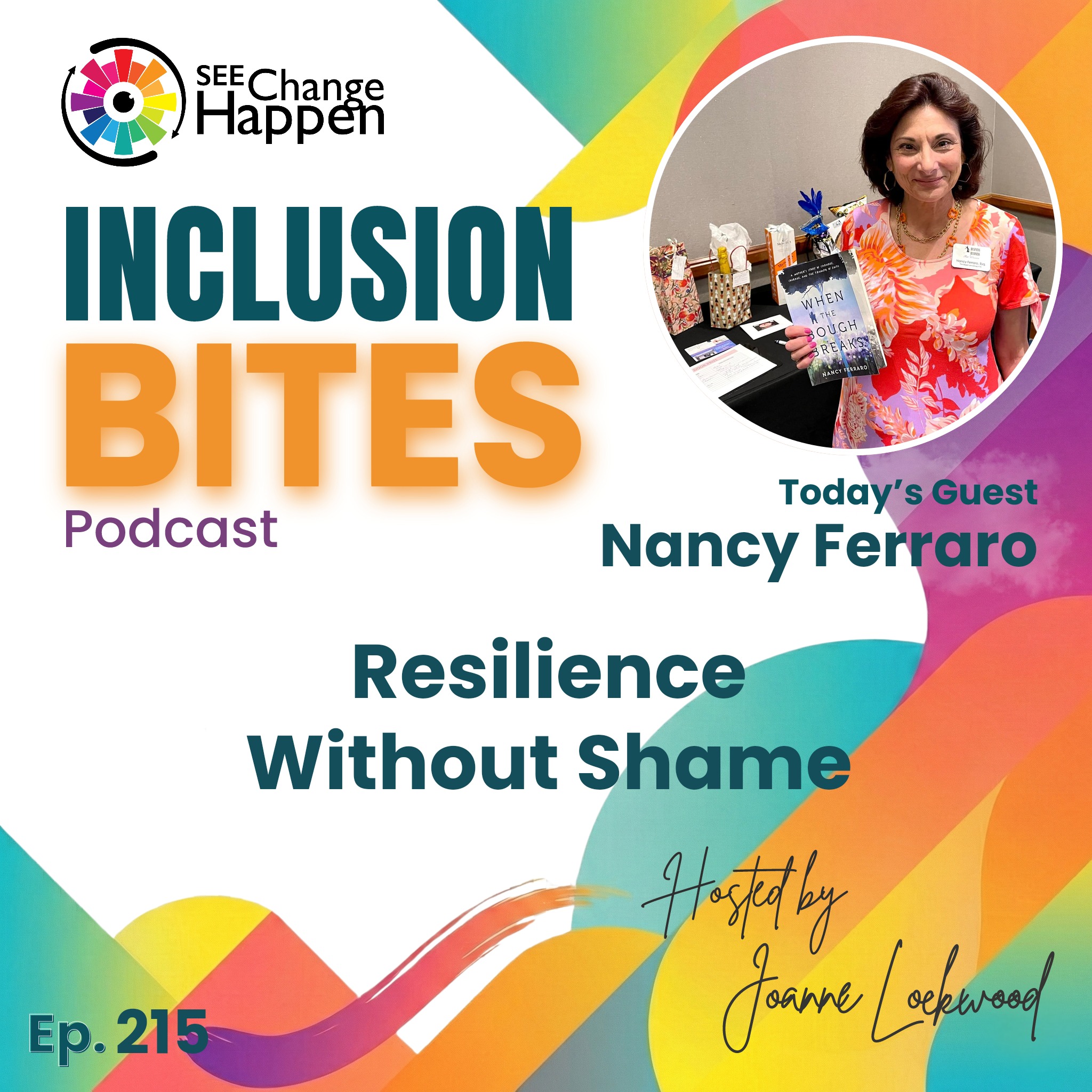
Nancy Ferraro shares a powerful, unfiltered journey through trauma parenting, resilience, and advocacy, challenging the stigma of shame while illuminating the path to hope and authentic support for families navigating complex needs.
In this episode of The Inclusion Bites Podcast, Joanne Lockwood has a deeply candid conversation with guest Nancy Ferraro about the realities of resilience, trauma parenting, and overcoming shame. Nancy discusses her experience of adopting George, a child from Romania with severe special needs, revealing how expectations quickly collided with unforeseen challenges such as fetal alcohol syndrome, attachment disorder, and institutionally acquired autism. Joanne and Nancy explore the relentless pressures, the grief of unmet expectations, and the isolation parents can face—particularly when society is swift to judge and slow to offer support. This conversation highlights the unspoken burdens that come with raising children with complex needs and rallies listeners to champion open, honest conversations over stigmatisation and silence.
“When our children have troubles, and we as parents cannot solve them. There's a lot of shame around that. Society blames us. We blame ourselves and no one talks about it.”
Explore
Navigate this episode
Joanne Lockwoodhost
Welcome to Inclusion Bites, your sanctuaryfor bold conversations that spark change. I'm Joanne Lockwood,your guide on this journey of exploration into the heart ofinclusion, belonging, and societal transformation.Ever wondered what it truly takes to create a world Remember, everyonenot only belongs but thrives. You're not alone.Join me as we uncover the unseen, challengethe status quo, and share storeys that resonatedeep within. Ready to dive in? Whether you'resipping your morning coffee or winding down after a long day, let'sconnect, reflect, and inspire action together.Don't forget, You can be part of the conversation too. Reach outto [email protected]to share your insights or to join me on the show.So adjust your earbuds and settle in. It's time toignite the spark of inclusion with Inclusion Bites.And today is episode 215. Withthe title Resilience Without Shame. AndI have the absolute honour and privilege to welcome NancyFerraro. Nancy is an attorney, an author, and aspecial needs mum who shares an unvarnished anddeeply human perspective on trauma parenting, together withadvocacy and resilience through lived experience. WhenI asked Nancy to describe her superpower, she said That it is her resiliencedeveloped through years of raising a child with severe special needsand continuing to advocate, speak out, and build communitydespite extraordinary challenges. Hello,Nancy. Welcome to the show. Hello, Joanne. Thank
Nancy Ferraroguest
you for having me. I'm thrilled to be with you. Oh, it's lovely. We were
Joanne Lockwoodhost
chatting just now in the green room and you said you're in the US?
Nancy Ferraroguest
Yes, I am. I'm in Florida. In Florida,
Joanne Lockwoodhost
the Sunshine State, but it's not very sunshine at the moment, is it?
Nancy Ferraroguest
Well, it comes and goes. The nice thing about Florida is we might get acool day, but then in a matter of a couple of days, we're back onthe beach. So we're recording this in February and no doubt this episode
Joanne Lockwoodhost
will drop in the summer. So we'll look back at this andgo, well, actually it's a bit colder because it's a bit dank and damp whereI am at the moment in the UK. Sorry, Will. Yeah, itis what it is, you know. It's never the wrong weather, it's just the wrongclothing. You just gotta find the right clothes to wear and it's fine. Go outin any weather. Although in Florida in the summer, you go out in t-shirts andflip-flops. So yeah. Yes, we do. SoNancy, you mentioned, I mentioned in the introduction thereand I looked in the show notes, you said, sorry, you have adisabled son or? Yes, I do. Well, I'll
Nancy Ferraroguest
tell you, years ago I adopted a child fromRomania and he was 4 when he cameto the United States and all of our reports said thathe was typical, but George arrivedas a feral child. He was basically a wild animal in the body of aboy with disabilities ranging from foetal alcoholsyndrome to attachment disorder, to institutionally acquiredautism. We came to know George as Hurricane Georgebecause of the violence he rained down on us. And really what I wantedwas just to give my older son a little brother. And what I gotwas a decades-long exercise in survival.So the reason that I wrote When the Bell Breaks, the memoirabout raising George, is because when our children havetroubles, and we as parents cannot solve them.There's a lot of shame around that. Society blames us.We blame ourselves and no one talks about it. And when wecame out basically vertical, I felt a responsibilityto shed light, share hope, and open up that darktunnel because it's very lonely. All of your socialoutlets disappear. You feel like you'rerunning an impassable battle and it's just trying to get from one day to thenext. And I thought, certainly I'm not the only mother going throughthis. And certainly I'm not the only one who needs to hear a message oflight and hope and community. Wow. That's quite a story. So
Joanne Lockwoodhost
take me back to that time. So you were, you had a child and youwere, your plan was to adopt fromRomania, give a child who was coming from that environment, a, abetter life, uh, a brother or sister, whatever that may be.And you were expecting that child to bein need, but not in extreme need. Is thatwhat you were saying? And when they arrived, they arrived almostblindsided you cuz you weren't aware of what was gonna happen.
Nancy Ferraroguest
That's true. We had no idea. And even when we went to Romaniato pick him up, it wasn't readily apparentbecause he would laugh and run away from me in the streets ofBucharest. And I thought, well, how am I going to explain this to the Romanianpolice officer? Because the only word he said was no. Is this yourmommy? No. And I'm, you know, picturing myself in a Romanian jail.But he did not attach and I didn't expect him tobecause how could he? Because he didn't know us, right? So it tookme a little bit. And frankly, I was living in denialuntil I realised that it wasn't just that he wasn't used tous. It wasn't just that he wasn't picking up English. He wasn'tpicking up language at all. He had moresevere disabilities than I had ever imagined. And wehad a journey of coming to the realisationthat love was not going to cure it. Whenyou hear speech delay or developmentaldelay, to us laypeople, that means temporary, right? Delayis a temporary thing. But in the medical world, delay meansa permanent disability. And I had no idea. Ithought I would love it out of him and then everything would be Norman Rockwell.Well, turns out not even Norman Rockwell is Norman Rockwell, butit certainly wasn't what we were expecting to deal with.In raising a family. I'm— my mind's going back to
Joanne Lockwoodhost
a period of time a little while ago when the Romanian, um,government— was it Ceaușescu? Was this around that time?Because I remember seeing storeys on the news of orphanages andchildren, right? You're right. So Ceaușescu
Nancy Ferraroguest
fell in '86, and we got Georgia in '19. 90?No, we met Georgia in the year 2000. So there had been a lot ofnews storeys around Romania trying to join theEuropean Union. Ceaușescu fell, all these rescue people fromall over the world ran in, and then the news storeyswere Romania was cleaning up SAP. They were trying to join theEuropean Union as a developing nation, and they hadto prove that they were taking care of the children. So that's what wewere consuming. That's what we were fed in the media. And thenon top of that, our medical reports told us that he wastypical, that there was nothing wrong with him. It wasn't until we got him backto the United States and I found a therapist who was fluentin Romanian, who read my reports and looked at me and said, yourtranslation is wrong. They knew that he was special needsand they passed him off on you as a typical child. So I
Joanne Lockwoodhost
remember you know, as you say, back in the '90s, thenoughties, the early 2000s, there was lots of TV news reportsof those orphanages and the conditionsthe children were being kept in. Soyour son was from that era. Exactly. Well, he was
Nancy Ferraroguest
a little post that era. We thought we were past the danger point, right?But when I was writing the book, I started listening to interviews. Now, Georgeis basically nonverbal. He speaks in 3-word sentences, gets hispoint across, but there's no way that he could tell me astorey that didn't involve something concrete or relay hisexperiences. And I started listening tointerviews with Romanian adoptees in the United Stateswho actually had a higher IQ and could put words together and tellthe story. And it was absolutely horrifying to meto know that these things probably happened toGeorge, but he'd never tell me and it will never come out of his mouth.So you can't heal a child if they can't communicate that,right? So it's always going to be in there somewhere. And that's the mostdisturbing part. Sorry, I'm, I'm struggling to find the words. This
Joanne Lockwoodhost
is very, really emotional. This is really traumatic to listen to this story. And, um,it ends. Well. Yeah.
Nancy Ferraroguest
The storey ends well. We'll get to the end. know, We, you I'm looking forward
Joanne Lockwoodhost
to get to to the, the arc of the story. Yeah. So what have yousurmised as being the root cause? Was it a birth orwas it as a result of trauma he sufferedwhile in the womb? Was it post-birth environment?
Nancy Ferraroguest
It was actually all of the above. His birth mother drank prettyheavily and in Romania they make that homemade plumbrandy that's very akin to grain alcohol. Right? Andso there's no prenatal care. So all thoseinsults in utero. And then when George was born, hehad anoxia, which is lack of oxygen to his, the brain, whichaffected his IQ. And then once he got intothe foster care and the orphanage system,the way they fed the children, I'm learning, was with those bigholes in the bottle. Because they fed them the glug and they had to getthe bottle removed for the next baby, right? So Georgedeveloped some kind of survival mechanism so he didn't choke to death.And as a result of that, he has no phonemic awareness, so he has noidea where his tongue is in his mouth. So he has words that hesays and wants to say, but you kind of have to know himto understand the point he's getting across. And heLet me tell you, he's very happy. He's very well settled. He's very well caredfor. And George is the mayor of everywhere he goes.But those challenges and the fact that he wasabandoned at birth mean that Mommy'sjust my name. He cannot attach to me that way.But not to, I don't mean to upset you because it all did comeout for the best and George living his best life in a group
Nancy Ferraroguest
home. He has 24/7 care and it's something I couldnot provide for him in my home. Frankly, wehad to lock our bedroom doors to protect ourselves from theviolence that just emerged from him, and you never knew when it was gonnahappen. And so even though he still suffers from that,I'm no longer the object of the violence and he has professionals who know howto calm him down and separate him from the group.And frankly, when it's over for George, it's over and he'son to snack time or TV where you or I would be blubbering in thecorner for a week, right? No, George is always ready for,you know, treats and TV and ice cream. Sothere's a blessing there. It's like a rhythmic rage
Joanne Lockwoodhost
where he's fine, then some brain chemicals hit him,he gets angry, frustrated. He takes it out on theworld and then snap, he's back in the room and he's, he's, he's off doingwhatever he was doing before. And it's like it never happened. So, but you're
Nancy Ferraroguest
still bobbling. I used to say George is like the fat man who jumps inthe pool. The fat man's always fine, right? It's the rest of us who arebobbling and trying to save our lives in the water. So that, that must have
Joanne Lockwoodhost
an impact on your spouse, your, your, your other children oryour other child. Right. Well, very disruptive time, wasn't it?
Nancy Ferraroguest
Yeah. Well, my marriage didn't survive. Obviously not many marriagesdo, but my older son, I believe,is on a good path. You know, he's successful, he'sempathetic, he's turned into a very lovely man and I'm veryproud of him. But he does have trauma from hischildhood, even though I did my best to shieldhim, to try to give him some kind of normalcy. And of course,I'm sure I let him do things with his friends that I never would've allowedbefore, right? Because I wanted himto have some kind of normalcy when I was, you know, over heredistracted with George. But he's, you know, he's fine. My ex-husbandremarried pretty quickly after we divorced, so I guess he's fine. And my olderson is just thriving and has a lovely,lovely husband whom I love and in Napa and justliving life. That's fantastic. Fantastic.
Joanne Lockwoodhost
So in terms of timeline, just so I can try and contextualise this.So you, you picked up George inRomania, you went over there. How old was he at the time? He was just
Nancy Ferraroguest
4. Just 4. Just 4. Andmind you, I put in for an infant girl, got a toddler boy. But you
Joanne Lockwoodhost
know, so Was there any point when you were in Romania thinking,hang on a minute, we just need to walk away from we, this. This is,this is something we, we can't do this. Or, or was itimmediately responsibility you were or as committed it were?
Nancy Ferraroguest
What happened when I saw George is I became physiologicallypregnant with him. He was my, the moment I laid eyes on that child,he was mine. You could have told me he was purple and had 3 heads.I would not have heard you. He was mine and he needed me and Iwas going to rescue him. And when we were there, and we wentto the foster home. I was really nervous because they insisted on feeding usand showing us the town. And I'm like, can we just get out of herewith my baby? I just want to get out. And then of course you
Nancy Ferraroguest
have to go through the embassy and you have to go to the medicalfacilities. And I remember knowing just enoughRomanian because I was learning mommy Romanian to speak to George. Are youhungry? Are you tired? Are you cold? Wash your hands. And the doctorlooked at our facilitator and said, nu verbește, which isRomanian for he doesn't speak. And Iremember feeling a trickle of sweat go down my back, justpure panic. Oh my God, they're not going to let me livewith, leave with this child. It was pure terror.I thought I just need to get him home and get him into a normalcircumstance and everything will be fine. Had we hadthe luxury of true medical reports, we might have made a differentdecision. But I firmly believe that if we had not takenGeorge, he would probably be dead. He wasunmedicated. He was feral. He hadlazy eye and he had these awfulscars up and down his back. So I know that, that there was some trauma.There's no doubt in my mind. That had we left him there or sent himback, he wouldn't have survived very long. Soin a way, in a very weird, strange way, I'm very grateful they landedwith me because I have ESQ behind my name. Forsome reason, when you're an attorney, that scares people. So Itook full advantage of that. I wrote all my letters on law firmletterhead because it gave theimpression that I had much more knowledge than I did. That'sokay. You know, I needed to get somewhere for George and I used anymeans that I had at my disposal to make headway forhim. So in a way, he landed with the right people. How is he
Joanne Lockwoodhost
now? Oh, George. George is living large.
Nancy Ferraroguest
He lives in a group home with 2 other boys. It is notthe scary institution that Ipictured for so many years, and that's the reason I fought it for so long.But he goes on outings. He spends all his money at Wawa, whichhere is like heaven for coffee lovers. It's aconvenience store. He tastes all the flavors. I think one month hespent $300 on coffee. I'm like, George, you know, rein it in a little bit,right? But he's happy. He goes to day program. He goes onoutings. He goes to his dad every other weekend. Andfrankly, the world is his oyster. And he's what, 20-something, is he?He's now 29.
Joanne Lockwoodhost
So how many years was it that you tried to parenthim at home? How long did it take you before. You— It was 9
Nancy Ferraroguest
years. 9 years. Almost to the day. Yes. And part of itwas I was afraid because he was so little. Every doctorsince we brought him home said, this child needs to be in an institution. Heneeds more help than you can give him. And frankly, I was doctor shoppingbecause I am mother, hear me roar, and I was going to fixthis. And every doctor that didn't give me the fix, I dismissed as aquack. Well, had I listened to those doctors,I should have listened to those doctors, but I was not willing toat the time. And then The word institutionscared me because I I was, had this image of thesehorrible places where they tie kids to the bed and I didn't want that. Iwas very frightened that he would get hurt, that he would be mistreated.But once we started to actually explore theservices available and the places, it became a wholedifferent story. It's like, why did I not do this for him before? Andit is really the best decision I ever made for himbecause of the structure they're able to give him because of the waythey keep them on a schedule. They manage him andthey, they're professionals and they have an 8-hour shift and then theygo home. Right. I didn't have an 8-hour shift. I had a 24/7shift and was just completely burned out. Look at, think
Joanne Lockwoodhost
of the timeline. You picked him up at 3 or 4. You were ableto parent him at home for about 9 years. That means he was what, 13,14? I presume at that age, as you said, you, you were getting worried ofhim hurting you, hurting others. He would've been becoming ateenage boy, developing strength and, uh, you know,his physical, physical strength would've been growing considerably at that point, wouldn't it?
Nancy Ferraroguest
Yeah. Well, he had strength when he came home. His, when he was 4,And he would start raging. Those chemicals kick in. Andalso his muscles were taut, which is notnormal. Toddlers are supposed to be chubby, right?George was not. He was very sinewy. And so when he decidedto rearrange his furniture and it was nothing,he was in a rage, everything would be moved. And then I'd go in laterand try to move everything back. It was really difficult. Hehad this Herculean strength that was justabnormal for a child. And the, yes, the bigger he grew,the more frightened we became. I became, I was the one home withhim. You, you. I think you
Joanne Lockwoodhost
mentioned you are part of a, a community or a network of otherparents or people who have adopted or broughtchildren into the country from Romania or other places.Are there other storeys from other, other people ofsimilar situations? Shockingly, there
Nancy Ferraroguest
are more storeys than I imagined. And when I go to conferences and talkto parents and realise how muchviolence is produced in these children, and not just George, not justchildren from Romania, not just children with foetal alcohol syndrome,children who suffer from certain types of autism.Because they have no frustration tolerance and that causesviolence. And I've seen so many parents who areburned out, hanging on by their fingernails. SoI am really on a mission to reach those parents.And I'll be speaking at the largest special needsconference in Florida this year. And I hope that is just the beginningbecause Mothers especially, anyone who stoodin the shoes of motherhood, could be a father, but anyone who's hadthat all-encompassing responsibility and thatfeeling that if I can't fix this, who will?They need to hear that message. And people come up to me afterward and ofcourse we all cry. We cry because theyfinally feel heard. They finally feel like someone has experienced whatthey're going through right now. And has come out the other side.So I really am so purpose-drivento get in front of as many parents who have experienced traumatic parenting asI can. And this is not just adoptees. This is
Joanne Lockwoodhost
parents, birth, birth parents as well in the US and around the world.
Nancy Ferraroguest
And funny thing is, parents give birth to foetal alcohol syndromechildren in the United States as they do all over the world. But of course,there's a modicum of shame with that because that means admitting that therewas alcohol consumption during pregnancy. But we can't hang on thatbecause that gets us nowhere. We have something called theFetal Alcohol Syndrome Respect Act that works its way through Congress,but there has to be conversation. AndI'm happy that you do this. I know that you do a lot of thisbecause fear hides in the darkness, right? Youhave to bring issues out into the open in orderfor people to talk about it, remove the shame, startconnecting with each other. Yeah, it is. And shame is one of those emotions that
Joanne Lockwoodhost
has no purpose really. It's an internal thing, isn't it? It's, you need tolose it and find action, find purpose. And I thinkreclaim. But I'm guessing if your childis suffering from foetal alcohol syndrome, you as a motherbirth mother would still be going through some of the crisis of, of youralcohol dependency. And I'm assuming that alcohol dependency wouldlead to homelessness, joblessness, relationship issues, lots ofother things, and probably maybe even drugs and other, other, other dependencies.So you, you're probably not in the best place regardless of, of dealing with thechild. You've got some other challenges to deal with in life your own for yourselfas well, haven't you? Yes. I, I'm,
Nancy Ferraroguest
ashamed to tell you, but I'm not. It's in the book. My life is anopen book. Believe I was actively trying to kill myself with alcoholbecause it was numbing. And I would hear that bus, theshort bus coming down the gravel driveway. We had a 50-footgravel driveway. And when I heard those bus tyresstart down and the crunching, it wasamazing the ability I developed to open a bottle of wineby banging it against the wall. I mean, I was a master at itbecause it was so common. So you're getting the cork out by—. Oh, I'm goodat it. I could show you how to do that. But I was so frightenedof what was coming in the door. He could be angelic or he could become coming, in attacking me. I never knew what was coming.So yes, there was a lot of destructive behaviour and I'm notproud of it. But it was the only way I knew to cope at thetime. So you've sorted
Joanne Lockwoodhost
yourself out. You uh, found, founda better way without alcohol. Have you, are you now 10 years sober, 20 yearssober? No, what I discovered is I'm not really an
Nancy Ferraroguest
alcoholic because I've, I went through the process anddiscovered that I can have a cocktail and not and have an off button.It was a response to trauma. And just like anything,depression, it was a response to trauma. And of course, it took afew years to unwind from that because you're soused to being in panic mode, in survival mode, that when you'renot, you kind of create something because you're so usedto— it's what you know, right? The trauma, theconflict is what you know. So it took me quite some time to cycleout of it, but there is light on the other side.
Joanne Lockwoodhost
So you've written this book about your life, Isuppose. And I think you said before we wentlive, it's about being able to change the life ofone other person to have a more positive outcome. So it's about creating thatawareness, isn't it? So when did you write that? How long ago did you writethe book? I started writing it. About
Nancy Ferraroguest
10 years ago. And I actually went to apitch conference in New York City and I was asked for a book proposal bya major publisher. And I had no idea what a book proposal was,let alone any of that. I had 10 pages and an idea. Andmy older son said, I'm not over my childhood with George, mom. Youcan't put this out. And I said, okay, put it away.And then a few years ago, I had been stalking a writer'sretreat. I knew I was going to write the book. I just didn't know whatI was going to do with it. And I got into the finals of thisnational writing competition. And again, I called my older son. I said,honey, I won't do it if you don't want me to. And he said, no,mom, go for it. I'm proud of you. I said, okay, honey, don't read thebook. And so as faras I know, my older son has still not read the book. His partners readportions of it to him, but I feel like it did a pretty goodjob of protecting his story, my older son, cuz it's hisstorey to tell. But yes, it was a long timein the making. So the book is called When the Bow Breaks. That
Joanne Lockwoodhost
implies from the title that somethingbroke the bow. Exactly. So what was the breakingpoint? Was that when you had to put George into care, or was there apoint in there where everything exploded? There was the
Nancy Ferraroguest
moment of realisation when you can nolonger hide in denial, when you have to adjust yourexpectations for your child and you have to— I hateto call it a come to Jesus moment, but it really was. We came tothe point where it was impossible to keep George in our home anylonger. Because he was big, he was violent, and we knew that wehad to place him. And that's the moment when my bell broke,because at that moment I had to redefine my relationship withmy child. And it was heartbreaking. It wasdevastating because I had to admit that I could not fix it.But it was also empowering because I believe that askingfor that help was not a sign of weakness. It wasabsolutely courageous and important.. And I want other parentsto know that asking for help is not a sign of weakness. You're notmeant to go through this alone. We're not meant to do anything alone in thislife. And so the moment that you step out andyou ask for help, that is almost sacred. You used a
Joanne Lockwoodhost
phrase when you were, when you first met George out in Romania,where your womb, was it your womb or yourparent motherhood? Just enveloped him.Many might say that you went above andbeyond reasonable expectations in sticking with this. You know,most people would have, even if you were the birth parent,people might have said you would have, you'd have every right to hangon, step back from this, but to be an adoptive parent, adoptive parentfrom child from overseas, adoptive parent from who'sadopted a child where there's a clear breakdown incommunication as as to, the expectation and the needs of this child.Many might say that you, you tackle somethingbeyond any reasonable expectations and you've, you've done amazing tokeep doing that. There really wasn't a choice because I knew what would
Nancy Ferraroguest
happen to George if we sent him back. And the other moreimportant decision was, what am I teaching myolder son? Am I teaching him that people are expendable?And then when they get inconvenient, you just jettison them? Thatis not something I wanted him to grow up with. And Iknew that, you know, it's like being stuck with a sword. Do you leave itin or pull it out? I knew that if I sent Georgeback to Romania, the psychological impacton my older son would have been 'Hey, people are expendable. I canjust do whatever I want with no repercussions.' I'm not raising that kind of ahuman, and I'm so glad I did not because he's turned into an amazinghuman being. Yeah. And part of your family, your son,
Joanne Lockwoodhost
your younger son. Yeah, exactly. I takemy hat off to you if I was wearing one. No, it's somethingamazing. I'm just trying to explore thethoughts going through my head. You not only have you written abook, you speak at stages, you mentioned speaking in conferences thisyear, but you also travel the world doing this. That's the goal. I haven't travelled
Nancy Ferraroguest
the world yet. So far I'm just in Florida, but I amdoing virtual speaking and that's going to be the focus of this year.
Joanne Lockwoodhost
Yeah. But are, I mean,the one, one side of this is the foetal alcohol syndrome, which is obviously anongoing problem. It's not gonna go away anytime soon in the USand around the world. But are are are there, there, there still childrenlike George living in orphanages,being in, in worlds where they're not getting the care in their nativecountry or even, even in the US? Is that still a problem with the adoptionsystem? I'm almost frightened because I do some
Nancy Ferraroguest
work with the African Orphan Educational Foundation. And I supporta pre-law student there in Kenya, and I do noteven want to ask the question because she's a very bright girland she was about to be sold off into marriage. And had I not sponsoredher, she would've had a horrible fate because of thepoverty. And so my question that I'm almost afraid toask the founder is what happens to the special needs children?Because these are typical smart intelligent,driven kids who are having trouble just feeding themselves, let alone gettingan education. So I suppose that's the next hurdle. Ihave to brace myself for it, but yeah, I'm sure there are. I knowthere's, there are horrific things going on around the world, but MotherTeresa said, you can't change the world. You just change your corner.And I'm trying to change my corner. Because there are still areas of the world
Joanne Lockwoodhost
that are in poverty. There's drought,there's malnutrition that causes developmentaldiseases, lack of vitamin D, rickets, bone structure,poor diet leads to brain injury as well.So there is still going on in the world, maybe not inRomania, but maybe in other, other parts of the world, other continentswhere certain regimes are not investingin healthcare and child support and growth that we may expect in theWestern world. Of course, of course there is. One,
Nancy Ferraroguest
what do we do? How do you eat an elephant? One bite at a time.So yeah, yeah, I, I know it sounds very,yeah, one talk at a time. So that's,
Nancy Ferraroguest
that's my goal. Nancy, this has been really
Joanne Lockwoodhost
enlightening and heart-wrenching and just to hear the storey andI'm 4,000 miles away from you and I'm, I'm feeling really quite, quitemoved. By your passion and, and, and the way you've stepped up forthis. And it, as you said, what else could I do? Thatin its own right, that sentence is, is, is, is exactly whatmakes you a strong and, and capable personwho, who's taken this challenge on. And it sounds really patronizing, but I admire whatyou've done and I admire what you continue to do, how you're spreading the word.
Nancy Ferraroguest
But aren't we all? We all have challenges. And youdon't realise how strong you are until you get 40yards away from it and look back, right? So we all have a story. Everyonefaces their own challenges, but everyone's got something.
Joanne Lockwoodhost
It's all relative. I know. Everybody's got something. We all have. Exactly.So Nancy, how how can, can people get ahold of you? I'm sure everyone's goingto want to reach out and connect with you about this. Thank you.
Nancy Ferraroguest
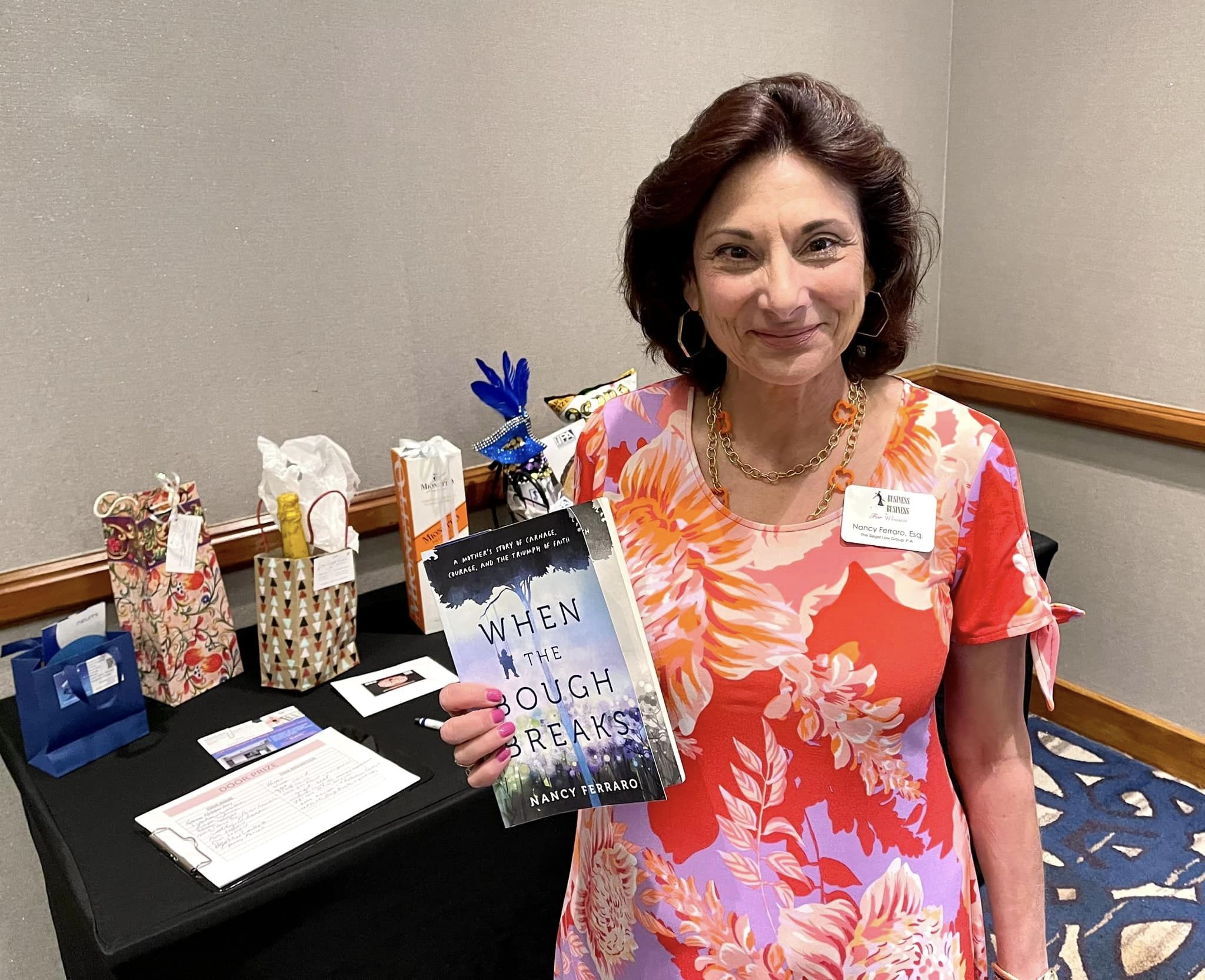
It's very exciting. I do have a link, Meet with Nancy. It'shttp://meetwithnancy.com.//meetwithnancy.me. And I'm happy to chat with anyone.It's a video conference and a short get-to-know-you meeting.And anyone who wants more information, I'm happy to talk with. The book is available.It's called When the Bough Breaks: A Mother's Story of Carnage,Courage, and the Triumph of Faith. And it's available at, ofcourse, Barnes Noble, Amazon, everywhere books are sold.But I would love, love, love to hear other mother storeys and Iwelcome the connection. And you're on the usual places like LinkedIn
Joanne Lockwoodhost
and I'll put all the details. Yes, I'm on LinkedIn, I'm on
Nancy Ferraroguest
Facebook. Yes, absolutely. There is a support group onFacebook called When the Bough Bends. And so there might be some goodresources for parents there that I run. So invite youto connect there as well. And people could join from all over the world.
Joanne Lockwoodhost
It's not purely a North America, US. Absolutely.Absolutely. Fantastic. And Nancy is N-A-N-C-Y Ferraro, F-E-R-R-A-R-O.
Nancy Ferraroguest
Correct. So if anyone's looking for that, perfect. Reach out.
Joanne Lockwoodhost
Nancy, thank you so much. It has been my
Nancy Ferraroguest
honor. Thank you. As we bring this
Joanne Lockwoodhost
conversation to a close, I want to express my deepestgratitude to you, our listener, for lending your earand heart to the cause of inclusion.Today's discussion struck a chord. Consider subscribing toInclusion Bites and become part of our ever-growing communitydriving real change. Share this journey with friends, family, andcolleagues. Let's amplify the voices that matter.Got thoughts, stories, or a vision to share? I'm all
Joanne Lockwoodhost
ears. Reach out to [email protected]and let's make your voice heard. Until next time, thisis Joanne Lockwood signing off with a promise to return withmore enriching narratives that challenge, inspire, andunite us all. Here's to fostering a more inclusive world whileepisode at a time. Catch you on the next bite.
Resilience, Trauma Parenting, and the Power of Lived ExperienceStigma, Shame, and the Importance of ConversationThe Landscape of Advocacy, Connection, and Global Inclusion
In this episode of The Inclusion Bites Podcast, Joanne Lockwood has a deeply candid conversation with guest Nancy Ferraro about the realities of resilience, trauma parenting, and overcoming shame. Nancy discusses her experience of adopting George, a child from Romania with severe special needs, revealing how expectations quickly collided with unforeseen challenges such as fetal alcohol syndrome, attachment disorder, and institutionally acquired autism. Joanne and Nancy explore the relentless pressures, the grief of unmet expectations, and the isolation parents can face—particularly when society is swift to judge and slow to offer support. This conversation highlights the unspoken burdens that come with raising children with complex needs and rallies listeners to champion open, honest conversations over stigmatisation and silence.
Nancy is an attorney, author, and special needs parent who shares her lived experience with an unvarnished authenticity both through her book "When the Bough Breaks" and in her advocacy work. Her journey began when she adopted George at the age of four, naively expecting only mild challenges, but quickly found herself navigating the exhausting realities of survival, violence, and profound misunderstanding from both professionals and the community. Determined to shed light on this often-hidden experience, Nancy has become a prominent voice for traumatised parents, speaking at major conferences and supporting families through virtual platforms and support groups. Her honesty about her own struggles, including coping with trauma and seeking help, positions her as a compassionate connector for others experiencing similar journeys.
Together, Joanne and Nancy reflect on the importance of redefining resilience as courage without shame, the need for honest communication, and the impact of building supportive networks. Their conversation dismantles the illusion of the ‘perfect’ family, instead offering hope, realism, and practical understanding for anyone affected by trauma parenting—be they birth parents, adoptive families, or wider support networks.
“When our children have troubles, and we as parents cannot solve them. There's a lot of shame around that. Society blames us. We blame ourselves and no one talks about it.”
“We had a journey of coming to the realisation that love was not going to cure it. When you hear speech delay or developmental delay, to us laypeople, that means temporary, right?”
“I found a therapist who was fluent in Romanian, who read my reports and looked at me and said, your translation is wrong. They knew that he was special needs and they passed him off on you as a typical child.”
The misunderstood distinction between developmental delays and permanent disabilities, and the myths around "loving" trauma away.
The compounding impact of prenatal harm, early childhood trauma, and institutionalisation on children’s lifelong outcomes.
The generational effects of trauma parenting, including the strain on families and the often unspoken shame experienced by parents.
The difficult, yet empowering, decision to seek external professional help and redefine what it means to be a caring parent.
The unique challenges of navigating adoption systems, medical misinformation, and the harsh realities facing special needs children around the globe.
How stigma and secrecy fuel isolation for families—and why connecting through storytelling and support networks is vital for resilience.
Practical approaches to building inclusive communities and advocating for structural change, starting with authentic dialogue and mutual recognition of shared struggles.
One thing to remember
Resilience in the face of extraordinary caregiving challenges is not determined by unfailing strength, but by the courage to seek help, confront stigma, and foster community. "Resilience Without Shame" demonstrates that when parenting a child with complex needs—whether by birth or adoption—there is transformative power in acknowledging limitations, inviting support, and breaking the silence around trauma and parental struggle.
Questions this episode helps answer
How does Nancy Ferraro redefine resilience in the context of parenting a child with severe special needs, and what role does lived experience play in her advocacy?
In what ways did societal expectations and internalised shame impact Nancy Ferraro's journey as a special needs parent, and how might communities better support families navigating similar challenges?
What are the psychological and emotional consequences for parents who are unable to "fix" their child's difficulties, and how does this relate to the concept of parental responsibility?
Reflecting on Nancy Ferraro's experience, how does language—such as terms like "developmental delay"—shape perceptions and expectations regarding disability and recovery?
Nancy Ferraro describes a pivotal moment of realisation requiring her to place her son in a group home. How should we understand acts of seeking help within frameworks of courage and vulnerability rather than failure?
What insights does the episode offer into the intersection of international adoption, disability, and institutional care, particularly concerning transparency and ethical responsibility?
Explore topics
Ideas from this episode
Resilience, Trauma Parenting, and the Power of Lived Experience
My conversation with Nancy Ferraro was a deep dive into the realities of resilience, especially as experienced through the lens of trauma parenting. Nancy, an attorney and author, shared the raw and honest account of raising George—a son adopted from Romania with severe special needs.
Stigma, Shame, and the Importance of Conversation
Particularly those faced by parents of children with special needs, whether adoptees or birth children. Nancy’s story emphasised how silence and blame often deepen suffering, and why shining a light on taboo topics is so vital for inclusion and belonging.
The Landscape of Advocacy, Connection, and Global Inclusion
Nancy’s lived experience led to advocacy work both in her local community and internationally, raising awareness of issues like foetal alcohol syndrome and the plight of special needs children in under-resourced countries. We considered the broader social systems at play—such as adoption practices, institutional care, and the power of parent-led support networks.
Learn
Frequently asked questions
FAQ: Resilience Without Shame — Parenting Through Trauma and Inclusion
---
What is the main focus of this episode?
This episode explores the lived experience of raising and advocating for a child with severe special needs, with particular emphasis on resilience, the dismantling of parental shame, and the importance of community and openness for those in similar circumstances. Nancy Ferraro shares her story of adopting her son from Romania and navigating the complex realities of trauma parenting.
---
What challenges did Nancy Ferraro face during her adoption journey?
Nancy Ferraro adopted her son, George, from Romania, initially unaware of the extent of his needs due to inaccurate medical reports and misleading assurances. Upon arrival in the US, it became clear that George had multiple profound disabilities, including foetal alcohol syndrome, attachment disorder, and institutionally acquired autism. The family experienced social isolation, daily survival challenges, and a lack of societal understanding or support 03:01.
---
How did the early childhood environment affect George?
George was affected by several complex factors: heavy prenatal alcohol exposure, birth-related anoxia (lack of oxygen), abandonment at birth, and subsequent time in the Romanian foster care and orphanage system. He developed survival mechanisms in response to institutional neglect, which influenced his development and phonemic awareness, resulting in nonverbal tendencies and attachment difficulties 09:38.
---
What impact did these challenges have on Nancy Ferraro's family?
The intense demands of care and unpredictable behavioural episodes placed immense strain on family dynamics. Nancy Ferraro's marriage did not survive, and despite her efforts to shield her older son, he was nonetheless affected by the ongoing trauma. However, Nancy Ferraro is proud that her older son has grown into an empathetic and successful adult 12:32.
---
How does Nancy Ferraro address the feeling of shame that parents often experience?
Nancy Ferraro believes that shame emerges when parents are unable to "fix" their children's troubles, an experience compounded by societal judgement. She advocates for shedding light on these issues, fostering hope and openness, and emphasises that asking for help is an act of courage rather than a weakness 04:47, 27:13.
---
What is foetal alcohol syndrome, and how is it addressed in this episode?
Foetal alcohol syndrome (FAS) is a result of prenatal alcohol exposure, leading to lifelong developmental, cognitive, and behavioural challenges. The episode highlights not only the medical and social consequences but also the compounded stigma and silence parents may experience. The need for advocacy, legislation (such as the Fetal Alcohol Syndrome Respect Act), and removal of blame for birth mothers is discussed 21:43.
---
Why is community and connection important for parents of children with special needs?
Families often feel isolated and unsupported. Nancy Ferraro stresses the transformative power of community, connection, and shared experiences, underscoring the importance of platforms where parents can find solidarity, validation, and hope 20:09.
---
How did Nancy Ferraro come to terms with placing her son in a group home?
After nine years of being George's primary carer at home, Nancy Ferraro and her family reached a breaking point. Placing George in a group home was "devastating but empowering," shifting from denial to embracing specialist support. She describes the placement as the best decision for both George's well-being and her own mental health, and encourages others not to equate asking for help with failure 18:13, 27:27.
---
What broader societal issues were discussed?
The episode briefly addresses the ongoing crises in orphanages globally, the persistent lack of appropriate resources for children with special needs, and the social determinants—such as poverty and lack of investment in child health—that continue to impact vulnerable children worldwide 31:34.
---
How can listeners connect with Nancy Ferraro or find support?
Nancy Ferraro is available via her website: meetwithnancy.com
Facebook support group: "When the Bough Bends"
LinkedIn and other major social platforms
Her memoir, When the Bough Breaks: A Mother's Story of Carnage, Courage, and the Triumph of Faith, is available at mainstream book retailers 33:43.
---
What is the central message for parents or carers facing similar struggles?
Resilience is not about going it alone or shunning help. Seeking support, being open about challenges, and letting go of shame are paramount. Sharing these stories helps drive societal change, build community, and foster inclusion for all.
Share this episode
Heard something worth passing on? Send this conversation to someone who needs to hear it.