Joanne Lockwood hosts Amanda Rezartsa on Inclusion Bites, exploring leadership strategies that embrace diverse thinking styles. They discuss emotional intelligence, tailored team systems, and how leaders can foster inclusive, sustainable cultures where people thrive by understanding and valuing differences without burnout.
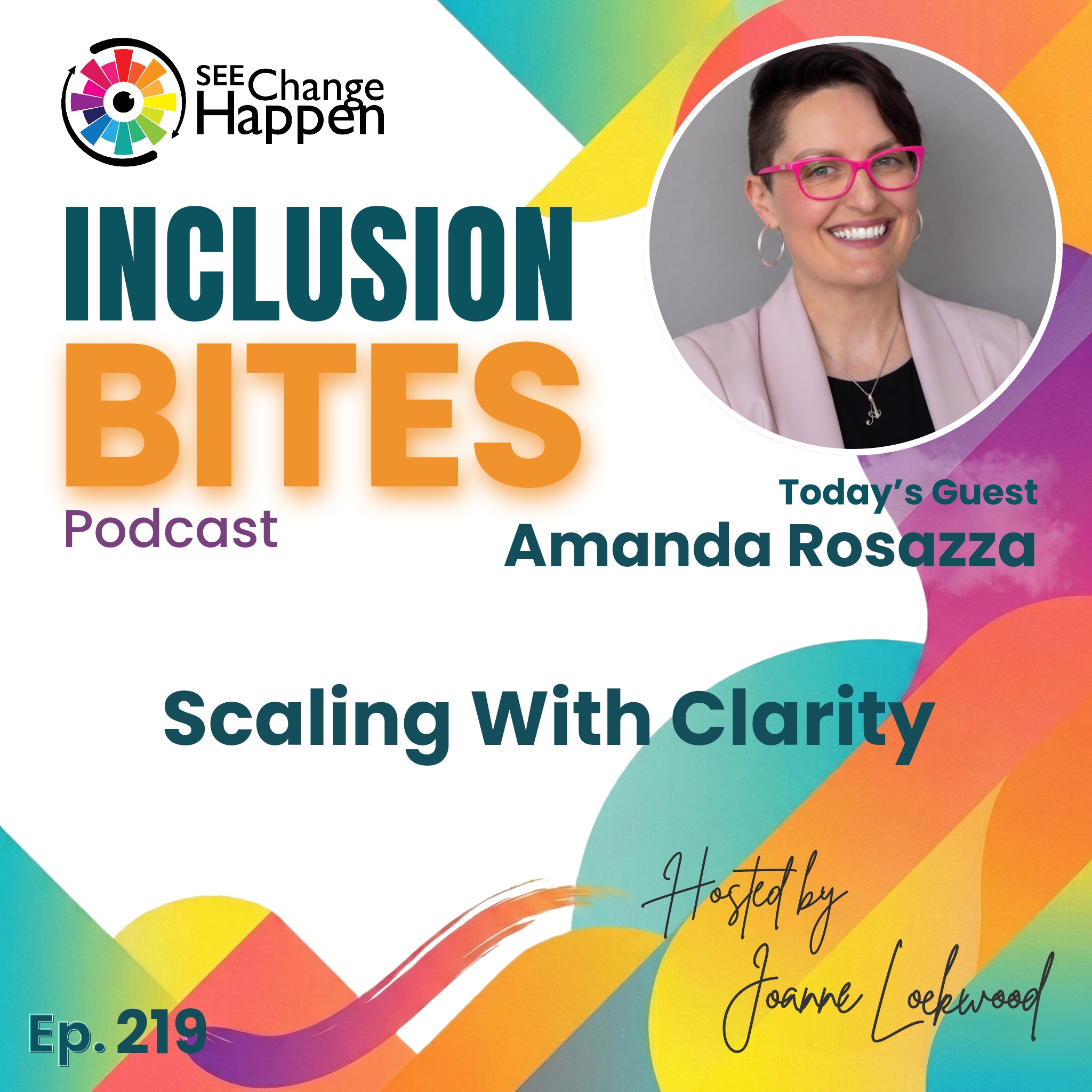
In this episode of The Inclusion Bites Podcast, Jo explores the theme of “Scaling With Clarity” alongside Amanda Rosazza. Together, they examine the art and science of building scalable, people-centred organisations—balancing robust systems with the flexibility to accommodate diverse personalities and working styles. Their discussion is rooted in the belief that emotional intelligence and cultural awareness are vital and learnable skills for leaders aiming to foster true inclusivity. The episode delves into the subtle tensions between structure and agility, celebrating wins in meaningful ways, and the challenges of navigating difficult conversations that shape high-performing, values-driven teams.
“Not everyone is wired the same. So we can't just all expect everyone to want to do the same things in the same way.”
Explore
Navigate this episode
Joanne Lockwoodhost
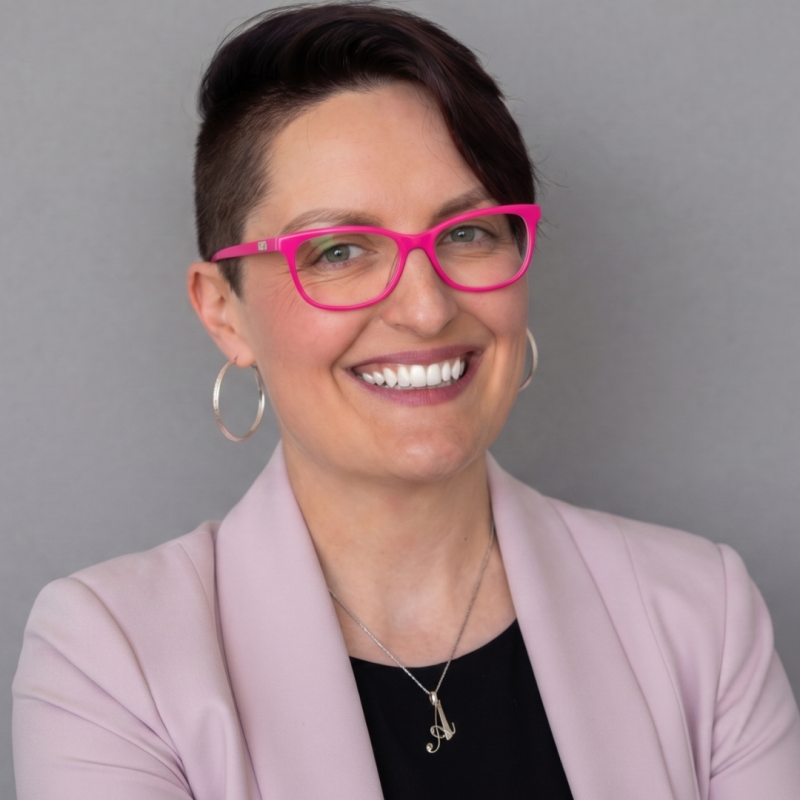
Welcome to Inclusion Bites, your sanctuary for boldconversations that spark change. I'm Joanne Lockwood, your guide on this journeyof exploration into the heart of inclusion, belonging andsocietal transformation. Ever wondered what it truly takes tocreate a world? Remember, everyone not only belongs, butthrives. You're not alone. Join me as we uncover the unseen,challenge the status quo and share stories that resonate deepwithin. Ready to dive in? Whether you're sipping yourmorning coffee or winding down after a long day, let's connect,reflect and inspire action together. Don't forget, you can bepart of the conversation too. Reach out to[email protected] to share your insights orto join me on the show. So adjust your earbuds and settlein. It's time to ignite the spark of inclusion with InclusionBites. And todayis episode 219 with the title Scaling WithClarity. And I have the absolute honour and privilege to welcomeAmanda Rosazza. Amanda is a business strategist, leadershipadvisor who helps founders build scalable, structured, human centred companies where clarity,culture and sustainable growth go hand inhand. When I asked Amanda to describe her superpower, she said that itis combining strategic thinking with creative innovation to help leaders build smartersystems, grow stronger cultures and businesses that grow without burningpeople out. Hello, Amanda, welcome to theshow.
Amanda Rosazzaguest
Really excited to be here, Joanne, thanks for having me.
Joanne Lockwoodhost
Absolute pleasure and I love chatting. Before you turn the mic on in the green room,you told me a bit about where you're from. So where are you from in the world?
Amanda Rosazzaguest
So Brisbane, Australia. So down under, for those playing athome.
Joanne Lockwoodhost
So Australia down under. It's a big place down under, isn'tit? I mean, Brisbane. So is that. That's east coast, is it?
Amanda Rosazzaguest
Yeah. So we're east coast, sort of a little more than halfway up inQueensland. So pretty nice weather at the moment, but we're starting to head towardswinter, so it's going to get a little chilly.
Joanne Lockwoodhost
We're just coming into a hot bit.
Amanda Rosazzaguest
Yay. I much prefer warmer weather.
Joanne Lockwoodhost
Doesn't get that hot, you know. Is Brisbane quitewarm? If you look back in Northern hemisphere terms, that's like south ofFrance. Is it? That's where it gets quite warm andsunny.
Amanda Rosazzaguest
It's kind of subtropical. So I'm just trying to think forEurope. Yeah. South of France. And I always say Florida, if you thinkof Florida.
Joanne Lockwoodhost
Sticky lightning.
Amanda Rosazzaguest
Yeah. Humid. And as much as we say it's going to get cold, it's our version of cold,which is not very cold at all really.
Joanne Lockwoodhost
Okay, so you are kind of med. Yeah. Mediterranean, south of France, Spaintype. Temperature. Very nice.
Amanda Rosazzaguest
Yeah. Yes. And then the further you go up the Queensland coast, the more liketropical. Tropical it gets. So like Gold coast when you get off the plane feels likebang. Yeah. Heat. Heat smashing you in theface.
Joanne Lockwoodhost
I remember that. That feeling. I was. I went to Cairo to look at the museum and we did the coach tour and we saw thepyramids of Giza and the Sphinx, all that kind of thing. I remember we sat in this coach for about an hour andthat we got off and they opened the doors and it was like literally pulling the oven door open, sticking yourhead in it.
Amanda Rosazzaguest
It's real.
Joanne Lockwoodhost
Yeah.
Amanda Rosazzaguest
Yes. It's. It's offensive. It's a lot. And if you're not prepared forit. Yeah. Adjustment period required.
Joanne Lockwoodhost
Yeah. I also went to the Dead Sea and swam in the Dead Sea, the one where youfloat. And that was. The water was something like40. Now the temperature, air temperature was like 47degrees. And it's like, boom. And then so you're gettingin. You're getting in the water. To think I'm going to get some respite by keepingcool. But the. The water was even hotter than the airtemperature. It's like everything is just too hot here.
Amanda Rosazzaguest
Oh, my goodness. That's crazy. But stillrecommend. Definitely worth swimming in the Dead Sea.
Joanne Lockwoodhost
Yeah. The whole. That whole area. It was in. It'sin. We were in the. Israel. Israel side of the Dead Sea and we went to a placecalled. I think it's called Masada, which is a. Likea. It's a. It's a fort, which is up high, but technically it's below sealevel. So the whole area is so below sea level that this high pointwas. Was high, but below sea level or something. It's something really crazy thatyou think you're up high but you're not.
Amanda Rosazzaguest
Wow.
Joanne Lockwoodhost
Relatively. And it's a fascinating place. Lots ofhistory. Yeah, lots of history.
Amanda Rosazzaguest
Yes. Yes, definitely on my bucket list.
Joanne Lockwoodhost
Definitely. Yeah. Yeah. Put it. Put it near the top. If you ever comeinto. Up this way, up north, of course, once there's less trouble going in the world because it's abit.
Amanda Rosazzaguest
Yes.
Joanne Lockwoodhost
So probably a no fly zone at the moment.
Amanda Rosazzaguest
This is a good point. Yeah. Bit hairy out there at the moment. So move that to the side fornow. Yes.
Joanne Lockwoodhost
Yeah. Just go to New Zealand. It's safer downsouth.
Amanda Rosazzaguest
Yeah, that's. That's a good plan. Just pop over to New Zealand, down to Tassie, maybeHit up one of the islands. Yeah, much safer bet.
Joanne Lockwoodhost
Yeah. I was in, I was in Melbourne just before COVID actually. So that's, that's my, that's my limitedexposure of, of Australia. I've got friends in Adelaide, but we never gotfurther than that bottom strip. You know, the 12 apostles and the Great Ocean Road andthat kind of stuff.
Amanda Rosazzaguest
Stunning. That's one of my most favourite parts of the world. No, Melbourne and Adelaide are beautifulcities. I'm sure you had an amazing time.
Joanne Lockwoodhost
Definitely on the bucket list to go back once I can find a consultancy opportunity that pays for me tobe there like they did last time. That was a work and pleasure.
Amanda Rosazzaguest
Oh, very good. Yes. Okay, we've got to tee that up for you. Definitely.
Joanne Lockwoodhost
We do, we do, we do. Hopefully this podcast will be a launch platform forthat. Who knows? Hinted.
Amanda Rosazzaguest
Outstanding.
Joanne Lockwoodhost
So in your bio we talked about creative thinking and strategic thinking andhelping leaders build smarter systems. And when we're chatting in the green room, we're talking about what makes a great leader andhow leaders can, can implement great systems in their business andthat. That's what you do.
Amanda Rosazzaguest
Yeah, yeah, absolutely. So, so one thing we spoke about thatI'd love to kick us off with because it's such an important point as much systems andprocesses, it's not about creating this one size fits allenvironment. So we were talking about, you know, that scenario where you've got sort ofyour, your task focused detail or thinking orientedpeople. They do not want to do the same things, socially or otherwise that your peoplefocused, sort of big picture acting oriented people want to do so and that'sone of the frameworks that we use when we're having these conversations and helping leadersto set their teams up to win. So being able to an environmentwhere everyone can do their best work and wants to do their best work because theyare comfortable and set up to win is so important. And one of the first things to understandas a leader is that not everyone is wired the same. So we can't just all expecteveryone to want to do the same things in the same way, which I think is really fascinating andimportant.
Joanne Lockwoodhost
So people talk. Probably equate this to things like DISC profiling and Myers Briggs andthose kind of things. I assume we're talking about something beyond thoseconcepts.
Amanda Rosazzaguest
Look, it comes from a tool that we use in the Reachecosystem. So it is fundamentally that is where it starts, but it does buildso much further than that. And they are a helpfultool to gain a base level understanding of how People think andhow people show up, but there's just so much more to people than justthat. So it's a great tool for a base level understanding andwe should definitely use it but then we need to sort of go a few steps deeperand a few steps further as well.
Joanne Lockwoodhost
Yeah, I agree. I, I like DISC and Myers Briggs as, as abaseline. I'm not going to diss it too much, you know, bit like a horoscope, itkind of gives you a sort of leaning in. You could sort of see yourself, you canidentify yourself in what they tell you but it's what you do with it that's the,the challenge, isn't it?
Amanda Rosazzaguest
That's it. And so we sort of use it as a common language toolso that we can give people context and they can, you know, look atthemselves and the rest of their team on a quadrant and get that base levelunderstanding to go and engage in a conversation or engage in a project and then it's up tothem to get to know the person behind theprofile.
Joanne Lockwoodhost
Yeah. Do you think people are generally are aware of othersand others needs or we also self centred?
Amanda Rosazzaguest
I think it's, I think in a lot of cases of course there are ouroutliers. I think in a lot of cases people assume that everyone is the sameas them and it's an ignorance or just not having sat down and thoughtabout if I'm going to go and ask Joanne to help me with this project, what does Joanneneed to win? It's we, we think about okay, how wouldAmanda succeed in this situation? Not necessarily the person that we're working withor we're delegating it to or we're giving the opportunityto. So I think in a roundabout way, to answer your question, I thinkit's, it's, it's ignorance and maybe. Well no, notmaybe. I know the organisation doesn't give the training orthe right guidance and it's not something we're taught inschool. Right. So unless we've proactively gone and done some kindof professional or personal development, we just don't have the tools to, to think thatway is belief. What do you think?
Joanne Lockwoodhost
Yeah, I do agree. I also believe, if you believe this, thatemotional intelligence is a learned behaviour. You can learn emotional intelligence, you can learn leadershipskills, you can learn cultural intelligence. Because I've gota line in my sand in my history where I wasn't self awareand then I became self aware. That first stage of emotionalintelligence. Do you really care how you show up and what people think ofyou. Most people go, ah, I'm old enough and ugly enoughnow. I don't care what people think of me. I'm over 40. Whatever it is. I went the other way when I gotover 40. I started realising that it did matter. And relationships are far betterwhen you adapt your style and thinking to otherpeople's.
Amanda Rosazzaguest
Absolutely. No, I wholeheartedly agree. And I definitely had that line in thesand moment myself and just kind of gone, oh, wait, I can get much better outcomesand I feel better and they feel better and everybody wins when we're conscious andproactive and start with that in mind. It's such a powerful change inmindset and behaviour. Absolutely agree.
Joanne Lockwoodhost
Yeah. And the other challenge is that we'reso. Well, of course we're going to think through our own lived experience, our own lens,and there's a huge cognitive load to put yourself to oneside and factor in all of the other people in theroom. And having to time slice your communication style,so much easier. Just be you and talk about you. And so you've got to try and retrain theplasticity of your brain to think in a different way, haven'tyou?
Amanda Rosazzaguest
Absolutely true. And you're 100%right. The first, you know, especially if you're interacting with a lot of different peoplewho show up in a lot of different ways, totally drains thebattery. Right. Because we're having to reach into these different. You know, thebeauty of it is it's like a muscle. The more you work it, the stronger it becomes and theeasier it becomes to be more, I guess, elastic and sort of even if youhaven't interacted with someone before, read the room and go, okay, I can tell whatthis person needs to set them up for success so that we can have a great interaction and this projectsucceeds or the podcast succeeds or whatever it happens tobe.
Joanne Lockwoodhost
Yeah, I was definitely more extrovertleaning before I crossed this line in thesand. I think now I'm very much more introvert leaning becausebeing in high density environments with lots of people, it is emotionallydraining having to really absorb eachindividual. Whereas an extrovert, I probably didn't care somuch.
Amanda Rosazzaguest
That's a really good point and I would agree with that because I, I woulddefinitely say the same of myself. Just, yeah, the,the more, just when you're in those environments, when there's more peoplenow, like a couple of weeks ago we did a three day off site with a clientroom full of sort of 20 people. First day was planning, second two days were theircultural embedment programme. Awesomeprogramme. We do. So we do the two days where I'm cofacilitating and we do this thing called the Special Objects dinner, where someonebrings something that's really special to them and, you know, it tells thestorey and it can get quite emotional. But it's a great way for the team to get to know each otherin sort of a safe environment because they've spent the first daytogether. By the end of that, I'd say 10 years agoI would have been totally fine, but now I'm. I'm like, I can't talk tohim. Totally done by the end of thatdinner. Because you're showing up in a way that gets the best result foreverybody else in the room, not just you. So, yeah,it's. I would absolutely agree with thatcompletely.
Joanne Lockwoodhost
Maybe without realising, I've maybe just redefined introversion and extroversion justby.
Amanda Rosazzaguest
I think so.
Joanne Lockwoodhost
Yep. The amount I care about absorbing thatenergy. Whereas before I had a safety valve and I didn't. Yeah, maybe that'sit.
Amanda Rosazzaguest
Yeah, that's it. And you just kind of just firing off and you're either with me or againstme. Let's. Let's go. Whereas. Yeah, that'sit. No. Yes. We have done great work sofar. Look at us.
Joanne Lockwoodhost
We have. I mean, I can feel the podcast has achieved its missionalready. It's fantastic.
Amanda Rosazzaguest
Exactly. Excellent work, team.
Joanne Lockwoodhost
So we talked in the green room about, you know, the peoplewho like the rigid structure and peoplewho. Who like the fuzzy edges and people who just. Like an openfield.
Amanda Rosazzaguest
Right.
Joanne Lockwoodhost
It's. It's from an organisational point of view, when you're talking aboutan organisation that has to maybe is looking to be sold or wants good structure or investment or whatever, thingslike that, you have to have rigid. Well, rigid policies and structure, don'tyou?
Amanda Rosazzaguest
You do, yeah. So. So something that. Where. So if we're looking at sortof your standard operating procedures. So policies are one thing,right? They're. They're pretty fixed and they make sure that we're compliant and legal andall of those things. But if we look at the procedures. So how do we create wins for
Amanda Rosazzaguest
our leadership team, for our team and our clients, ourguests, our customers, whoever it might be. Being able to give peopleguardrails as opposed to rigid standard operating procedures issomething that's really powerful. And we talk about SOPs or standard operating procedures for the realworld. So how do we set up everybody that's going to read thisprocedure to win Making sure that it's not just written by one type of humanfor a hypothetical situation. We actually sit down with the different players in theorganisation and understand how they get things done and how people who arewinning get things done so that they get that everyone's having a greatexperience. So. And a lot of that is understanding the differentpersonalities and the different approaches to work so that people, you know, I always say this, you know,we want people to be able to do their best work, so we give them the tools and they want todo their best work because we've set them up to win and play to their strengths,essentially.
Joanne Lockwoodhost
I've worked in environments where you can clearly see that people operatingat different speeds with different core values and rule sets,there are. There are certain group of people who almost like pulling you back with chains going,whoa, slow down. We just think about this more carefully when you do this. Other people go, well, we just got to run for the finishline. We've got to go and do this. You know what people in the middle go, we need a process for this, we need a process forthat. What we're going to have. It's a real nightmare in a business where you've got all these competing things and everyone's gettingfrustrated. This person's not playing by the rules, this person's got too manyrules. This person won't do anything. I can't make a decision.
Amanda Rosazzaguest
Yes, it's real. It's real. It is anightmare. It's. It comes. Becomes quite chaotic. Soas much as we give position it. So we give our rule followers what they'recraving. So we give them. Here's the standard operatingprocedure. Those that want a little bit more fluidity,but we still need you to colour inside the lines to get this result andhelping them have guardrails so that they can still be their best selves withinthe guardrails and really driving home, ultimately showup as best. However you do your best work. I need the result to look likethis. As long as you give me this result, we're good. And that's a big part of how wewrite procedures and embed them inorganisations. There's often more than, you know, multiple ways toget things done. Ultimately, as long as the result is the gold standardthat goes out to the client or the guests or the customer, then we're good,really.
Joanne Lockwoodhost
So the other sort of person often described maybe is the gifted jerk,the person who is too big to fail. Arrogant topsalesperson. I'm untouchable and I always think well, actually, that's the personyou need to fire first because they're not helping the organisation, they're creating toxic environmentor something. So how can you encourage this, the team player from somebody who'sclearly a loner?
Amanda Rosazzaguest
Look, that is a tough one. To your point, Iwould. So if I was going into that organisation, I'd put them in adevelopment programme and just see if we're coachable,essentially. Or am I here to rufflefeathers? And we've been in organisations where both havebeen. The case had great results when they just needed a little bit ofguidance or often it's helping the others leverage them, if that makessense. So if there's something that they are genuinely really good at, notto play into their ego also, just leverage what they're goodat. So if they are a gun sales person, okay, let's leverageit. Little boost to their ego. And we all win because we're learningsomething. Also, we tend to hold onto bad hires or people that haveoverstayed their welcome. So we have had situations where we've,We've. We've had to, you know, make those tough decisions because they'renot meeting the requirements of their position as a, shall we say, a sideeffect of that behaviour. So it depends is the shortanswer.
Joanne Lockwoodhost
I was in exactly that position where this is going back into themid-90s. I was working for a large bank. And I remember our HR businesspartner, whatever they were called at the time, came to us and said, so and so's probation is up at theend of the week. Do you want to keep them? It was like what wewere. We were on the cusp of. This person wasn't really. They were kind ofokay. Not okay, kind of. And they sort of said, look, we got threedays. And then we're stuck with them in the nicest possibleway. You know, we're committed.
Amanda Rosazzaguest
Yeah. Yeah.
Joanne Lockwoodhost
For a while.
Amanda Rosazzaguest
We're committed. 100.
Joanne Lockwoodhost
We're committed. And I remember my, My manager and I, we sat there and we looked at each other andwent, wow. It seems very cold and calculated. This is a human being and they've got afamily.
Amanda Rosazzaguest
Yeah, yeah.
Joanne Lockwoodhost
Could we make this really cold decision to terminate them or arethey. They're all right, really. They're a nice person. And we fell down onthe. They're a nice person. And we decided that they werenice. They were lovely. They were a bit ineffectual. They were. We always get frustrated withthem. And then six months later, we're all looking at each other going, we should have, we should have cutthem. Should have cut them.
Amanda Rosazzaguest
Yeah.
Joanne Lockwoodhost
And it's, you have to make that wrong decision once to learn the wrong decision,don't you?
Amanda Rosazzaguest
Well, exactly. And I've been there myself. I've, I've held on to team members to belike, oh, they're so lovely, but they, you know, they're costing you moneyultimately. You know, as we're running a business, not a charity, we need to make moneyor we won't be there for anybody to take home their paycheckultimately. So. And what I find interesting, you know, you're talking about that happening alittle while ago. It still happens. I it with. I don't think I've had a client I've ever
Amanda Rosazzaguest
worked with that did not have that person that they held onto because they werenice. And I think one thing we do roll out in organisations that solvesa lot of this is if you onboard people reallyeffectively. So that first week, that first month, that first 90 days,and you really, I want to say, indoctrinate them into your cultureand help them understand what a great insert position name herelooks like, what an A player looks like. And you make that really clear from the startand the speed at which we move and all of thosethings. If you're clear on that, you do cultural fit in your interviewingstage, you do rapid values alignment in the interview stage and you get clear onthat and then do a really good onboarding. Someone like that will generallyself select out before the end of their probation or you do have that opportunity tocoach them through that probation period, or don't wait till you get to the end if they'renot a good fit and you, you know, if you've got that robust onboarding and the data is telling youthey're not the right person. Okay, let's, let's set them up for success by letting themgo and, and let them go and win in the right environment forthem. Because if you're keeping them where they can't win or they can't do their best work,then you know, it's not good for anybody really. So if you, I think if we changethe, I guess, framing a little bit, you're not doing them any favourseither.
Joanne Lockwoodhost
Yeah, it's a fair enough. This role isn't foryou. There are other roles that are for you, but they're just nothere.
Amanda Rosazzaguest
Yeah, it's beautifully said, Joanne. Beautifullysaid. And I think that's what we encourage our leaders tosay. There's so much opportunity out there. This isn't the rightfit. There will be a right fit for you.
Joanne Lockwoodhost
Could grab might actually be us and not you. It might be that the culture we've createdisn't for you. And actually you can find somewhere whereyou. You create a sense of belonging somewhere else andyou. You thrive.
Amanda Rosazzaguest
Exactly right. Exactly right. And I think there's this, or at least I notice ithere. There's this underlying assumption that anyone who has the right experience or theright qualifications or even the right drive can slot into any role in anyorganisation. It's just not. It's just not the case. So Ithink educating people or helping them see that, and especially, you know,I. I know a lot of recruiters are talking about that now. Just because a job is advertised doesn'tmean. And the money is right and the conditions are right, doesn't mean it's the rightfit.
Joanne Lockwoodhost
Yeah. And that's what the onboarding and selection process should all be about, is tomake sure that you both come out of demomode.
Amanda Rosazzaguest
Exactly.
Joanne Lockwoodhost
Is that stuff in the review mode? Not. Or the not actual game footage sort of thing, isn'tit? You know, this is just a pretend environment.
Amanda Rosazzaguest
Exactly.
Joanne Lockwoodhost
We're both BSing each other. You're trying to sell me the role and I'm trying to sell youme.
Amanda Rosazzaguest
Yeah, exactly, yeah.
Joanne Lockwoodhost
And that's when we get to demo mode. Get the covers off quickly and go, well, what's the realityhere? Yes. It's a shit place to work and I don't like it or whatever it maybe.
Amanda Rosazzaguest
Yeah, yeah, exactly. So if we. More of that honesty up frontjust sets everyone up to win. But, yeah, absolutely.So. So the biggest favour you can do for yourselves out there, team,be vigilant when you're doing your recruitment process, rapid valuesalignment, cultural fit. And then if your onboarding isrobust and you have clear milestones where they should be performing weekone, month one, like first 90 days, then everyone's set up for win and you'll knowpretty quickly whether you have fit or not.
Joanne Lockwoodhost
Let's dive into. You mentioned culture fit a couple of times, and that's a very subjective thing, isn'tit? And it's, you know, we've got to be careful here. So what is culture fit done welland when is culture fit done badly? Let's talk about the difference ofthose.
Amanda Rosazzaguest
So I always look at it from the perspective of you've got your vision, yourmission, your values. If someone can get excited about those, it's generallya good culture fit. If they're excited about the why, the why we do things, thenthey will find a way to make magic. And I'm a big Disney fan, so I alwaysrefer back to this for, you know, their guest, to theircustomer, their client, whoever it might be. Whereas I thinkit's too bad at
Joanne Lockwoodhost
this mode, isn't it, that's they're passionate about the mission and thepassion.
Amanda Rosazzaguest
Yeah, that's it. Whereas if they're not and they're just kind of dialling itin, I think it's a little bit harder for them to do their bestwork. I'm sure you've seen it yourself when someone's like, I'm just here to do a job, I'mhere to make sure the wheels don't fall off thebus. Or versus. I'm really excited because, use the Disneyexample, these guests, you know, this could be a once in a lifetime trip for them and Iwant to make sure that they have the best possible time. There's sortof. There's a difference in that energy and that to me is what a good cultural fitin. And then there's layers above and beyond that and it's where the organisationtakes care of its people as well. So making sure that we're settingeveryone up for success, no matter what their background, like, you know, how they cometo us, making sure that we're setting everybody up towin. So that's another layer of it because some organisations are doing it really likeamazing work, others are doing it really poorly. Sothere's. It sort of works both ways, if that makes sense.
Joanne Lockwoodhost
Yeah, I did some work back in my old days when I was doing IT work and I ranmy own IT consultancy and I did some work for funeraldirectors. And I remember the principal of the funeral director, when I wasinstalling his systems and he sat me down and sort of said, just to explain what we'reabout, he says, we get one opportunity tobury your mother. Yeah, we cannot get it right next time,so we have to be on time, it has to work all thesethings. We get one chance, so there can not be anyrisk. And they're all geared around. There's anabsolute. It has to work once, first time, because there's never a secondtime. And he explained that to me and that was just theculture. There's also this ultimate respect. If that red light flashed, that meant afamily were visiting in one of therooms. Therefore, at that point, there, quiet, shush,respect. Everyone sombered down a bit. The moment stoppedflashing. It was lively, bantery, jokey. But there was animmediate. This is. There's a family going on here. That's theirtime. And it was a real cultural thing and I was really impressed withthat. Everybody bought into that and I, because they briefed me as asupplier when I was there on site, I bought into it aswell. I knew what was important to them. And I think that's what we're talking about here iseducating people into the way things work besthere.
Amanda Rosazzaguest
Yes. No. And that is a beautifulexample. Thank you. That's amazing. Yes. So how dowe do our best work? How do we show up in the best possibleway? And little things like that are what make all thedifference. That's some chills. I love that.
Joanne Lockwoodhost
Because what we can't have though is culture fit as an excuse fortoxic culture or enforcing. Oh, we go to the pub, we do this andwe're bros. We high five each other and ring bells and jump up and down and getexcited. And you must be that bouncy person aswell. That's not culture fitness.
Amanda Rosazzaguest
No, not at all. Not at all. So you. Okay, so let's draw a line there so we couldhave a culture of we celebrate our win. It doesn't have to look like, you know,what is it? The chest thing and the, thebumping. The bells and. Yeah, the chest bump. Yeah,yeah. It doesn't have to look like that. We can have a culture of celebratingour wins. Absolutely. And as a leader, you can understand what that lookslike for each member of your team. Because celebration is something thatpeople are so ignorant of and it still astoundsme. To your point, they think that we're all just going to have a party in thelunchroom or we're all going to ring the bell. But when you actually check inwith each member of your team, they like to celebrate individual winsdifferently. They like to celebrate group winsdifferently. So get everyone together and understand how they want tocelebrate. Let them dictate what the celebration lookslike. Because when they've decided what it looks like, they've got more buyin and they actually feel celebrated. Not like this is the most horrificthing ever. Can I please just exit stage left at thispoint? So, yeah, yeah, that's a greatexample.
Joanne Lockwoodhost
Overly recognised.
Amanda Rosazzaguest
That's it.
Joanne Lockwoodhost
Yeah. Some people just.
Amanda Rosazzaguest
Exactly.
Joanne Lockwoodhost
They don't resonate with that praise, do they?
Amanda Rosazzaguest
Percent so when you know when you're bringing in a new team member oreven if a team member has left or you're forming a new team, it's about havingthose conversations and going, okay, These are our values and part ofwhat we do is we celebrate the wins. How are we going to do that as ateam? What matters to each of you? And then deciding as a team,that's. That's really powerful.
Joanne Lockwoodhost
Going back into my old banking days in the 90s, I remember I had thisperson working for me and I think we had a crisis goingon. There was something flying around and this one person was all over theplace. He was staying late, he was doing this. He waseverywhere. He was helping people and helping us avert thiscrisis. And he was an unsung hero. And I remembersending. I remember to this day, I sent him an email on LotusNotes. Going way back into the 90s, then.
Amanda Rosazzaguest
Yes.
Joanne Lockwoodhost
Just saying thank you for being such a helpfulbastard. I love it. That's what I said. Just that one phrase. And he came up to me the next day andhe sort of said, that is the most relevantpraise. You know, that is the best thank you I've ever had in mylife. Because I was speaking his language. That was a kind of a relationship wehad.
Amanda Rosazzaguest
Yes.
Joanne Lockwoodhost
It wasn't fluffy, it wasn't performative. It wassincere. From here, the way I would have spoken to him face to face. And he went, thatmeant so much to me. Thank you. Thank you for recognising me in thatway. I didn't think you'd noticed.
Amanda Rosazzaguest
That's awesome.
Joanne Lockwoodhost
That's where praise and reward really resonate, when you figure out what thatthing is, isn't it?
Amanda Rosazzaguest
Absolutely. Yeah. And exactly what yousaid. Speaking their language. Right. And it matters so much more because you've takenthat time to understand them as a person and acknowledgethem. It's. It's.
Joanne Lockwoodhost
Yeah, yeah.
Amanda Rosazzaguest
That's where the magic is.
Joanne Lockwoodhost
Yeah. We don't always want the parking spot at the front of the building with employee of the Month on it, dowe?
Amanda Rosazzaguest
That's it. And some people are not motivated by money. You can give them a pay riseand. Okay, cool. I want you to tell me I did a goodjob.
Joanne Lockwoodhost
Right.
Amanda Rosazzaguest
Everyone's motivated by different things. So understanding what drives your people isinsane.
Joanne Lockwoodhost
The other realisation I had a little while ago is. I think it was. I was listening to anaudiobook. Utopia for Realists or Humankind? Which one of the two by RutgerBregman. One of the points he made, amongst many others, is thatpeople don't show up in the morning to do a bad job. Nobody believesthey are the dick. Nobody believes that they are the problem. Everybody believes that they are being Their bestself.
Amanda Rosazzaguest
Yes.
Joanne Lockwoodhost
So if they're not to you, where's the gap inperception? Why are they not seeing what you see and why are you not seeing what theysee? And that's often a communication barrier.
Amanda Rosazzaguest
Absolutely. Could not agree more. And people, generally speaking are poorcommunicators. They're even worse in a corporate environment because we haven't given them thetools that they need to communicate. So one of the big things that weadvocate for is as a bare minimum helping people understandbasic communication. But moreover, how do we have those more challenging conversationsif there is, if there is a gap? If I think I'm doing a great job, justassuming because I get a high five occasionally from one of the other sales team,how does Joanne then come to me and say, well actually Amanda, there's a coupleof opportunities here that we need to work on. Soteaching people how to have those conversations, how to give feedback where we're often notempowering leaders or you know, even sort of future leadersto be able to have those conversations with theirteammates. So it's, yeah, just a neglected area and a massiveopportunity in so many organisations.
Joanne Lockwoodhost
And challenging conversations are challenging, aren't they? Yes, it'sobviously more, it's an obvious statement but we have millions of conversations that aren't challenging so we don't eventhink about them. But the challenging ones are the ones we, we get anxiety, we're worried about, we sometimes beill prepare, we shoot from the hip, we go off half cocked and we're not prepared forthis eruption of emotion that confronts us fromthem.
Amanda Rosazzaguest
Exactly, exactly. And that said, with a few tools in your back pocket, you'll overlike you'll still feel terrified the first time you do it and that's okay, feel itand do it anyway and then you'll build that muscle like we were talking aboutearlier. But we just, we haven't given people thetools. So frameworks are so powerful and you can bake that into this is how we havethose challenging conversations. You can give everybody in the organisation aframework, teach them how to utilise it. Please don't roleplay. Everyone hates role plays, but pleasedon't. But show them how, how it can be effective, especially likeas. And if you want other people to use the tool in the organisation, use it as theleader. Be set the standard, set the example. And another thing not to go off on atangent, also leaders please ask for feedback. That's another way that you canunlock what's going on in your team. So so many leaders are prepared to givefeedback. And there's a lot out there that are not yet asking for feedback fromtheir team. So things are simple. To avoid things escalating into a difficultconversation, it could be, Joanne, how can I better set you up for success nexttime we tackle a project like this? Asking for feedback on how you can serve yourpeople is something that will be a game changer for you aswell.
Joanne Lockwoodhost
And starting the conversation off by listening. Because often you sit down in thesechallenging conversations, the first thing you want to do is, I want to tell you that you'rewrong. Which is never a good foundation.
Amanda Rosazzaguest
Nope.
Joanne Lockwoodhost
A good leader would probably say, how are you doing? What's goingon? Tell me about how your work is at the moment. What's going well, Any areas you think we could workon together to improve. And if they've got any emotional intelligence at all, theywill know what's going wrong in their world. You just need to allow them to help youunlock that. And then you can coach them on it, can't you?
Amanda Rosazzaguest
A hundred percent. A hundred percent. If you go in straight for the throat, nobody winsthere. But having that structure that you just explained to the team, it's superpowerful. It comes down to curiosity, right? Instead of us having our bias andour judgement and all these assumptions, often we'll go into those difficult conversationsbelieving we know what's actually going on. But if we approach it with curiosity and say,hey, Joanne, tell me what's happening? What's your workload? Like, you know, start the conversationthere and like you say, they will know if something needs to be broughtup. And they will. They will tell you exactly what's going on and you can workshopit.
Joanne Lockwoodhost
Suddenly, someone turning up late every day, 10 minutes late every day, but they've beenreliable. It's like, what's going on? Oh, yeah,Babysitter. Or this. Or they've changed the bustimetable. That's the earliest bus I can get. I had torun. Or my car's broken down. Exactly. Sometimes you do a bit offact-finding. Oh, right. Okay. The only bus you can get is thatone. Or you have to leave the night before. Okay, so can we restructure yourday?
Amanda Rosazzaguest
Exactly.
Joanne Lockwoodhost
You're gonna make it. Make it up at lunchtime or you. You just shift yourwindow. Fine. There's no issue. It's just you. Yeah,but they're too scared to tell you because they didn't know how you'dreact.
Amanda Rosazzaguest
Yeah, exactly. Exactly. Whereas if you just go in curiousand ask what's happening? Instead of why have you been late for the last six days out ofseven or whatever it is? You know, it's. Yeah, they will feel that supportand, you know, then you move into solutions mode. Right, okay, well, what do we do withthat? What's. Let's find a way to make this work for both ofus.
Joanne Lockwoodhost
Yeah, but managers could be scared as well in these conversations. I mean, I was talking to somebody who wasin a situation where this person wasn't performing and they were scared toapproach them because the person they was having trouble with was black and they werewhite. And they were worried through their own biases, they may be perceived as being racistby giving this person constructive feedback or addressing this performanceissue. And what happened was this performance issue never got resolved andeventually they ended up terminating this person because they were beyondrecovery. Whereas if they have said something at day one, it wouldn't have been anissue. So again, the managers have to realise that there are anxieties holding themback. Their affinity bias, their in group bias versus the people who are out group,how they have conversations that they need to unlock their own communication skills, don'tthey?
Amanda Rosazzaguest
Absolutely, absolutely. And if you think of, you know, if we had have had that, that conversationwhen we should have had it, we, we were doing that person a favour aswell. Like, it's not just when we avoid them, we're not helping our team, we're nothelping them to grow or to, you know, make that. It could have been such a,at that point, it might have been such a slight change in behaviour, but then because we just let itfester for. Want a better phrasing, it's like deviated and becomeuntenable. Like you say, yeah, you, you need to have those conversationsin order to serve your people and allow them to set them up forsuccess.
Joanne Lockwoodhost
So I'm a manager, a leader in a business at some hierarchywithin it. What are the trigger points that I should be aware ofthat tell me that I need to either coach my team better, coach my people better, or evencoach who's above me better how to react to me. So what the kind of trigger points that sparkthis. Hmm, I need to do something.
Amanda Rosazzaguest
So it's generally, if you haverepeated. What's the right word, Joanne? So repeated deviationfrom our norms, our standards, our, you know, position descriptions, all of thosethings that are written in our playbook, if you like. If there's repeated deviations,once it's, you know, okay, second time it's a coincidence, thethird time we've gotta pay attention
Joanne Lockwoodhost
so to your point about behavioural issue, at thatpoint.
Amanda Rosazzaguest
Yeah, exactly, spot on. So at that point, I would suggest sitting down and having aninformal conversation with the team member andjust. Just exactly as we said. First step is to understand what's goingon. And if they're late, for example, and they don't have a good reason, okay, soremind them gentle reminders of, you know, we have to start atxyz, I need you here by this time. Remind them of our policiesand procedures, make that clear, make sure they have understanding, get them to repeat it back to you, allthose pretty standard things. Once you've done that, if we still see the same behaviour, that's whenwe need to go into some more formal performance improvement plan, stylescenario. If we don't see improvement there, that's when we need to ask the questionif we're a good fit. So, yeah, is thathelpful? Is that kind of what you're looking for?
Joanne Lockwoodhost
Yeah, I'm just thinking. And then when you walk in day one,what are the warning signs you look for? What are the first ways you wouldintervene? Or I presume you start by listening a bit of thoughtbecause. Just listening.
Amanda Rosazzaguest
Yeah, yeah, just so I'll normally start byjust. Yeah, hanging out and just listening. What I'll askat different levels of the organisation, what's your bottleneck? What's your biggestfrustration? Treat it as therapy, Tell me, bring me your problems, bring me yourchallenges. And then it becomes pretty obvious prettyquickly where the challenges are. You will normally havea couple of team members who are. Who need extrasupport. And whether that's somewhat like, to our point earlier, whether it's someone we'veheld onto for too long or whether it's someone that genuinely just hasn't had the guidance that they'veneeded. And I've been in organisations where we've had both, we've had one or theother. And there's always a way to move pastit. It's just we can't bury our heads in thesand. We've just got to be intentional about it. And. Yeah, so the first step in the process isliterally just hanging out, talking to people. Look what's happening in a Slack threadasking what's happening in your meetings? What do your meetings looklike? How would you. How would you rate your meetings? Let's show me your KPIs, yourOKRs. How are we performing? Are we. Are we all heading towards the same NorthStar? It's crazy the amount of organisations that I walk into and differentdepartments, silos have different ideas of what North Star looks likeor the vision or the mission. Just doing those temperature cheques and having thoseconversations is where we start. And then from there you cansort of see where the opportunities are and what's, what's going to stack the deck in their favour themost. What's going to move the needle forward the most?
Joanne Lockwoodhost
Companies with lots of motivational posters all over the wall. Is that a warning sign or is thata.
Amanda Rosazzaguest
Okay, yes, if so, in those situations. So either the motivational posters or theirvalues are written on the wall. If I will always do this, if their values are writtenon the wall and they're prominent, I will go and spot checksomeone. I'll go into the kitchen and I'll
Joanne Lockwoodhost
say, what are they?
Amanda Rosazzaguest
Yeah, Joanne, what are the values? 9 times out of 10 they can give me 1 outof 5 or however many there are, and that's usually a pretty goodindicator. Then there'll be other organisations, they'll have them written on the wall, but it'spart of their common language. Completely differentvibe. Right. Completely different energy. So someonemight. What's an example? Let's say they're, they're working on a project, they're putting arack together, say, like for an ITinstallation. And their value is, I don't know,
Joanne Lockwoodhost
not perfection, but good enough is good enough.
Amanda Rosazzaguest
Yeah, there you go. Let's say that was their value. Sothey. Maybe we've got two technicians that are working together and they say good enough is goodenough. Are we there? What do we. Or what would, what would we need to do to get usthere? If that's part of their common language, that's, that's a different, different energyto, you know, when they can't tell me what they are. So it's, it can be a warningsign if the people not embodying what is written on thewall. And then you have the organisations that can't tell me what their vision, missionand values are because they haven't articulated them either at all or in such along time. And then, you know, you have the ones that have them in a drawersomewhere and they have to go and dig it out and blow the dust offit. So, yeah, there's a, there's a broad range of, of how that shows up,but it is very interesting. Often if it is on the wall, they can't tell me what they are, eventhough they're right there.
Joanne Lockwoodhost
And that forms some of the basis of recruitment, recruit, marketing, employer, value proposition, all these kind ofbuzzwords you hear talked about. You have to try and represent who you are because oftencompanies sell who they're not or who they aspire to be. And then that's when demo mode kicksin. You know, you think, oh, this is the aspiration of the company. And you get in and go, everyone's reallymiserable.
Amanda Rosazzaguest
Yeah.
Joanne Lockwoodhost
The demo doesn't live up to the reality, does it?
Amanda Rosazzaguest
That's right. And. And that is something I've. I've actually pulled a couple of clients upon. It's like, okay, this is, this is how you're selling yourself and this is what I'experiencing when I come into your office. There's a massive disconnectthere. So we either need to change how we're selling ourselves or we need to bridgethe gap in here.
Joanne Lockwoodhost
So, yeah, your staff surveys, your pulse surveys haveto. You have to overlay them with your expectations, hold them up to the light andcheck and check. The holes are in the same place.
Amanda Rosazzaguest
Yes. Beautifully said. Absolutely.Yes. You need to, need to get, get super clear onthat. If they are not in the same place, what are you going to do aboutit? What is the solution? And move quickly and don'tignore it because those little problems become bigproblems.
Joanne Lockwoodhost
I often say to clients that you should stand outside the front of your building,metaphorically stand outside the front of yourbuilding. And what do you see from the outside? What do you see as a person walking by, as aconsumer, as a potential employee? Sniff and smell. What do you feellike? What do you smell like from the outside? And then step into the door and do the same and go,where's the disconnect? Where am I? Where am I? What am Imissing? And is it C-suite smell one thing and the shop floor smell a different thing, you know,because you've got, again, a disconnect in the organization aswell.
Amanda Rosazzaguest
Absolutely. So common. And a lot of that issilos. Right. We have departments that are, aren't, you know, cross collaborating orcross pollinating. That's, that's a whole other thing. But to your point, I have a clientand amazing client. They do premium consumer goodsor awesome company. You would not know it. Walking into their building is a hotmess. And I'm like, team, this is yourbrand. This is where you're positioning yourself. I walk into the office, it lookslike. I don't even know how to describe a hot mess is what I would describe itas. But, you know, so, like, yeah, everything has to be connected, whether it's, you know,our client experience has to be connected. To our team experience, to our leadershipexperience. It has to all connect back to the vision, the mission, the values, why,why we do what we do. And so often, as I'm sure you've seen it like you're describing,there's these little just disconnects everywhere, everything come together
Joanne Lockwoodhost
and that's where the magic happens, isn't it? Yeah. And I always talk about belongingness is theintersection of all of these various elements and when you 100% andeverything else aligns in that perfect symmetry, that's belonging, that's where you reallyresonate with everything that's going on, don't you?
Amanda Rosazzaguest
Absolutely agree. Absolutely agree. And what do youthink? I'm going to ask you a question and what do you think, what do you thinkstops people from getting to that place of belonging to.
Joanne Lockwoodhost
It's really hard to define. So ephemeral, I think is the word I'm lookingfor. So nebulous and it means something different to differentpeople. All you can hope to do is create an environment where your culture fitpeople for a better way of describing it, go, wow, this is for me and thepeople. It isn't for go, it isn't for me. And you go, that's absolutelyfine. I'm not saying you should have a bias where you only have like minded people,but you with the right environment. And I was. I always think about it as myfavourite coffee shop and I tell the story quiteoften. I know what my favourite coffee shop is. Why isthat? It's the service at the counter. It's the bean, it's the cup size, it's theflavour, the way they put the milk in, the little thing they put on top, the seats inthe window, the sofa. How I get reward points. There's so many things around thiscoffee shop but I know it's out of choice of three coffeeshops. I will always go there. And if I end up going to the other one, Igo. It just feels it's not my place.
Amanda Rosazzaguest
Not, it's not the same.
Joanne Lockwoodhost
I was talking about the other one and it's. I always describe it that feeling from the sitcom, the Canadiansitcom Cheers. The bar where everyone knows your name, all the people that go there,it's their happy place, they know that they're going to do have a greattime. And I'm not saying work should be a playground, but work shouldbe. Should boost you, enrich you and give you something back and youjust know that it's your place, don't you?
Amanda Rosazzaguest
Absolutely. Could not agree more. And I Think we inwanting to create that environment, you have to be prepared to do it onepercent at a time. Because all of those things that you described about your favourite coffee shop, they didn't do thatovernight, they had to stack the deck over time. And so many, especiallyfounders, they want to create that now. I want thatnow. I'm like, yes, I know, and I love that you're excitedalso. That's going to take, that's a three year rampup. And here's how we get there. Don't let the fact that it takes time to getthere stop you from taking the steps to get there.
Joanne Lockwoodhost
Yeah, there's a coffee shop at the same chain and insideit's okay, it's fine. But outside, because it's on a high street, they've got tablesand chairs on the outside, on the pavement and that's where peoplesmoke. So people sit at these chairs, they'll smoke. They may have whatlooks like an aggressive dog or something like this. And you walk out and think, I don't wantto walk through this hostileview that I have six foot of space outside theshop. It just feels hostile. So I go somewhere else. So whatever you're doing inside for your brandand values, you can turn people off with that negative impressionwhen you first walk up. And I think that's, you really gotta stand outside your buildingand look in sometimes. What do people see?
Amanda Rosazzaguest
Absolutely, yes, absolutely. And outside your building could be your website,it could be how you're represented, you know, like onother platforms, in otherenvironments. Think about the outside of yourbuilding. Where do people first find, find out aboutyou? Where, where do they first explore what you'reabout? Absolutely. So crucial, so crucial.
Joanne Lockwoodhost
I can't remember the exact, the exact phrase, but it's about self awareness,it's. What do you, what do people say about you when you're not in theroom?
Amanda Rosazzaguest
Yes.
Joanne Lockwoodhost
And what do you want people to say about you when you're not in theroom? You, if you don't have an opinion on that, how can you influence how you showup? If I want people to say, well, Joanne's amazing, she'sfantastic. When I'm not in the room, I have to be that person whenI'm not in that room. And when I'm in the room, and I think a business and organisation has to have,how am I seen when I'm not in the room asking the question.
Amanda Rosazzaguest
Exactly. And you can't decide, you can't be not all in onthat. You have to decide and commit to what you're going to beand always be that.Absolutely.
Joanne Lockwoodhost
I know, I mean, there's some major global banks and there's some in the uk,obviously. And I know, because I know the leaders and the board, people like that, I know thatthey have this belief that they want to be the best, they want to have the best customer service, they want to be the bestemployer, they want to be on Glassdoor and all these kind of things and they want to be rahrah. And everyone loves them and wants to stay there forever. That's what they really, reallywant. But you have a conversation with an individual and their lived experience, theiremployee experience is completely different. And that's this massive disconnectin these layers of management where it just takes one supervisor, leader, point ofauthority to mess it up. And then my customer experiences suffers because I've dealt with the personthat's having a bad day and that's not what the bank wanted, but it's what I got andthat's where it messes up. That one person makes a difference to who youare.
Amanda Rosazzaguest
Exactly, exactly. To your point, like the solution to thatisn't micromanaging our team, it's about having all of those things that we've alreadyspoken about in place. So that one of my friends says, so that you canstill do a great job on your worst day.
Joanne Lockwoodhost
Yes.
Amanda Rosazzaguest
So that's. Yeah. So if you, if you have all of those things set up correctly onyour worst day, you can still do a pretty good job.
Joanne Lockwoodhost
Yeah. And I always say to people, you have permission to have a bad dayand you can, you can phone me up and say, I'm having a bad day,I need to go home. And you go, if you're having a bad day, please do go homeand come back tomorrow when you're better. And rather than sit there andbe bad with everybody else and feel worse, everyone should be allowed totake a bad day and be honest aboutit.
Amanda Rosazzaguest
Absolutely. Yeah, I know, I agree, I agree. And I think we have,in Australia, there's definitely, we joke about it, we call it the sickie, like the, thesick day, but everyone jokes about like, if you're having a rough day, you know, youwant to take a mental health day, just, just take, take one of your sick days and, and, and everybody'sbetter off when you just take that moment to stepaway. So, yeah, definitely, definitely agree.
Joanne Lockwoodhost
Yeah. I've been self employed or a principal in organisationsfor the last 30 odd years, so I have, I have the privilege of being able to do that whenever Iwant. Want. But I.
Amanda Rosazzaguest
Right.
Joanne Lockwoodhost
I wake up in the morning, I think today's not a day where I could beproductive. Let's either sit on the sofa, let's go for a walk, take the puppy out, dosomething else. Today is not my day.
Amanda Rosazzaguest
And absolutely.
Joanne Lockwoodhost
Yeah, we shouldn't restrict that privilege to just a few.
Amanda Rosazzaguest
Yeah, I agree.
Joanne Lockwoodhost
And people. Could people there provide you support? You can support that. So you've had a bad day, come backtomorrow. Can I help? What was the bad day? What can we do? Can we. Can we help you in thefuture? If you need some more help, let us know. If it ever gets too much, come and talk tome. We can deal with this. Not a problem, don't worry. That really opens up the conversation then, doesn't,does it?
Amanda Rosazzaguest
Does. And you know you want to. We always talk about thatextreme empathy. So, you know, sitting down with them and just listening, having thatcuriosity, no judgement, just saying. I think Brene Brown says,I'm not sure what to say, but I'm glad you told me. That sort of mentality, like, I'mnot.
Joanne Lockwoodhost
Not.
Amanda Rosazzaguest
I'm not judging you. And when they're ready, let's move into solutionsmode. How can we work together and move past this when we're ready to move pastit, depending on, you know, what is going on and where they'reat. So, yeah, definitely.
Joanne Lockwoodhost
If you're a manager or a supervisor or leader, listening to this episode,and this is news to you, you must think, wow, this is a lot of effort, a lot of cognitive brain powerhere to navigate this, but we touched on the plasticity and the learnedbehaviour. You can compress all of this into your new standard operation, processyourself, can't you?
Amanda Rosazzaguest
Absolutely, absolutely. And the important thing is, like I said earlier,just 1% each time. Choose one thing to focus on that week,implement it, get that right and then bring the next thing in in and the nextthing in. If you try to do it all at once, you'll decide it's all too hard and you won't doanything. But if you just pick one thing to focus on that we've spokenabout. Game changer. And then you can add the next layer and the next layer and in12 months from now, you'll. You'll be a completely differentleader.
Joanne Lockwoodhost
Amanda, this has been an absolutely fantastic conversation. How can people get hold ofyou?
Amanda Rosazzaguest
Yes. So you can. Best way to find me is on LinkedIn. Honestly, come and check out myLinkedIn profile. I'm pretty confident I'm the only AmandaRosata. So. So come and connect with me on LinkedIn and we can continue theconversation.
Joanne Lockwoodhost
That's Rosa is R O Z. Sorry, R O S A T Z Z ARosa O S. R O, SA. Oh, sorry, there's no T init. I put that in there because I couldn't remember how to pronounce your name. So the T is mytypo.
Amanda Rosazzaguest
No, no, no, no, no. It was to empower us to win at thestart. See, it's all about. It's all about those hacks. Yeah,absolutely.
Joanne Lockwoodhost
Let me take that out. So it's pronounced with the Italian way as anAmanda. It is not the traditional way. Absolutelyamazing.
Amanda Rosazzaguest
Nailed it.
Joanne Lockwoodhost
Thank you so much. I've loved talking to you and catch up with yousoon.
Amanda Rosazzaguest
Absolutely. Thank you for having me. It's been a pleasure.
Joanne Lockwoodhost
As we bring this conversation to a close, I want to express my deepestgratitude to you, our listener, for lending your ear and heartto the cause of inclusion. Today's discussion struck achord. Consider subscribing to Inclusion Bites and become part ofour ever growing community driving realchange. Share this journey with friends, family andcolleagues. Let's amplify the voices thatmatter. Got thoughts, storeys or a vision toshare? I'm all ears. Reach out to jo.lockwood[email protected] and let's make your voiceheard. Until next time, this is Joanne Lockwood signing off with apromise to return with more enriching narratives that challenge,inspire and unite us all. Here's to fostering a more inclusive worldone episode at a time. Catch you on the nextbite.
Creating Human-Centred, Scalable SystemsEmotional Intelligence: A Learned Leadership SkillCulture Fit Versus Toxic UniformityThe Art of Meaningful RecognitionCourageous Conversations and Feedback
In this episode of The Inclusion Bites Podcast, Jo explores the theme of “Scaling With Clarity” alongside Amanda Rosazza. Together, they examine the art and science of building scalable, people-centred organisations—balancing robust systems with the flexibility to accommodate diverse personalities and working styles. Their discussion is rooted in the belief that emotional intelligence and cultural awareness are vital and learnable skills for leaders aiming to foster true inclusivity. The episode delves into the subtle tensions between structure and agility, celebrating wins in meaningful ways, and the challenges of navigating difficult conversations that shape high-performing, values-driven teams.
Amanda is a business strategist and leadership advisor, specialising in helping founders and leaders design scalable, structured companies that centre humanity and sustainable culture. She blends a sharp strategic mindset with creative innovation, enabling leaders to architect systems and cultures where clarity does not come at the expense of people. Amanda draws from frameworks developed within the Reach ecosystem, guiding businesses beyond surface-level profiling tools. She equips leaders to understand the real person behind the profile and to enable every member of a team to do—and want to do—their best work. Amanda’s experience spans from embedding company values to transforming onboarding, cascading culture through developmental programmes, and empowering leaders to facilitate honest dialogue.
Jo and Amanda examine the pitfalls of rigid “culture fit” criteria, the necessity for flexible SOPs, and the risk of tolerating brilliant but toxic employees. Their conversation navigates the importance of rapid values alignment, self-awareness, continuous feedback, and the need to reframe what leadership and belonging should feel and look like in practice. Their real-world examples—from funeral directors to global banks—provide nuanced insights into aligning aspirational culture with lived experience at every level.
“I can get much better outcomes and I feel better and they feel better and everybody wins when we're conscious and proactive and start with that in mind.”
“Let them dictate what the celebration looks like. Because when they've decided what it looks like, they've got more buy in and they actually feel celebrated.”
The pitfalls of applying a one-size-fits-all approach to systems, and why understanding diverse working styles unlocks team success.
Practical tactics for moving beyond personality profiling tools to deeper individual and team engagement.
Why emotional intelligence and cultural awareness are learned skills, and how to develop them intentionally in leadership.
The necessity of frameworks that support both rigorous standards and the flexibility for people to do their best work.
Effective approaches for recognising and addressing toxic behaviours or misaligned hires before they undermine organisational culture.
The critical difference between genuine culture fit and exclusionary or performative practices, and how to foster meaningful belonging.
Real strategies for starting and sustaining brave, honest conversations—especially when difficult feedback or change is needed.
One thing to remember
Scaling with clarity requires leaders to foster human-centred cultures where structure enables, but never restricts, individuality and inclusion—empowering every team member to do their best work by appreciating, communicating with, and equipping them as unique individuals. Optimising procedures, onboarding, and feedback loops, whilst grounding everything in authentic values, transforms organisational chaos into scalable, sustainable cultures of belonging.
Questions this episode helps answer
What does it truly mean to scale a business with clarity and human-centred culture?
How can leaders balance structured systems with the need for flexibility across diverse teams?
What pitfalls arise when culture fit becomes exclusionary or performative rather than purposeful?
How do you give meaningful feedback and foster genuine belonging in high-pressure environments?
Can onboarding and values alignment prevent costly mismatches before they take root?
In what ways can self-awareness and emotional intelligence transform team engagement and organisational outcomes?
Explore topics
Ideas from this episode
Creating Human-Centred, Scalable Systems
Moving beyond rigid processes to design workplaces where every individual is empowered to thrive.
Emotional Intelligence: A Learned Leadership Skill
Exploring how awareness, adaptability, and reflection underpin strong, inclusive leadership.
Culture Fit Versus Toxic Uniformity
Distinguishing genuine alignment with vision and values from groupthink and exclusionary practices.
The Art of Meaningful Recognition
Adapting praise and reward to individual motivators, creating authentic connections and motivation.
Courageous Conversations and Feedback
Equipping leaders and teams with practical frameworks to address issues early and compassionately, enabling growth and belonging.
Learn
Frequently asked questions
How can leaders foster a high-performing and inclusive team culture?
Leaders should recognise that individuals are wired differently, embracing varied personality types and working styles rather than enforcing a one-size-fits-all approach. By creating environments where everyone is set up and wants to win, leaders lay the foundations for inclusive and productive teams.
What’s the difference between ‘guardrails’ and rigid standard operating procedures?
Guardrails enable flexibility by providing essential boundaries for success, allowing team members to play to their strengths while still delivering consistent outcomes, whereas rigid SOPs dictate one fixed path and can stifle innovation or engagement.
Why is “culture fit” often misunderstood in organisations?
Culture fit is not about replicating sameness or enforcing uniform behaviours; done well, it is alignment with the organisation’s purpose, values and mission. When mishandled, it can become a mask for exclusionary or toxic practices.
How can managers approach challenging or difficult conversations effectively?
By starting with curiosity and compassion—listening, asking open questions, and understanding the context before giving feedback—managers build psychological safety and open the door for honest, solution-focused dialogue.
What role does onboarding play in sustainable performance and belonging?
A robust onboarding process, which rapidly aligns new hires with organisational values, behavioural norms, and clear expectations, increases the chances of engagement, performance, and early identification of any misalignment.
How should organisations address the gap between stated values and actual employee experience?
Regularly overlaying staff survey feedback with the company’s values and EVP, and acting swiftly on identified discrepancies, helps ensure that everyday experiences match the brand’s external promises and internal aspirations.
Share this episode
Heard something worth passing on? Send this conversation to someone who needs to hear it.