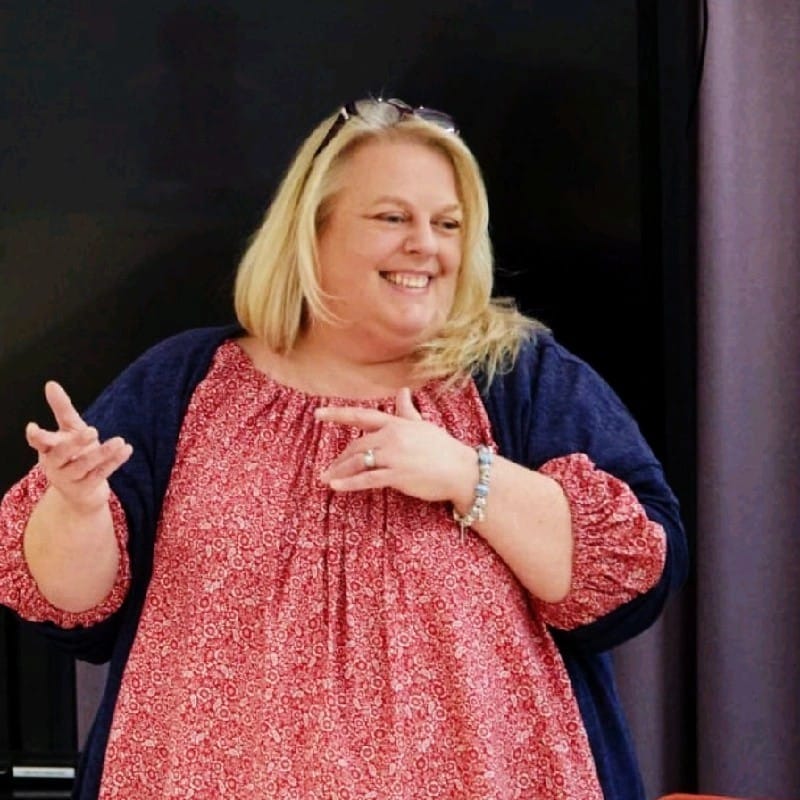
Nikie Forster explores the transformative impact of playful, inclusive learning experiences—demystifying LEGO® Serious Play®, unpacking the psychology of group belonging, and championing truly person-centric approaches to training and development.
In this episode of Inclusion Bites, Joanne Lockwood speaks with Nikie Forster about workplace culture systems.
Foreign.Welcome to Inclusion Bites, your sanctuaryfor bold conversations that spark change. I'm Joanne Lockwood,your guide on this journey of exploration into the heart ofinclusion, belonging and societal transformation.Ever wondered what it truly takes to create a world without? Remember, everyonenot only belongs, but thrives. You're not alone.Join me as we uncover the unseen, challengethe status quo and share storeys that resonatedeep within. Ready to dive in? Whether you'resipping your morning coffee or winding down after a long day, let'sconnect, reflect and inspire action together.Don't forget, you can be part of the conversation too. Reach outto [email protected]to share your insights or to join me on the show.So adjust your earbuds and settle in. It's time toignite the spark of inclusion with Inclusion Bites.And today is episode 207 with the titleInclusion Through Play. And I have the absolute honour andprivilege to welcome Nikie Forster. Nikie is a learning and developmentspecialist who challenges traditional training by designingplayful, inclusive experiences that help everyone feel they trulybelong. When I asked Nikki to describe her superpower, shesaid it is her ability to turn almost anything intoan engaging, inclusive learning experience that meets peopleexactly where they are. Hello, Nikie, welcome to the show.
Nikie Forsterguest
Hi, Jo, thank you so much for having me along today. Pleasure. We met
Joanne Lockwoodhost
probably back in October, September, at a localbusiness coaching workshop series that was beingrun in the local council offices. Right, something like that. We did,
Nikie Forsterguest
we did, yes. I think you were part of Cohort 2. I camealong as part of Cohort 1 and the lady who was running asked me tocome back and do a specific piece aroundmanaging people. And I racked mybrains as to how to do that, where it wasn't just, you know,words on a PowerPoint slide. And I think we engaged over that littlesession. Yeah, we did. And my wife Marie was with us as well and
Joanne Lockwoodhost
she's not normally one to participate in these kind of stand upactivity games. She's always one of the back. She's the introvert. Don't make me standup, don't make me clap. Don't make me put a hand in the room. Andeven she engaged and I was really impressed. We built little Lego models,didn't we? And you gave us a box of LEGO each. We played with it,little cards to look at and design our cars. I think it was,and I think the way you did it was you built it up really, reallyslowly that we bought into the concept. So we had, we were invested inthe vehicle. And then you said, right now, I want you to stand up andput the vehicle on the mat, where it represents where you're atright now. And of course, you've already got the investment in. It's a very smallgap to go from vehicle to in front of you to vehicle, the mat, isn'tit? Watching people,
Nikie Forsterguest
you know, kind of also different in what people made and what people'sideas are. And I think that that's. That's part of what draws me to thatstyle of facilitation is allowing people very much to bethemselves and not just be the loudest person in the room thatwants, you know, is able to express themselves there. And thenit's about everybody being able to think first and thenparticipate. I'm guessing that you
Joanne Lockwoodhost
bespoked the whole. Thegame, if you like the game. The cards. You had a deck of cards whichwe handed out. You had a mat, which I'm presuming you'vedesigned or at least assembled from some templates and things. Butyeah.
Nikie Forsterguest
It'S kind of a bit of a mishmash of things. So very much. Some ofthe tools that I were using were ones that I've made specifically to use ina training arena. But some of the other elements, like usingthe Lego part of that is just learning and development, but it also comesfrom something called LEGO Serious Play, which I do a lot of as well,uses LEGO in a slightly different way to how we were using it, butultimately is about that interaction and getting peopleto create things for themselves. Over Covid, I did a few
Joanne Lockwoodhost
Minecraft events. So again, I guess digging and building inMinecraft and having a little project team and a project leader to decide how you'regoing to excavate or build or construct. Yeah. And achievegoals. I guess in Minecraft it's just a digital version of LEGO Play. Is it
Nikie Forsterguest
kind of using LEGO in. So I. I think Iprobably just need to distinguish because if you've got anybody in your audience who knowsabout LEGO Serious Play and I start talking about LEGO, as in we're justbuilding stuff that. That you'll probably get some emails. So because they. They'requite distinct. So I use it in two different ways. In the way that you'retalking about and the way in which we used it, it was very much usingLEGO as a tool to adiscussion. And so that. That's how we used it.LEGO Serious Play is an actual methodologycreated by the LEGO group back in the 90s, along with twoprofessors and they created something that has aspecific methodology where everybody builds their answer,shares their answer, so everybody in the room gets to hear it. Andthen you can bring all those models together to create a much biggernarrative, a much bigger model. And so it has very many differentlayers to. So depending on what I'm doing will depend onwhich of those is the best option to use.
Joanne Lockwoodhost
So I'm assuming that LEGO Serious Play then, is a trademarkedprogramme and you have to be a certified or part of theLEGO clan to be able to use it, Is that right? Oh, okay, so
Nikie Forsterguest
this is where it gets interesting. So the first part of your question. Yes,it is trademarked. You have to have your little R's incircles. Are they. What are they called? Registered trademark. Yeah, yeah, yeah. So if
Nikie Forsterguest
you're writing LEGO Series Play down, it has to be down that. And. And itis associated with lego. However, they did a reallyinteresting thing. So they started off with training people touse it and running certification courses. So because they. Itwas originally designed for in house, because if you think in themid-90s, you're just talking about mine, Minecraft there in themid-90s, that's a lot of. When the kind of electrical games cameout, a lot of gaming and stuff was becoming big and LEGO was at thatstage where they're going, oh, okay, how do we keep up with this? You,we're just little traditional blocks and things. What do we do? So that's
Nikie Forsterguest
when they collaborated with these two professors to go,surely there's something that we can use in house, that we can spark ideasand conversations with our teams in order to work out how, what our future is,the strategy. So that's where LEGO Serious Play started. Thenthey realised actually other businesses could benefit from this, so they started training people.But in 2010, they made the decision tomake it what's called open source, which was basically,here's all the details, here's how you run it. As long as you know howto facilitate, go ahead and do it. And so youdon't have to be certified. And it's one of my big bugbears, Ican, I can rant about this for quite a while, but I won't. But whenI see people offering LEGO Serious Play certification courses,that's fine. If you're not in learning development, you're not a trainer,you're not a facilitator and you're learning from scratch, I think it's a goodroute to go down. But you. What they're reallyteaching you is how to facilitate and using Lego Serious Playas the underlying method for it. So I run coursesfor experienced trainers, facilitators, coaches and educators about howto use Lego Serious Play. And it's a one day event, you don't have tobe certified to do it. So I did go off on a rant there. Sorry.
Joanne Lockwoodhost
No, that's fine. It's education. I've learned something that's good.
Nikie Forsterguest
But I think ultimately it should always be about the learner and notabout the, you know, whose model it'sattributed to or the theory. Unless you are using thatthroughout an entire programme, it should always be about, well, what's useful for thelearner. How am I going to get the learners to feel comfortable inthe space and open up and engage? And if that means usingLego, then fantastic, let's do that. And
Joanne Lockwoodhost
drilling down into that. It's about each individual learner, not thecohort of learners. Because we've got to be multimodal, we've got to think abouteach learning style, each attention style, each reward.
Nikie Forsterguest
Yes. Pathway, all these kind of things. And too often
Joanne Lockwoodhost
it's a one size fits all. Yeah, I remember
Nikie Forsterguest
a little while ago, but I do remember it quite vividly. I went alongto a training event and I was writing mynotes. I'm not a copious note taker, but I do like making just notesor scribbling down things or doodling or something like that. And I wasactually told by the trainer to stop writing.Yeah. And it took me a moment to kindof. To kind of what? No, stop writing. You have to listen. That'show you're going to learn. You have to listen. Well, you're not much of atrainer if that's what you think. And I didn't saythat out loud, that was in my head, but it took me a while andI'm not normally a person that's lost words. But the idea thateverybody has to learn in the same way.I think anybody who's worth their salt as a, you know, in learning and developmentunderstands that. However, not everybody does. Some people are veryfocused on, well, this is how I learn, so that's how I'm going to trainor teach. So, yes, I think it's really important to understand
Nikie Forsterguest
and not just to design in that way. So have aworkshop where all of that is incorporated. But to actuallybe very much in the moment of this isn't landing, whatdo I do differently? Or this is going great, let's do it a bit more.But that person over there isn't Quite engaging. So,you know, it's very much around that for me it's beingin the moment and making sure that everybody's getting what they need or want. Ido quite a lot of stuff pre workshop, actually, when I'm running a programmeor working with clients in order to understand who's turning up and whattheir needs are. And I think that's reallyhelpful, not just from my perspective of understanding who's coming intothe room, but I tend to send a form witha video attached to it. So they get to see me before they turn up,they get to understand a little bit about how the programme's gonna run. Cause I'mquite informal in the way that I do things. But everything has apurpose. So I think if people understand all of that upfront, theycan make better judgments when they turn up about how theymight want to interact. I remember seeing in the old
Joanne Lockwoodhost
days, yes, Steve Jobs at Apple and he was veryfamous for his launch and the way he stagecraft everything.I'm not sure the exact point I'm trying to make here, butI think what he did was he used to do his presentations inside 8minute or 10 minute segments. So we would talk for a while,then he flipped to a video and the video would flip to a livedemonstration and then that would flip to involving somebody elsecome in and they talk about it and have a discussion and thenhe'd move on to the next thing. So I've always taken that when I'm deliveringtraining, delivering anything, I want to go through this cycle where I say, here'smy 20 minute segment, I'm going to talk, I'm going to video, we're going todiscuss, we're going to write something down and then we're going to do some Qand A and then we're going to rinse and repeat, do the next topic. Yeah,
Nikie Forsterguest
it is keeping fluid, isn't it? Yeah. And now I've got
Joanne Lockwoodhost
a puppy. I've learned even more about those kind of techniques where you're constantly tryingto feed the brain and move from one state to anotherstate before the person shows the teeth and goes out of grounding it. Yes.
Nikie Forsterguest
Yeah, it is, it's about. I thinkthe kind of. The real depth of it is psychology rather than anything else. It'sabout understanding people. And I think a lot of what I do, regardless of thetopic that I'm training, it nearly always, always comescomes back to understanding yourself and understanding others.Everything else on top of that is just extrainformation that you can sprinkle over and go. And I'm going to use that inorder to do this. But I think self awareness,whether that's innate or whether you have to learn it is the firststep and then understanding others and how you reactto them is the bit that will then get you those, that kind of betterinteraction. Those are what you just said. There are the key
Joanne Lockwoodhost
tenets of emotional intelligence, aren't they? Yeah, yeah, absolutely. And Ithink, I think you can learn it. I would say myself that Ihave learned self awareness, self management,building relationships, all the attendance of those emotional intelligence thereover, over the last 10, 15 years. Before that I was, I wasunaware of who I was, how I showed upand I was unaware what if that mattered or not.So I think yes you can, I think you put people in a space wherethey go, the light bulb comes on and go, ah, okay. The world is muchsimpler if I understand who I am. Yes.
Nikie Forsterguest
Yeah. And I think it's really interesting to think about howwe get to that point of self awareness and I do think some peoplehave more insight than others naturally. Butlike we just said, I think it can also be learned and Ithink there are aspects that you can do yourselfin order to learn that, but there are aspects that other people can help youwith as well. So yeah, simple things. Like years andyears ago I did my first personality profiling. Yeah. You know,thing where you find out what your colours are and the stuff and then whatthat means and then whether you like the results of that or not.
Nikie Forsterguest
So that I think was probably my first journey into it being. But I hadsome very good managers when I was younger, particularly startingout in my training career, who were more coachingmanagers which, which worked well for meto a certain level. Although I'm quite a pragmatist at heart. SoI like to be involved and I like, like for me to have an opinion.But ultimately I need to know why. Why are you asking me that? Why, whyam I doing it this way? And so the managersthat I had at the time understood that about meand was able to help me find my own way,encourage me to be the me that I am now. Interms of. Yes, I do turn up with suitcases full ofprops in my training sessions and I always have to a certain extent. But Ithink in those early years when I was, my world oftraining experience was more about sitting in a room and seeing peopletalk at, you know, it was more of a presentation or a lecture. Andso that was my experience of being content. And you're going to have it.Yes, exactly. And I'm the expert on it and you know,you have to ask me the questions. So when, when you have an experiencethat you then think, well, I don't want to do it that way. And isthat okay? You need that encouragement. You need people to go, yes, it's allright to do things differently. And I was very lucky that I had that. Yeah.
Joanne Lockwoodhost
I tend to always assume that somebody in the room probably knows more than Ido about the topic. So I never want to consider myself the expert.I'm just there. I often say when I start talking is that I'm not hereto tell you what to say, think or do. I'm just asking you to thinkabout what you want to say, think or do. And Iobviously, I always have this, the acronym WIFM W I,I F.M. you know, what's in it for me? So I'm always thinking about whythe person's in the room, what they're hoping to get out of it. I reallywant to hear why they're here, why they're there and what they're expecting. Because I.Yes, if I'm talking about this and everybody else and everyone wants totalk about that, then I need to adjust. I can't force them to my sideof the fence. I need to meet them. Meet them where they are. Absolutely,
Nikie Forsterguest
absolutely. And I think it's very much when you treat people likeadults, but you're telling them that you're treating them like adults,I think you get a much better response. Again,kind of having, I'm not a great delegate in workshops becauseI sit there and I go, why are you doing that? I just want toredesign everything. But one of the things that I really strugglewith is when people open up a workshop and they say thingslike, right, everybody has to switch their phone off. Or even worse,here's a bowl in the middle of the table. Everybody put your phones in therebecause I don't want you to be distracted or that's just treating them like a5 year old. Not that 5 year olds have phones. Well, they might do, butyou know, it's like everybody's busy. If you need to use your phone, you useyour phone. But just be considerate. I don't even mention phones. Ihave to be honest because I think setting theexpectation for people about we're all adults in the room.Nobody is, you know, saying you have to be here.Nobody is saying they have to participate. But when you do, you do it withconsideration for others. And we do it with respect and things like that. Yeah.So I think setting expectations is important, but doing it as anadult is even more. Yeah, I tend to try and start with an expectations
Joanne Lockwoodhost
contract, if you like, where we are part of whiteboard. So what do weexpect of each other today? Being present? Be attentive.
Nikie Forsterguest
Yeah. Create space for learning, don't jump to conclusions,
Joanne Lockwoodhost
allow people to have their opinions or those sort of things. So I would tryand do it that way. And that's why I say be present is kind ofmy way of saying, if you could turn your notifications off, silence thething. But I also, look, if you need to make a phone call, you're busy,you want to make a phone call, please step out, go and go to thetoilet when you want, use the phone when you want, but do it outside theroom. I ran a workshop a little while ago, probably ayear ago, and I think it was the chief people officer wasin the room and they constantly were sat there on the laptop going.And then their phone was beep, beep, beep, beep, beep, beep, beep. All the otherdelegates were going, this person's supposed to be setting an examplehere. And I felt really, really uncomfortable because I could feel everybody else wasuncomfortable and I didn't want to sort of say, or you stop it.But I was. And they were looking to me as a kind of, you know,because you're one of your training, you're the leader, aren't you, to take responsibility anddo something. And I, I wasn't sure how to do it without beingkind of authoritarian. I didn't want to be authoritarian. I, whatI, I think what I let happen was I let the roomdecide it was unacceptable. Yes. Without me saying it. AndI, and this person, they were just oblivious. Oblivious to the impact they were havingon everybody else. And I just. It's coming back to that self
Nikie Forsterguest
awareness bit again, isn't it? I think in the past when I've had that,not with laptops and stuff, but when somebody's been like on the phone andstuff, depending on the room, sometimes I have justsaid, would you like us to wait until you finished? You know, if it's beengoing on a while and they go, oh, no, I'm really sorry, or actually, yeah,no, this is really important. Okay, do you want to take it outside then sothat we can focus on what we're doing rather than on what you're doing? Orsometimes if they're repeat offenders, then I will walk aroundthe room and just stand at the back of them while I'm stilltalking. So everybody eyes is on me. But ultimately that personrealises that that's a good technique and they realise then. But I'mquite happy to. I'm pausing here because I was gonna say I'm quite happy tocall people out on it, but this is something that you taught me inone of your posts quite a while ago. Now. I remember seeing this and it'salways stuck with me. You did a post about notpeople out, but calling people in. And that'salways stuck with me. And I really like that. And so I, Itry and do that more and more. So I don't try and embarrass people andI don't try and make them feel as though they should know that what they'redoing is either wrong or unacceptable because they might not know, they might notbe self aware, there might be other things going on for them. So I tryand do it in a way that, you know, allows them to feel as thoughthey're not being told off and just making them feel more self aware thatactually what you're doing is distracting or what you've said isn't appropriateor, you know. But allowing them to learn from itrather than feel defensive. Yeah, that's why I try and
Joanne Lockwoodhost
do the contract at the beginning. It's. We all agree that we needto be present, we all agree that it's a good idea not tobe distracted with other things. And we all agree that if you want to usethe phone, you want to go to the toilet, you want to do anything else,you feel free. This is not primary school where you have to put your handup and ask for permission. You just stand up and walk out and it's absolutelyfine. Yeah, but the words that you use there to
Nikie Forsterguest
describe that is the words that I use as well. It's about expectations. So whatexpectations do you have of what we're doing? Of me? Of your peers,rather than using the term ground rules. Because again, assoon as you start using that rules, we're limitingpeople. Yeah, again. But the group should decide. It shouldn't be me
Joanne Lockwoodhost
dictating, it should be the group. I mean, if the group said, look, actually we'reall trying to close a deal at the moment and we're all on standby andif the deal happens, we've all got to jump up and go and do something.I go, okay, it's going to be a rough ride, but I'll factor that intomy meeting plan or my lesson plan and I'll meet You where you're atand you're paying me to be here, you want me to do agreat job. As long as you take away those key things, I may skip halfthe content because you're not listening and go straight to some action stuffwhere you have to be engaged because you're doing things. Yeah,
Nikie Forsterguest
yeah. But again, you have expectations, setting. Yeah. I've chaired so many
Joanne Lockwoodhost
board meetings where board members sat around the table with theirphones and their laptop and someone's giving a report and everyone's doing this ontheir own laptop, their eyes are down and then. And then when it's their turnfor report, they give their report and everybody else's eye down. Do you thinkhalf of you haven't paid attention to anything that's going on? And you look atquestions at the end or people disagreeing with the minutes, you think,were you not there at the time? No, you weren't actually. I remember you weresitting there writing your own personal emails while you were, while you were around thetable. And it is frustrating, that respect thing. If you want peopleto listen to you, you need to give people theirspace. And that's that self regulation, that emotional intelligence of understand theroom, isn't it? Yeah, no, absolutely. And I think that's. That's one of
Nikie Forsterguest
the reasons why I gravitated towards the Lego series play thatwe spoke about earlier, was because as well as everybody havingto build their own models in a proper structured session, I would then go aroundevery single person and ask them to explain their model,how they see it, so there's no wrong answers. But also, then I getthe rest of the group to ask questions of the model,not, not the whys, you know, why have you done that? But I see you'vegot a pink flower on the edge of your model there. What does that represent?So in order to ask those questions, you have to havelistened to what the person says. Otherwise you'veasking a question about something that's already been said and itdoes. And it drives deeper listening, but it alsodrives a deeper discussion. Because some people, even when they've built something,will go, well, I built this and it represents howI'm motivated on, you know, do my work. And that's all they'llsay. Some people will go into it very elaborately, but when you start askingquestions about, well, what. Tell me about that pink flower on the edge of themodel. What does that represent? And even if they say, oh, I don't know,I just like the flower, you then follow it up with well, now that I'vepointed out, what might it represent? And they can give you an answer, and theyalways do. They'll say something like, well, actually, that's probablywhat I'm hoping it be like. But it's right on the edge. Itfeels as though it's slightly out of reach. And you get these real deepinsights into things. And the level oflistening and contribution really shiftswhen you do something like that, rather than the standard, hasanybody got any questions? And everybodygoes, okay, how close to lunchtime is it? I might not answer becauseit means you're going to be here for another five minutes and I'd rather gonow. So, yeah, it's interesting how you can shift the conversations along.
Joanne Lockwoodhost
Yeah. One of the things I liked about the exercise I did with you, withmy wife and others was that initial phase whereyou're building and you're sharing a pile of Lego with somebody else.You're interacting with the person next to you who you may not know is alsoa very good bonding opportunity. And you're discussing and you've broken thatice in your one to your left, one to your right,and you, your three. And if there's another three, you overlap and it almostlike infects around the table. You start to have conversations. You're standing therequeuing up to put your model on the map, on the mat. And againyou're, oh, what's yours? And what's yours? Where are you putting your one? And itagain creates that. I'm going to use a puppy thing here. So when puppies meet,all they want to do is sniff each other's bums and run around, around circlesfor five minutes. That's that they want to bond and get to know each other.And I think sometimes when we're. When we're engaging in workshops and learning and development,we're not allowing people to do the puff stiff. We're not allowing people to getto know each other and to. And get that human value. It's all me toyou, not us. And we. Absolutely.
Nikie Forsterguest
But I think also there's an element of. So as a traineror facilitator, allowing people, you know, giving somebody an activity that allows them todo that allows then people to go, okay, right. It's. I'mallowed to talk, I'm allowed to interact. I think sometimes when you go into aroom, particularly if you don't know anybody else there and you're not quite sureof the situation, then that can be hard, just tostrike up a conversation and go into small Talk and tryand engage and work out well who's who. And you know, itcan be very intimidating even in an in houseworkshop where you know that there are gonna be people in the room thatyou've worked with but you don't really know them and how's it gonnawork? And you know, you need something at the beginning that justallows people to feel comfortable in just starting to talk.I think as a very young trainer I expectedthat to happen just naturally. All these people would show up and nobodywould talk and I would almost be like, have you all lost your voices?And I look back at that now and think, how horrendous must that have beento be that person turning up who was probably a bit anxiousand a bit worried about how it was going to work.Just, you know, to sit there and well, no, I haven't lost my voice, butI'm really, you know, I don't know how to do this. I don't know howto interact with these people or I don't want to, I don't actually want tobe here, maybe, you know, all those things. So I think overmy 30 odd years of being a trainer, I've learned an awful lot. And Ido look back at those early years and think, oh, if only somebody had kindof steered me in a better direction in how to open upa workshop and make people feel more comfortable in that space.
Joanne Lockwoodhost
I found that if you, if you pounce on people cold,that makes people very nervous and very worried because everyone's sitting around the table going,oh, gonna bounce on me and avoid eye contact. Orsometimes I still do it and I know I shouldn't. Maybeyou start and go around the table. So everyone sort of think, oh, I've gottime to think, time to think what I'm saying. What am I gonna say? Yeah,and you've got to try and figure out who you start with because you're thinking,okay, I've got to find the person who I think is going to be gungho for this. I find the extrovert, start with you and work around.But I've also found that if you ask people to introduce themselves to the personnext door first. Yeah. So they're used to speakingout loud to somebody and then once they've broken theirdark, they've broken the ice on that, then they're happy to talk to the groupbecause they've already shift their voice has already been heard once. Yeah,
Nikie Forsterguest
One of the activities that I use quite a lot because it works quite well.And again it does link to Lego. I keep going back to Lego a lot.I have a whole tub of deconstructedminifigures. Right. Okay. Lots of accessories. And Ibasically get people to build their own minifigure that representsthemselves as and whatever the topic is. So it's usually a leader ora manager, because that's mainly what I deal with. Fade of the lightsaber or something.Well, actually, some people do, you know, but again, it's asking them, howdoes that represent you? And then depending on the size of the group, everybodyintroduces themselves to everybody or they get into small groups and theyintroduce themselves. But it's about the representation. So you know that they might well havechosen something that looks like Darth Vader with a lightsaber. When you say to them,because how does that represent you as a leader? Then they have tothink a little bit more. Cheque people.Yeah, I have a very commanding style of leadership. Okay, let's see how that playsout. When we talk about leadership styles and stuff. Again, it gives somethingfor somebody to do before they then start to talkand they've got a prop there to be able to talk about, soit feels a bit safer rather than just to say, hi, my name'sNikki. I think my leadership style is a bit like DarthVader. I don't think anybody would actually say that if they didn't have a minifigure,you know, that they could construct into something with a lightsaber andstuff. But, yeah, I think it's really interesting, those allowingpeople to feel comfortable in that opening part.
Joanne Lockwoodhost
So how did you start your career then? You weren't always this superstarLEGO deep learning specialist. What was yourambition when you left school, then? My ambition when I left school
Nikie Forsterguest
was to be a Radio 1 disc jockey. I wanted to beon the radio. And I did actually do a bit of time athospital radio, which I loved. And I also did a bit of time at localradio. Radio Victory was the local radio station.Yes. Yeah. Trout Road. Yeah. Off to the St.
Joanne Lockwoodhost
Marie's Church. Yeah, it was. So I
Nikie Forsterguest
did. I did several stints with what was called Victory fm.It came back as yes, and again,I loved it. It was a great experience and I did a lot ofpresenting and producing and thought that could be a wayforward. It was a real. Really helped me learn how to talk topeople in terms of interviewing andquestioning. So I did something called Coffee on Victory fm. It was amorning stint where I used to get people in andinterview them. So that was a big Learning curve for me. But I soon realisedif I wanted to do it professionally there's way more rules and regulations and thecertain things you're allowed to say and not allowed to say. And I kind ofwent off the ball a bit because I don't do rules very well.I. So I kind of deviated a bit. I didn't know what I wanted todo after that. So I started working at B and Q. Very different from wantingto be on the radio, but it was just a part time job. But actuallyit was B and Q that allowed me to become a trainer ina very weird and wonderful way because it was the, it was the knees Iwas working on the decorative section and everybody was rag rolling their walls andcrackle glazing anything that wasn't nailed down. And we had all these paint effectsthat came into the store and nobody knew how to use them. And my manager,yeah, yeah, my manager at the time knowing that I used to do theradio stuff, basically said, Nick, you know how to talk. Go and demonstrate this stuffand get it sold. Okay. So I took myself off into a corner of thestore and I was, you know, kind of trying to work out how to useit and then people would turn up randomly and ask me what I was doing.And then that kind of evolved into me putting out some tannoyannouncements that I was going to do a demonstration. And then that escalatedinto me doing way more demonstrations on things. AndI also became their interior designer for a while quite randomly.But in true Nikki style, I didn't just want to be on the shop floordoing interior design. I decided that I was going to put on some evening classesfor the customers to come in and do like a six weekcourse on all this interior design stuff. I didn't even know I was trainingat that point. All I was doing was I didn't want to be on theshop floor, I wanted to do something else.And so the cafe, I was at Hedge End at the time when it justopened, the B and Q there and they had a mezzanine floor witha cafe on it which closed at 6. So from 6 till 8every Thursday for about six weeks. I basically commandeered that and set
Nikie Forsterguest
up wallpaper, trestle tables and had all this, all thisstuff going on. I had loads of people turn up little certificates at the endof it. And it was through that that somebody saw me and say actually you'dprobably be quite good at doing induction workshops for us.So that's when I really got involved in doing what I'd call official training.I did induction workshops and became part of the the team atBQ and then became a management development person and then eventually becamethe regional training manager for the south, the little region that I wasin. So I learned most of my formal training withBNQ in. It's what I'd call its heyday of learning and developmentand then everything else since then is different companies and different ways of doing thingsand just learning. Every time you have differentculture in the business or different people that want training to bea slightly different way, but all the time the creative element has alwaysfollowed me just doing stuff that engagespeople to do things rather than me just study in front of the roomtelling people stuff. So, yeah, so that's how I gotinto it. Wow. So
Joanne Lockwoodhost
BNQ head office was. It used to be at Eastleigh, didn't it? At one time
Nikie Forsterguest
it did, yes. Yeah. I didn't go there very often, but yeah, it wasjust up the road. But I know from hearing other
Joanne Lockwoodhost
storeys that BNQ are an excellent inclusive employer, thatthey employ more people over the age of 60 than most. They're reallyfocused on developing people who are retire but useful.
Nikie Forsterguest
Well, absolutely. Have a disability, employ lots of people with downs.
Joanne Lockwoodhost
Lots of people with learning disabilities that they are a really inclusive employer.
Nikie Forsterguest
Yeah. Certainly in the time that I was with them for 13 years and certainlyin the time that I was with them, I raved about bnq.I really enjoyed their approach toemployment and allowing people to doto better themselves, but also in a way that worked for them.It wasn't, you know, a hard line of this is how it's done. Have
Joanne Lockwoodhost
you noticed a generational shift in how people want toengage in training? I mean, we hear that Gen Z, GenAlpha, even younger millennials are. Theywant reward based. When we were talking about puppies earlier, you need to keep feedingthem traits. You know, people talk about gamifying and stimulating the brainchemicals to get people to be hyper and pumped up or is dotraditional training methods still work for the younger generation?
Nikie Forsterguest
It's an interesting one and I think I might struggle to answer that becauseI think what I've always done is hits the dopaminebecause I've always had activities that get peopleto do the thing and get people to explore it and design it in away that is quite short sections before we move on.But I do think I've got a son who's 14 and I do recognise withhim that the shorter, moreinteractive stuff will definitely sit better than you know any longform of learning. He talks about his teachers and the ones thathe likes the best are the ones that will engage in conversation, will setactivities for them to do, rather than the kind of thedrawn out side of things. So I noticed my speech has slowed down abit because I'm trying to think and I see a lot of different generationsin the work that I do. I mean, a lot of the stuff I dois around management and leadership, so it tends to beprobably mid-30s, upwards for most companies whenI get involved in that. But I do a lot of stepping intoleadership as well. And you tend to get younger generationsin that. I do a lot of work with the NHS around leadership asmindset rather than leadership as a title.And I think that sometimes I see them turn upalmost like I've got a full day of doing this, because they just usedto being on their feet and doing stuff and things, but usually by the endof it, I've got a good thumbs up. And I think it's about engagement. Ithink it's always just been about treating people as they want to be treatedregardless of age. The Platinum Rule people often. Well,exactly. People forget that they always go for the Golden Rule. Treat people as you
Joanne Lockwoodhost
want to be treated, but. But you've got to step into them. You got tobe person centric. Yeah, yeah. So if you've got a, you know, a
Nikie Forsterguest
group of people who are more quieter, you know, morereflective, then you need to give them more time to reflect. If you've got agroup of people that are all in veryloud and boisterous and wanting to, you know, kind of do everything at100 miles an hour, then you might need to speed things up. But it's alsolooking for the outliers as well. You know, just because 90% ofthe room is that you still need to make sure the 10 isallowed to, you know, get what they want from it as well. And
Joanne Lockwoodhost
I suppose I actually want to have fun myself, you know, facilitating a group.I want to come out at the end of the day going, high five. I'veenjoyed that. Yeah, we've all bonded. I want you to think I've done a goodjob. So it's. You're trying to keep it active for yourself because, you know, Idon't know about you, but I've run the same course for an organisation I thinkI ran. I think I deliver something like 40 versions of this session todifferent cohorts over the course of six months. And by the end of it, youthink Have I told that gag before? Have I said that? Did I tell youthat or did I tell the last group that? And it's like by the endof it, your brain is like mush. So you want to. You want to enjoyit yourself, don't you? And I think the more you enjoy it, the more youraudience are going to enjoy it as well. Absolutely. And I think
Nikie Forsterguest
the way that I kind of get over that is by allowing moreof the audience participation to come through,because then every session is different, you know,I think that there's always a structure to what you do, of course, and there'salways key points that you want to dig at home. Butwhen the audience is coming up with their answers and what happens next, andyou know, if we go off on a tangent, then fantastic, because that's what's neededin the moment. But you're right at the end of it, you can usually, usuallytell if it's landed or not. I do.I think for those people who are slightly moreextrovert and vocal in how they're getting thatthey're learning, it's very easy to read those. I think it'sharder to read those that are slightly more reflectiveor internally thinking. Andsometimes I do have to just verbally cheque how, you know,how we're doing. Are we on the right level?Because I do find those sometimes slightly harder to read.
Joanne Lockwoodhost
Yeah, it always surprised me because I tend to finish my sessions with atell me the one thing that is going to stick with you out of today'ssession or the one thing you're going to implement right now and go around theroom and ask people to just verbalise that. And I think, wow, you picked upon that. Wow, you picked up on that. And the diversity of things thatresonated with people. And it wasn't all the point I thought, thought they were goingto go for. They picked up something really random. I thought, wow, that was athrowaway remark I made an hour ago. And thatreally stuck with you. I thought, okay, that's brilliant. And soagain, it's recognising that everyone's going to take away something different and everyone hears somethingdifferent and everyone's situation is different, aren't they? So it's alwayssurprising me. And I think it's really good because by sharing to the room whatyou're taking away, it gives other people those nuggets as well. So they're alwaystheir self appear to be learning again, aren't they? Oh, I'm taking this away becauseI'M taking that way. So it reinforces that withoutme having to do a summary at the end. Yeah, yeah, no,
Nikie Forsterguest
absolutely. And yet absolutely spot on with that. The throwaway comment thatwasn't in your design notes. You had no intention of saying it when you turnedup in the morning. And that's the thing that they're taking away. It always makesme smile at that. But that's the beauty of listening to the room and pickingup on what other people are saying and having thefreedom as a trainer or facilitator tointerject, you know, and add storeys that. That make sense for thatmoment, I think. You know, just sticking to your script.Well, no, that. That's what we've got, so that's what we'll do. That,you know, it doesn't help. So I think it's great. I mean,
Joanne Lockwoodhost
there's a technique. I don't know if you heard this. It's called newsjacking. So whatyou're doing is you're taking current affairs or something of the moment. Yeah.And bringing that into the session as an anecdote or anexample. Everyone's. Everyone's heard the news today or everyone's aware of what's goingon in the world. So if you. If you ignore the Middle east, you ignoreRussia, you ignore Iran, what's going on there at the moment, then you'reignoring the world. If you can bring some of those examples in.
Nikie Forsterguest
Yeah. Whatever that may be. And then it makes it completely off the moment.
Joanne Lockwoodhost
Relevant. Yes. Yeah, no, absolutely.
Nikie Forsterguest
I think making it relevant is really important, I think, alsoallowing people to work out for them in.In that moment what's going on for them right now. Because quite often I getpeople turn up to management or leadership programmes that aren'treally managers or leaders, that they're perspective managersand leaders, you know, and it's kind of allowing people to say, okay, thisis what we're talking about now. Might not be something that you do for sixmonths down the line, but actually, everything that. Generallyspeaking, everything that I talk about is just people skills. So it can translateinto talking with your peers, talking with suppliers, talking with stakeholders.I can't remember why I'm going off on this tangent now, but.
Joanne Lockwoodhost
I'm with you. I'm hanging in. I mean, I think what you're trying to saythere is. What you're trying to do is help people build a kit bag ora toolkit. Yeah. Of various things. You know, if you're. And you're young,your toolkit's quite Empty. But you get a couple of screwdrivers, you get a coupleof spanners and they think, oh, I need to, I need to do this. Ihaven't got the right tool. I'll go and buy one of those from B andQ. And then you put it in your bag. And then later, a year later,you think, oh, I need that one again. And then you've got that repertoire, thoseanecdotes, those sayings, those thought processes. Yeah.
Nikie Forsterguest
And then being able to reflect back on, you know, oh, I went to thatworkshop when we talked about that. Right, where's my notes about that? Or go andspeak to somebody that was at the workshop before. I think that was anotherthing that I was going to bring up actually, as you were talking about atthe end of the day where you said about what's the one thing you're takingaway from today? So I'm a big fan of what I calldistracted reflection. Notmaking full on action plans at the end of a workshopbecause I don't believe that people have everything they need at the end of aworkshop in order to say, this is definitely what we're doinggoing forwards. I think it's about giving people everything they need in aworkshop to start the brain and allow the brain todigest it later down the line. Because when you say to people, right, come upwith a really good idea, idea, right now you are five minutes off you go.You might get one or two, but it's very unlikely. You're more likely toget that idea when you're walking the dog or, you know, when you're satreading something. Oh no, that. Oh yeah, I remember that. Well, that could work.It's always kind of in the moment. And so I'm really keen whenI do my workshops to explain that to people that at the end of thisyou're not going to have a set of three action points that you have totake away and do by three months time and then reflect backon them. Because the brain doesn't work in that way. The brain works in away that it needs time to mull it over and digest it and then workout, well, what am I doing with it? And it also takes the pressure offpeople as well, I think, to think that they have to do thosethings, particularly if somebody's, you know, quite anxious about,well, I've said I was going to do this and I really should be doingit, but I'm not gonna have time to do it. Or actually the plan's allchanged. Yeah. And people have to oscillate between
Joanne Lockwoodhost
operational and strategic thinking, don't they? It's like, what affects metoday, what's my burning bridge, what's biting me on the backsideright now, versus if I invested the time to change theprocess or to enhance or to do things differently,I would do it this way in future, but I can't because that's stopping me.Which is why I always tend to ask, what's stopping you? What prevents you fromdoing these things and what's the most important thing you want to do? And hopefullyin the room is generally a manager or a lead or a supervisor. They're hearingpeople say, well, this is what's stopping me. And I go, of course, time, money,all these kind of things are going to be stopping you. But what you shouldbe saying is nothing is the answer. What's stopping you? Nothing should bethe answer. So what do you need your manager to do to allowit to be nothing? What are the blockers, is what I'm saying. And then let'sget those out on the table. Yeah, yeah. Because
Nikie Forsterguest
again, as soon as one person says something, they go, oh, yeah, no. And it'llspark a conversation for, for something else. And it allows them toreally delve down into what the challenge is rather than just the I don'thave time. Here's a tip for anyone listening. I
Joanne Lockwoodhost
found that Chat GPT is really good at reading handwriting. So what I dois in my workshops, I get people to write on Post it notes.The four questions I ask is, what will I do? Will ratherthan should will I do? What will we do? What's the priority and what's stoppingme? I get to write on the individual Post it notes and go around theroom and at the end of it, I take a photograph of all the PostIT notes on my phone in ChatGPT and say, right, create a spreadsheetwith all the we's, I's, priorities and stoppings in aspreadsheet. I then feed that again back into ChatGPT andsay, I want you to write me a delegate synthesis pack now with the 30,60, 90 day products with all the key actions and all the key points andall the things that people were saying. Summarise back, which I then send to theleader or the booker and say, this is what your cohort said,this is what their actions are, this is what they want to do about itand this is what's stopping them. I like that. Yeah. Do you want to havea follow up in 30 days? No one ever says, yeah, let's have a chatabout this. They always take it. I've no idea if they read it, but it'sa very easy way. Now, I say just take photographs and chatgpt willdo a good enough job on the handwriting. Yeah. It doesn't have to be aperfect. It's better than typing it in because I used to sit on the train,train typing it in all the post it notes. Type it in. Two hourtrain journey. I'll have them all done. But yeah, now, now photograph I take. Iput them all on a whiteboard. Take a photograph of the page, put one. Yeah,yeah, yeah. I could, I could turn this around in 20 minutes. Now acts as
Nikie Forsterguest
a really good reminder of the day as well, because any, even if they don'tdo those things in 30, 60, 90 days, it will be a reflection of whattheir intentions were. And I think that's really important to lookback on. And if someone does something with it,
Joanne Lockwoodhost
I don't need any gratitude. It was their work. If the person that booked meas a trainer or facilitate for the day, they take that away and go, oh,that was useful. If they take one thing out of it, that's fine. Andthey may never thank me, they may never come back to me, that's fine. Atleast they got the document. I know I've done a good job.You never know, they may refer you saying, oh, yeah, when Joe came in, shegoes, this is fantastic, that's what you want. And it's part of the sales pitchas well. So you can sort of offer it as your value add, isn't it?Your bonus content, if you like. Right. So Iliked about your session, we got to keep the Lego. I was sort of thinking,oh, I built my little model here and I was thinking, oh, this is really.He said, you can take your model away with you. Oh, what, really? Oh, oh,I've got my model and it's that value.
Nikie Forsterguest
Yeah, yeah. I do tend to do that with thesmaller bits of Lego. As I said, when people build their minifigures atthe beginning of a workshop, I always allow them to take it away because, again,it acts as another little element in their brain to reflect back on whatthe day was, what it represented for them. Sometimes Ibookend, so I get them to build their minifigure in the morning, they seethemselves as a leader and then at the end of the session get themto add one accessory. Having been through theworkshop, that they now recognise about themselves as a leader or what they want tobe in the future or whatever it is that we're doing. So they rummage aroundfor another accessory and again they go around and talk about it. So then theytake it away and they end up putting it on their monitor or on thedesk, or even if they take it home and talk to the partner about it,take a. Photograph, stick it on LinkedIn, tag you in, all that kind of stuff.Absolutely, all that stuff. But it's just an extra reminder. It's an extra littleneuron in the brain that's connected somewhere that said, this iswhat we did on this workshop and this is what it meant for me, andthat'll stick with them. It'll make it sticky for a lot longer. We
Joanne Lockwoodhost
talked about inclusion and in the narrative wealso use the word belong. And all of these little techniquesdraw you in. This place is for me, I belong here. Nikki's forme. Yeah, this, this training's for me. It's. I've got something, I'm taking it awayand I, I feel that, as you say, the dopamine hits the brain, chemicals arefiring off and you come away going, oh, that was really good. So you havea positive experience of the whole thing. That's what, that's what you're after, isn't it?
Nikie Forsterguest
Yeah, yeah. Because if somebody's had a positive experience,they're much more open to learning. That's ultimately what, What I'mgearing it for is if they feel comfortable in the space and theyfeel comfortable with how to express themselves, they are much more likely toretain the learning that they've had and that then becomes muchmore worthwhile in terms of somebody having employed me todeliver. But them, in terms of having spent their time in term and turning up.
Joanne Lockwoodhost
Are you able to translate this into online or are you more aface to face person? I prefer face to face,
Nikie Forsterguest
definitely. I do do some programmes onlineand I usually send out a workshop pack if I'm.If I'm doing. If it's something like a. I don't tend to dodays, I tend to do programmes, shorter sessions, over aperiod of week. And so in the past, what I've done is I've sent outa workshop pack where I've actually had some form ofactivity that I want them to do, but I've put it in almost like aparty bag, like a little paper bag that I've sealed down with a snicker onit. This is Workshop one. So everybody, you know, we're all online, right?Everybody get your, your, your pack, your little parcel for Workshop one.And so Again, dopamine. We're all open. What is this? You know,opening it up and there's something in there, you know, thatit may be a deck of cards. It may. And so, you know, they're goingthrough those. Or it may be a bit of Lego that they have to build.It could be anything. But again, it allows itto be more than just. We're juston the camera and the microphone and talking and I want to go off andget a cup of tea or I'm just distracted by the dog or something. It'sgetting them physically involved, but also the excitement of, oh, I've got theselittle presents that I'm going to open up on each. Each session. So that'show I tend to play it if I'm doing online stuff.
Joanne Lockwoodhost
I think that's what impressed me about the session that you ran, that I wasa part of, is the amount of forethought and prep and stuff.Stuff that was. It wasn't just you stood up with a side deck and talked.There was clearly so much depth there of thematerials you produce. As I always said that these are customstuff. You've designed these, pull these together. And that's not cheap to pulltogether either, is it? You must have invested quite reasonably in the. Inthe card, decks of card, the Lego. You give away, the mats and stuff. Youmust have. Yeah. I mean, you know, a lot of money. Some of this.
Nikie Forsterguest
So, sorry, talking over the top of you. Some of this stuff I've designed specificallyfor me to use, but some of it I design and then sell to othertrainers as well. So it has like an ongoing effect. Butthe Lego, I think it's not that expensive at the end of the day.And for the value that it gives in terms of the experience,well, minifigures. Two pound fifty or thereabouts, isn't it? So one minifigure.Not if you buy Pre Loved minifigures. Pre loved. Okay. Off ebay.
Joanne Lockwoodhost
Yeah. Yeah, I'm all for recycling and upcycling and that kind of stuff.
Nikie Forsterguest
Good old ebay gets quite a lot of my business. Yeah. And I get allsorts and you can. You can get all sorts on there and just give thema little bit of a wash and stuff and they're. They're perfectly good forreusing. Stick them in the dishwasher in a bag or something. Yeah, well, yes.Yeah, that's a good one to do. But, yeah, I thinkit doesn't matter whether it's half an hour or, you know, asthe six part programme. I think the same effort should beput into that experience for both of those.
Joanne Lockwoodhost
I do that. I produce lemonade cards, A6,A5A. Well, look, tiny ones. I have props, I havelots of videos which I've curated over the years and little games I do. Soyeah, it's. I even turn up with a, a crate of, full of Fidgettoys and baskets. I always provide pens andpen holders. I've got sweets, I've got gluten free,vegan compatible sweets which I give out thiscoffee biscuit. So I turn up and I spent 15 minutes to get the roomready and then when people walk in they go, wow. It's like, ohyeah, you can see the meat and the sweets in the biscuits. You think, yeah,this is kind of. People are eating, they're enjoying, they're settled down,they sit there with the Fidget toys. Yeah, help yourself with the Fidget toys.
Nikie Forsterguest
Absolutely. And it tells people, as soon as they walk into the room,it tells them that they've been thought about. Youmentioned about the gluten free and the vegan aspect of things. The amount oftime I've turned up to a hotel to runa workshop and they've got the biscuits out and you say, okay, where are thegluten free ones? Where are the dairy free ones? Oh no, we don't have anyof those. Good job. I bought some then, you know, because it's.My husband is gluten free and dairy free so I know that every time hegoes to it, there's never anything for him. And lunch is alwaysjust a salad. Yeah. And. And it is kind of like, well, that's not thesame experience. So it's, it's the small things that I think reallydo make the biggest difference for people. A number of times I've turned up for
Joanne Lockwoodhost
lunchtime buffets and things. You see all of this stuff and then at the endthere's this one plate with a bit of cling film over it that's got veganor dairy free or anything really. We've got all this lovely colourand appetising food here and we've got this, this plate of mush at the endwhich is like. And I just think it's so sad. My reaction would bestart that everyone has vegan or everyone has gluten free or whatever andthen have your meat pile that you can add to it or something. So ifyou make it all special for everybody and then, then you can add the meator you can add the gluten and people should Engineer it inreverse. Yes. Include something for this for everybodythat you can then upgrade if you need to too. Absolutely. And havegluten free upgrades as well. Yeah, absolutely. Yummy and exciting. Yeah, yeah, it's.That's conscious inclusion for you though, isn't it? We know about that. Yeah.
Nikie Forsterguest
Is, is. I think that's when you find out whether whether a companyis driven by profit or not. Because glutenfree, dairy free quite often is more expensive but whenyou think about it, natural foods tend to begluten free. You know, it's. Yeah, I think it's just aboutmaking the experience good for everybody. Yeah, it is. And
Joanne Lockwoodhost
that's where we started. We talk about person centric. You know, you can't have onesize fits all because do you want to be the person that's not thought about?You're going to switch off, you're going to be disruptive, you're going to be unattentive,you're going to be fidgety and that vibe will spread around the room as well.
Nikie Forsterguest
Yeah, it will. It gets picked up very quickly. Nikki, it's been absolutely fascinating.
Joanne Lockwoodhost
I love talking to you and I can't wait to meet for a coffee sometime.I'm sure we'll get to each other some somewhere. Yes. How canpeople get hold of you? So the best way is via my website,
Nikie Forsterguest
which is curiouslighthouse.co.uk Everything is.Is on there from the management development stuff to the Lego series play workshops.But LinkedIn is also where I hang out as well and if they're looking forme, it's Nikie, which is spelled N I K I E just to be different.Forster, F O R S T E R. So yeah, LinkedIn or mywebsite are the two best places to get hold of me. Fabulous. And
Joanne Lockwoodhost
you talked earlier about having aspirations to be on the radio and you probablyweren't radio friendly enough. And I was thinking as I was talking just thenthat bum sniffing wasn't a phrase I was expecting to say today.It probably isn't a phrase you could broadcast on breakfastradio or something. So. Yeah, I'm with you. My brainslots things into my mouth that I don't necessarily filter sometimes.
Nikie Forsterguest
It's a good job that we've got this as a, as a way of beingable to voice ourselves without those rules. And that's right. We can broadcast our
Joanne Lockwoodhost
own radio. Indeed. Thank you so much. It's been absolutelywonderful. Thank you. I've thoroughly enjoyed it. Thank you for having me on, Joe.
Joanne Lockwoodhost
As we bring this conversation to a close. I want to expressmy deepest gratitude to you, our listener, for lendingyour ear and heart to the cause of inclusion.Today's discussion struck a chord. Consider subscribing toInclusion Bites and become part of our ever growing communitydriving real change. Share this journey with friends, family andcolleagues. Let's amplify the voices that matter.Got thoughts, storeys or a vision to share? I'm allears. Reach out to[email protected]and let's make your voice heard. Until next time, thisis Joanne Lockwood signing off with a promise to return withmore enriching narratives that challenge, inspire andunite us all. Here's to fostering a more inclusive world oneepisode at a time. Catch you on the next bite.
Inclusion Through Playful LearningPerson-Centric Learning and Psychological SafetyGenerational Shifts and the Future of Inclusive Training
In this episode, Joanne Lockwood speaks with learning and development specialist Nikie Forster about how playful methods can make training more inclusive and effective. The conversation centres on LEGO Serious Play, custom activities, and other hands-on techniques that help participants feel comfortable, contribute in their own way, and engage more deeply with learning.
Joanne and Nikie explore the limits of traditional one-size-fits-all training and discuss the importance of designing for different learning styles, pacing, and levels of confidence. They talk about setting adult expectations in the room, creating psychological safety, using pre-workshop preparation to understand participants’ needs, and adapting facilitation in the moment based on what the room needs.
The episode also reflects on Nikie’s career journey into learning and development, her experience of using creative tools to encourage discussion, and her belief that inclusion is not just about content but about how people are treated in the learning experience. The overall message is that inclusive facilitation can help people feel valued, connected, and able to learn more effectively.
“I tend to send a form with a video attached to it. So they get to see me before they turn up, they get to understand a little bit about how the programme's gonna run.”
“It's coming back to that self awareness bit again, isn't it? I think in the past when I've had that, not with laptops and stuff, but when somebody's been like on the phone and stuff, depending on the room, sometimes I have just said, would you like us to wait until you finished? You know, if it's been going on a while and they go, oh, no, I'm really sorry, or actually, yeah, no, this is really important. Okay, do you want to take it outside then so that we can focus on what we're doing rather than on what you're doing?”
“So in order to ask those questions, you have to have listened to what the person says. Otherwise you've asking a question about something that's already been said and it does. And it drives deeper listening, but it also drives a deeper discussion.”
“It was B and Q that allowed me to become a trainer in a very weird and wonderful way because it was the knees I was working on the decorative section and everybody was rag rolling their walls and crackle glazing anything that wasn't nailed down.”
“Every time you have different culture in the business or different people that want training to be a slightly different way, but all the time the creative element has always followed me just doing stuff that engages people to do things rather than me just study in front of the room telling people stuff.”
“But when the audience is coming up with their answers and what happens next, and you know, if we go off on a tangent, then fantastic, because that's what's needed in the moment.”
“I'm a big fan of what I call distracted reflection. Not making full on action plans at the end of a workshop because I don't believe that people have everything they need at the end of a workshop in order to say, this is definitely what we're doing going forwards. I think it's about giving people everything they need in a workshop to start the brain and allow the brain to digest it later down the line.”
“I always allow them to take it away because, again, it acts as another little element in their brain to reflect back on what the day was, what it represented for them.”
The impact of playful methodologies on opening up learning environments and boosting individual participation.
Distinctions between using LEGO bricks for discussion purposes and the structured LEGO® Serious Play methodology.
Why workshops tailored for every individual’s learning preference—rather than a one-size-fits-all model—drive deeper engagement.
The power of establishing expectation ‘contracts’ with groups to promote respectful, adult-to-adult interaction.
Techniques to create psychologically safe spaces where even quiet or reluctant contributors can participate meaningfully.
How pre-workshop engagement, thoughtful props, and even snacks foster inclusion and a sense of “this space is for me.”
The importance of post-session reflection and providing tangible reminders (like custom minifigures) to reinforce learning and belonging beyond the training room.
One thing to remember
The episode "Inclusion Through Play" expertly demonstrates that truly inclusive learning and development experiences hinge on playful, creative engagement tailored to the individuality of every participant. By leveraging techniques such as LEGO Serious Play, facilitators can foster an environment where all voices matter, individuals feel genuine belonging, and learning goes far beyond the didactic—centred instead on participation, emotional connection, and shared ownership of the outcomes.
Questions this episode helps answer
How does the use of play-based activities, such as LEGO and other hands-on tools, facilitate a sense of belonging in learning environments?
Nikie Forster references both LEGO Serious Play and more informal LEGO-based discussion techniques. In what ways do the methodologies differ, and how does each contribute to inclusion?
What are the potential risks of a "one size fits all" approach to training and development, as discussed by Joanne Lockwood and Nikie Forster?
The episode touches on setting expectations versus enforcing rules in workshops. How do you think expectations contracts impact psychological safety and inclusion for adult learners?
Nikie Forster shared her journey from radio ambition to inclusive facilitation. How do personal backgrounds and non-traditional career paths enhance inclusive practice in learning and development?
Play and multisensory engagement seem to particularly support people who may be introverted or anxious in group settings. How might incorporating tactile and visual elements to training help reach quieter or less confident participants?
Explore topics
Ideas from this episode
Inclusion Through Playful Learning
Reflecting on my conversation with Nikie Forster, what captivated me most was her innovative approach to learning and development—eschewing the tired tradition of PowerPoint-heavy sessions in favour of playful, interactive experiences. Instead of scripts and slides, Nikie uses tools like LEGO Serious Play and other tactile methods to bring everyone into the learning space, ensuring contribution from the introvert at the back as much as the extrovert at the front.
Person-Centric Learning and Psychological Safety
Our discussion also turned to the critical importance of designing learning experiences with a truly person-centric ethos. We agreed that inclusion in learning is not simply about the content—it’s about each individual’s journey, their learning style, and their unique sense of safety and belonging.
Generational Shifts and the Future of Inclusive Training
As our conversation unfolded, we found ourselves contemplating the changing landscape of learning and inclusion, especially across generations. With a blend of anecdotes about younger learners’ desires for instant feedback and the universal power of dopamine-driven reward, we questioned what innovative inclusive training might look like in the workplace of tomorrow.
Learn
Frequently asked questions
What is the central theme of "Inclusion Through Play" on the Inclusion Bites Podcast?
The episode explores how playful, creative approaches—particularly through tools such as LEGO and bespoke experiential activities—can foster genuine inclusion, engagement, and belonging in training and development environments. The discussion centres around designing experiences where every participant feels seen, heard, and valued.
---
Who were the speakers in this episode?
The episode features Joanne Lockwood as the host and Nikie Forster as the guest. Nikie Forster is a learning and development specialist passionate about playful, inclusive experiences.
---
What is LEGO Serious Play, and how is it different from just playing with LEGO?
LEGO Serious Play (LSP) is a trademarked facilitation methodology originally devised by LEGO and two professors in the 1990s. In LSP, every participant constructs a model in response to a question and shares its meaning with the group. The method ensures that all voices are heard and enables deeper group understanding. In contrast, generic LEGO use in training might involve building for creativity or ice-breaking, without the formal LSP structure (Nikie Forster).
---
Do you need formal certification to facilitate LEGO Serious Play?
No, certification is not mandatory. While LEGO originally provided official certification, the company made the LSP methodology open source in 2010. Anyone with facilitation skills can use the approach, though training is recommended for those new to facilitation (Nikie Forster).
---
How does play contribute to inclusion in training?
Playful activities, such as building with LEGO or sharing a deck of custom-designed cards, create spaces where individuals of all dispositions (introverts, extroverts, and everyone in between) feel able to engage. Play meets people where they are, lowers barriers, and enables more equitable participation. It also produces dopamine-driven experiences, increasing openness to learning and retention (Joanne Lockwood, Nikie Forster).
---
How do the speakers tailor experiential learning to individual needs?
Both Joanne Lockwood and Nikie Forster stress designing multimodal experiences. They focus on understanding learners before the session—using pre-workshop forms, videos, or informal approaches—and adapting content live, emphasising self-awareness, emotional intelligence, and respect for adult autonomy.
---
Share this episode
Heard something worth passing on? Send this conversation to someone who needs to hear it.