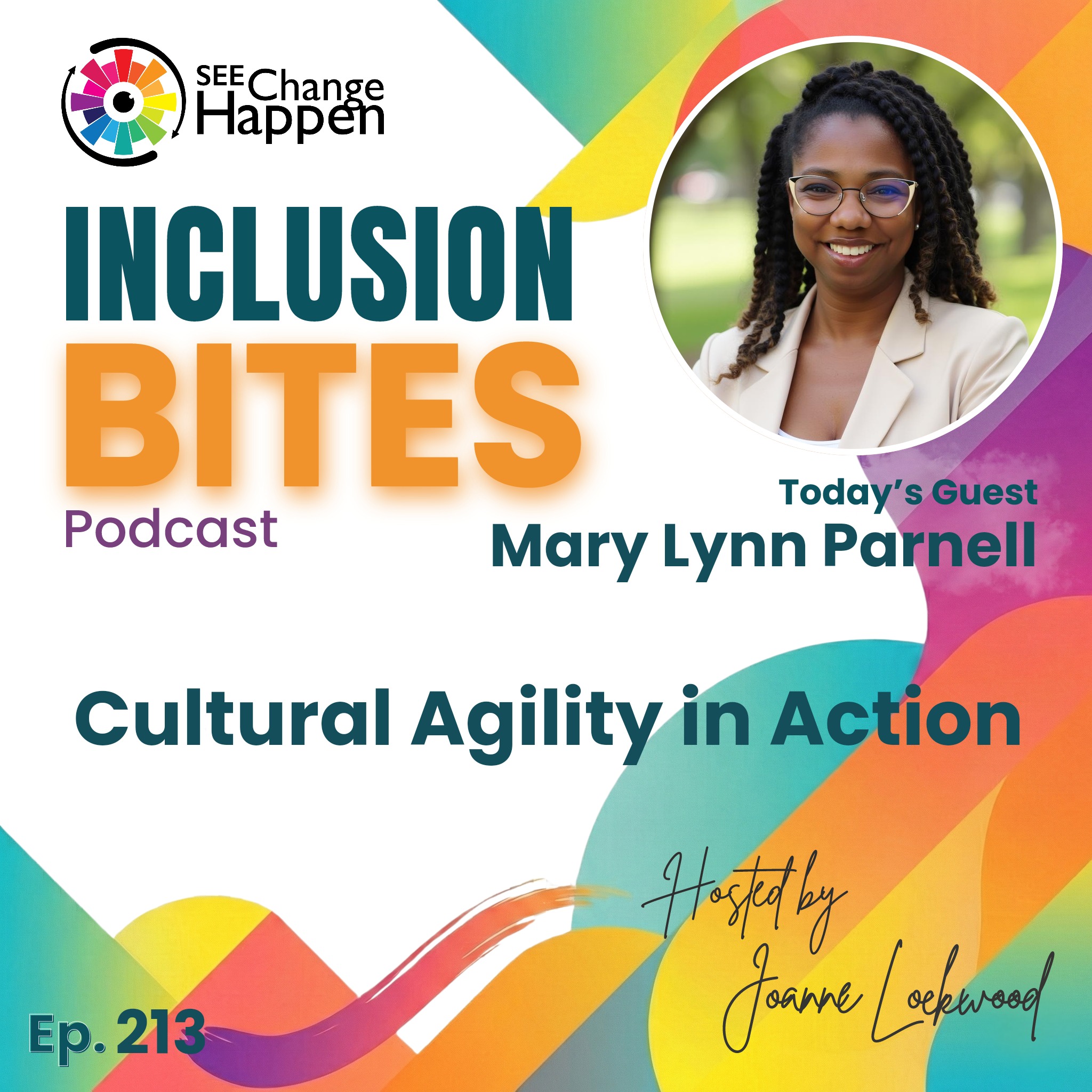
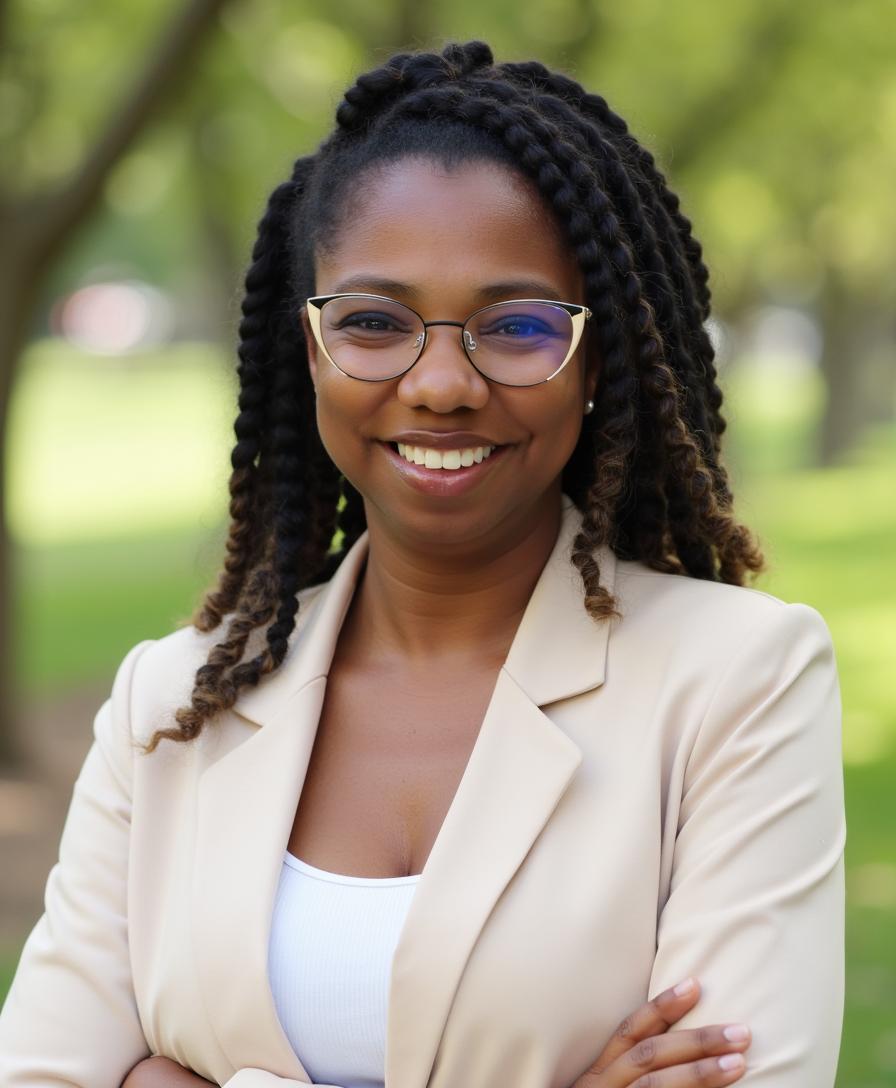
Mary Lynn Parnell explores the nuances of cultural agility, belonging, and the transformative impact of embracing diverse worldviews, collective values, and inclusive communication across global environments.
In this thought-provoking episode of The Inclusion Bites Podcast, Joanne Lockwood welcomes Mary Lynn Parnell for an exploration into the real meaning and lived experience of cultural agility. The conversation weaves through Mary Lynn’s extraordinary multicultural upbringing—born in the US to Haitian parents, raised in Montreal, and now settled in Spain—unpacking how her identity has been shaped by embracing the nuance and depth of multiple cultures. Together, they examine the challenges and joys of forging a sense of belonging amidst constant change, grappling with everything from preconceived notions about American identity, to the realities of adapting to European perspectives on collectivity, race, and individuality.
“Our history is beautiful, but it's also come with pain. And being able to hold both things in tension and not ignoring one for the sake of the other.”
Explore
Navigate this episode
Joanne Lockwoodhost
Welcome to Inclusion Bites, your sanctuary forbold conversations that spark change. I'm JoanneLockwood, your guide on this journey ofexploration into the heart of inclusion,belonging, and societal transformation. Everwondered what it truly takes to create a worldRemember, everyone not only belongs but thrives.You're not alone. Join me as we uncover the unseen,challenge the status quo, and share stories thatresonate deep within. Ready to dive in? Whetheryou're sipping your morning coffee or winding downafter a long day, let's connect, reflect, andinspire action together. Don't forget, You can bepart of the conversation too. Reach out to[email protected] to shareyour insights or to join me on the show.So adjust your earbuds and settle in. It's timeto ignite the spark of inclusion with InclusionBites. And today is episode 213. With the titleCultural Agility in Action. And I have theabsolute honour and privilege to welcome Mary LynnParnell. Mary Lynn is a leadership development consultant,intercultural trainer, andrelocation specialist who helps leaders andorganisations build cultural agility, trust,and belonging in a global and diverse environment.When I asked Mary Lynn to describe her superpower,she said this is her love of peopleand her ability to bridge worlds across cultures, perspectives,and disciplines with curiosity,empathy, and structure. Hello, Mary LynnHi, Jo. Welcome to the show. Hi, Jo. Sorry, I went ahead.
Mary Lynn Parnellguest
I was excited. You confessed earlier that you've listened to quite a few of
Joanne Lockwoodhost
my episodes, and I'm really honored. I've actually— I'm meeting a listener for the firsttime. I have. I really enjoyed them. They're really enlightening
Mary Lynn Parnellguest
for some of them, especially the new ones. Balance between what you don't expectto hear, but then when you hear it, dive down. And it was just reallyinteresting. Yeah, I've been surprised by some of my guests. I'm looking forward
Joanne Lockwoodhost
to being surprised by you. So we were chit-chatting in the greenroom earlier and we kind ofconcluded, well, you led me to believe that you're a child of theworld, not necessarily geographically defined.Tell us a bit about where you were brought up and how that shapedyour life. Well, yeah, awesome. I I am,
Mary Lynn Parnellguest
am a citizen of the world in the sense I, I'm a classic third culturechild born in one country, raised in another. So I'm American born, soyou can hear by my accent a little bit. Really astute listeners will, mightsay, oh wait, might, she she's not fully American. She might have somethingelse in her. And that would be Canada. I grew up in Montreal, Quebec. Sothe only French province out of all of the English-speaking provinces.I spent most of my formative years in Canada and returned to the USwhen I was an adult at 18. And so my family in and of itself.I'm first-generation American, so when you hear about first-gen,that's that. I'm a very typical— my family's from Haiti, so came up with avery Caribbean background, and that really made lifeinteresting growing up Black American or Haitian American or first-gen.Part of the things I love because it just makes life just that more colorful.And moved to Europe when I was, I think, back in 2012.Made Europe my home, so moved to Spain and have been here ever since.
Joanne Lockwoodhost
And you now have a family in Spain, so you're first-generation Spanish,I guess. I moved over with 3 children. So 3 of my children, I'm a
Mary Lynn Parnellguest
mother of 5, so 3 of them were born in the US and the last2 were born in Spain. So they, interestingly enough, if you askwhere they're from, they say they're American, 'cause that's the kind of home culture thatwe have. So they're an American culture kid, but they have learned bothlanguages, Spanish and Catalan. They love all things Europe.They struggle with some things US when we go back. They don't understandsome things when they go back, so I have to teach them as we onthe go, like, oh, this is why this is, and they don't have lived experience.But yeah, we're, we're a multicultural, multi-continentalfamily. Maybe you should write a book on understanding
Joanne Lockwoodhost
American culture because I'm not sure anyoneeast of America gets it. No, it's one of the biggest
Mary Lynn Parnellguest
enigmas. I think even some subtle things I get asked questionslike, because most non- American countries, even America, butthey experience America through culture, meaning movies,music, headlines, soundbites, you know, what does that looklike? And I remember when I would meet people in the first years ofliving abroad, they're like, well, all you eat are hamburgers,right? No. I met this woman who went on a weekend getaway withfriends and she came back all excited. They went to New York and shesaid, Mary Lynn, you can't believe what, what I found. I said, whatdid you find? She said, I found salad. I said, yeah, you can't, youcan't. Yes. American food is the most unhealthy food. Yes. Wehave an obesity issue. Absolutely. But yes, you can find healthyfood. Yes. You can live a pretty healthy life outside ofwhat we see in media. So just the, you know, the misconceptions of whatAmerica is. And people ask me questions. I said, the country is so vast.
Mary Lynn Parnellguest
Our history is so diverse. You can't really sum it up in asoundbite and say that this is Americana because you have first-generationpeople, you have First Nations people, which are the You know, thefirst Americans, like this land, like even appreciating where this land came fromin the US and taking even my favourite holiday, whichis Thanksgiving, is one that comes with pain. Like Iappreciate what Thanksgiving is for what it is today, but there's anacknowledgement of what Thanksgiving meant to the First Nations people.So there has to be that nuance of that feeling and thatunderstanding of our history and not see it with rose-coloredglasses. I think that's the part that I do tryto help people that our understand Our history is beautiful, but it's also come withpain. And being able to hold both things in tension and not ignoring one forthe sake of the other. I think we went in a different place for that.But just really American culture, can I write a book on it? As afirst-gener, maybe, but not— I don't have like history ofgenerations of history with American culture because I doidentify more with Haitian culture, with that idea of wewere free and independent. We fought for independence from the French. Andso when I moved to America, and this began my journey of justlearning and racial reconciliation education, that there were certain things that Ididn't tie to my history when it came to even oppression and even theracism I felt when I came to the US. I didn't understand it because Icame from a mentality of freedom. And so I was livingout and experiencing these dynamics that I didn't, I didn'thave any reference for. So I had to learn all of it. I had tolearn what it, what did it really mean to be Black in America?I didn't, I didn't know. I really learned that in my teens. And
Mary Lynn Parnellguest
really identifying with some of the struggle that I had no idea. Part ofthis is my naivete that came out of it. When Obama won,a white woman, I was having a conversation, a white woman,and she was telling me how important his winwas. And I, as a Black person, as a Black non-Americanperson, like I have to really quantify my context. I saw a manwho worked hard, who achieved a position, and shesaid, wait a minute, but for the country, it's really huge. I said, okay, wellbreak it down for me, 'cause I didn't have that. I wouldn't callit baggage, but I didn't have that context to see that this wasmonumental for the US, right? I was like, what's going on? And shesaid, no, this is, this is, let me give you a little bit of, ofhistory. And so, so I went to learning, learning abouta lot of what it really meant to be Black in America. What are thedifferent po— politics that happened, how it shifted from oneparty to the other. I'm still not into identitypolitics. I don't associate my name with a party, witha party that will never be me. I think that each party has certain thingsthat are redeemable and that are important for society. So I'm not thattypical black and white perspective type of person, but really appreciatedhaving being shared like, oh no, this was monumental and now I can seeit. And I'm like, oh right, but I just came from, you work hard.Yes, there are barriers, but I didn't know what those barriers were. And thenwhen I learned what those barriers were, then it helped me get more context becauseI'm living out the consequences of these, of this system,but I didn't know the origins of it. And so now I know how toname it and now And now I can see it. And now, um, yeah, it'sbeen, it's been an interesting journey. And then I bring that, but what it challengedme was to think, wait a minute, there's got to be more than this. Ithas to, how can this look globally? And that really started me on myjourney of culture for global perspectives. So going
Joanne Lockwoodhost
back to Haiti, when you were, were you,did you ever live in Haiti before you moved to America? So you were bornin America? Never. Born in America. Haitian culture, but my
Mary Lynn Parnellguest
parents did. Yeah. So is that where your, your
Joanne Lockwoodhost
move to Canada and Quebec being French speaking, did thathave any influence? Do you speak French? I do speak French, trying to get it
Mary Lynn Parnellguest
back. I haven't used it formally in a lot of years, but my momis the epitome of an adventurous,independent, I'm going to make a way for myself kind of a person.So she left her family at 18, left them in Haiti and went to Canada.So she went to Canada. So she, she started her life there. Then herfamily slowly emigrated to New York. Everyone else went to the States.She's the only one that went to Canada. And then at some point she reunitedwith my father and then they started having us and we went back to theUS. And when I was 8, then we made the final move backto Quebec, back to Montreal. And so that's how she wasthere. She had a life and then she went back and then she brought uskids. I have, I'm the eldest of 2 younger brothers and the 4 of usmade our life in Montreal, Quebec. Oh. So
Joanne Lockwoodhost
what did you— soyou've got a mix of background and culture. So you've got your Haitian background, yourculture, that Caribbean, your parents andgrandparents and ancestry. You've got the American, you were broughtup for most of your life, then you moved to Canada, then back again tothe US. What does Spain bring you orEurope? Because Spain is more than Spain. Spain is now Europe,isn't it? It's a very European culture. It honestly,
Mary Lynn Parnellguest
it amplifies what my life in Montreal was like. I, 'cause Icouldn't go back to Canada. That just wasn't in the, in thecards. And I remember when I got to the US, it was 1995, and apart of me was like, when can I get out of here? Like, that was,it was, it was, that's it. I got there. I'm gonna build my life. Iwent to college, I started, started building my life at 18,similar to my mom. I left Canada at 18, went to go find my lifein the US. My family lived there, so it was just easy to move withthem. And I just, there's something that wasmissing and I wasn't fully at homein America and I really had to come to grips with that.And it took a while for that journey to realise that, you know, I reallydid. And so when I met my husband, weboth had that sentiment. He tried to move to Europe maybe 3 or 4 timesprior. He tried to move to Germany. And so we had that affinity formore, for diversity, for, for something different.And Europe just had the values that were very similarto Canada, that were very opposite from the US. Andso from a culture, from a values perspective, Americais very individualistic as a whole. A lot of theirpolicies, the way the structure's done, their healthcare, it's veryindividualistic. Canada is very collective. It's more about thewellbeing of everyone. And so Europe has those values. Andso when we looked about moving abroad, we looked at France, we looked atdifferent places, but we really settled on Spain, specifically inCatalonia, which is where Barcelona is. And it just wasa right cultural fit. I feel more at home here than Ihad in the US, which is crazy to think. It's a whole otherlanguage, it's a whole other culture. But what, what the affinity I havefor that worldview of collectivity, of collectivism, thinking ofothers above yourself, and even seeing that played out is something that Ireally do treasure. And even though it does have some of itschallenges, and it's— and we can get into that a little bit later when itcomes to culture and opening their borders and things like that.Europe was just the next right move for us in the kind of life Iwanted for myself and the environment I wanted also for my children. So when
Joanne Lockwoodhost
you're moving around, you know, you've had experience of uprootingand settling down again. What's the biggest challengein that process? In your bio, we talked about belonging.We talked about cultural agility. You have to, you have to learn that it's nota, it's not it's not something that you just have, is it? Or maybe itis, maybe you evolve it. I think I do some
Mary Lynn Parnellguest
workshops on third culture kids to help new arrivals with theirchildren that are doing also new identity, like this culture. But forme, I've always said the only constant in life ischange. And with that comes this idea of resilience. And so thirdculture kids, people who tend to move the globe, have this resilience tobe able to adapt rather quickly. And what I also believeis that I do a lot of cultural work, so working with NorthAmericans moving into European contexts, and some of themstruggle with new environments, some excel, some take a littlelonger, but it's being able to see and have a perspective ofif this is difficult, or for example, some of the government work that you haveto deal with, you'd get— there's inherent stress, but there's a perspective tosay, well, this happens in every country, so this country isn't thatworse because it's harder. That perspective of it's a challenge.The challenge is challenging. Okay, let's move on. Let's figure it out and let's moveon. And it doesn't impact you as much. And so there's a lot of stressand work that has to be done in that perspective. But for me, I foundit rather easy. I found it rather— trying to think of theright word. It just was easy. And I say easy,but it's still challenging. I still had to learn. I still had to maneuver. SoI had to learn the language. I still had to understand the context that I'mworking in, understand a lot of the hidden messages. I really had to become astudent of what was happening, but to me, those things were exciting becausethat comes from a, a perspective of curiosity. I wanted to know, Iwanted to learn. I didn't want to feel like I'minherently an outsider, which I am, but I'm an outsider that's wantingto belong and wanting to learn. And so when you find yourselfin that posture, it justbecomes an adventure. It's, yeah, I, I smile and Ithink, oh, this is amazing. Many people who have wentfrom different cultures suffer from, um, we don't suffer, it's not the word,but we go through this journey of culture shock andthe beginning is a honeymoon phase and then you kind of go down into depressionuntil you get to acceptance. But I think I've alwaysstayed in the honeymoon phase because I really just lovethe diversity, the learning, the challenge, and the growth. I just,yeah, I really enjoy all of it. I think you summed it up there. You
Joanne Lockwoodhost
have to want to joinin. You can self-segregate. You can stay, you can say your primaryidentity. I'm American, I'm Canadian, I'm Haitian. I'm going to keep thatidentity as my primary badge on my chest and tell everybodyI meet. Or I can say, actually, I'm Spanish, I'mEuropean with a Haitian American Canadian background. I've got a bit ofblend of everything. And it's allowing yourself to becomeor evolve into more and bring in yourcurrent environment into your identity as well, isn't it? Yeah,
Mary Lynn Parnellguest
it's, there's, I wouldn't go so much with this idea of assimilation, but Ithink it's more of this evolution of being able to grow and become moreof who you are. Some of my clients that I do consultation withwhen they come into a new city and they ask the questions, they have thisbig fear. They're like, well, do I have to leave my identity at the doorand all the things that I love, all my culture? And I said, No, youjust, you bring that with you, but you're open to new things and then youbecome a better, more inclusive version of yourselfbecause you're involving everything. And do you have to adopt everything ofthe new culture? No. Do you have to let go of everything of your oldculture? No, but you find a way to have this new culture.And so when we think about third culture children, specifically my children, I lookat them and they don't know how to answer the question, who are you? Whereare you from? But they're creating their whole new worldview basedon their experience where they've come from, it's very unique to them.And they have to get to a point where they're comfortable with the fact thatit's not easily defined, nor it's, you cannot put it in a box.And so becoming comfortable and sure of yourselfin that identity is what helps you move forward. And so that idea of puttingin a box is something my daughter, she's 19 now, she cannot,she refuses to answer the race questions on an Americanform. She said, mom, this is ridiculous. Why are they asking me what myrace is? That doesn't matter. Because she's biracial. My spouse is white. Soshe, for her, she's like, but I'm both. And I said, honey, we were inAmerica at that time. So she was filling out a form and she said, whyare they asking me this question? I said, this country is based on race. It'salways part of the form. That's it. Answer whatever you want. So she's like,well, I'm gonna pick both. I said, you have every right to pick both. Soshe picked both, but she just was, she was visiblyupset. Why are you asking me that? Because in Spain there areno forms that has a race designation. They onlyask factual questions. Where was your mother born? Where were youborn? What's your address? Right? Just very factual questions that youcan trace, not this race question. Construct. Yes. Which isvery, it's not, it's intangible. It's not even a tangible thing anymore.That's not our world. Ethnicity is tangible. Race is
Joanne Lockwoodhost
a construct, isn't it? So. Yes, absolutely. Can I say my mom is
Mary Lynn Parnellguest
from Haiti? Absolutely. She's born, her passport says LasCaobas, Haiti with a Canadian passport as her nationality.That's It's factual. It doesn't say, and Haiti for, if you see myfamily, we are the whole spectrum. You have white with blue eyesand really dark with brown eyes. It's multicolored,if you call it that. That's the Haitian history. And most peopleassume it's just one, it's not black. It's, our background isvery diverse in that sense. What
Joanne Lockwoodhost
surprised you about European, particularly I suppose Spanish culture,rather, 'cause Spanish is a, it's amicrocosm of the general European culture. I'd say
Mary Lynn Parnellguest
it's not so much a surprise, but it was an affirmation of whatmy experience in Canada was. And so when, and I'll bring it back to adifferent question and then I'll see if it answers what you're saying. When people askme, what's your experience in America versus Canada? And I would paint thema picture. I said, we can be in Canada in a room, we'll have 5Caucasian-looking people in a room in Canada, and theconversations will be Where are you from? And they will say, well,I'm from Poland, I'm Italian, I'm Irish, I'mGreek, I'm fill in the blank. That's where the conversation will be.Take the same 5 people, put them in a room in the United States,and their response, they won't even have a question because they'll see that theyall look alike. And that's where the conversation starts. We're all white.So in Europe, it's very much about culture. They don't go alittle step deeper, which I really appreciate. It's about culture. It'sabout your background. It's, it's, it's more, it's it's deeper, richer. Culture.Yes. Are there challenges? Absolutely. But that just comes out of notknowing. We can solve that with curiosity. That's part ofwhat I do in cultural agility with my clients. How can we,how can we be more curious and be more inclusive in ourinteractions with people and ethnicities that we don'tknow? How do, how do we approach the things that we don'tknow? And that's with curiosity as opposed to beingdefensive and saying, I want nothing to do with that. And soI find that in Europe, because it's so culturally rich inthat perspective, that they really deal on a deeper levelwith difference as opposed to this surface. I say surfacelevel, 'cause that's my personal belief, but it's not sobinary. It's not so black and white. It's not ones andzeros. It's complex. It's the nuances that are there. That's what Iappreciate most about being in Europe. How can
Joanne Lockwoodhost
you walk the tightrope between cultural curiosity andinvasive questioning? That's such a great question.
Mary Lynn Parnellguest
The tightrope is there. You hold it. It's like a tension rod. You have tohold it with both hands and really follow the person and where they areand engage and try to get to that second question.It's what I call looking between the surfaces, really getting to that second question,really asking what are they really wanting to know? Where is the nature of theircuriosity coming from? And I do give people morebenefit of doubt in the sense that if they don't know, they don't really knowwhat they're asking just yet. So, so I tend to have a lotmore leeway, a lot more grace, a lot more understanding and kindof going along. And so when I'm at a basketball game,which this has happened, and I usually wear braids, so myAfro is not always out, but then when Ihave my Afro out and then they're like, can, can I, can we, can wetouch it? Can we? And so I'm like, Okay, this would not happen in theUS. I wouldn't let this happen in the US, but I have a little bitmore grace in European settings, especially if I'm like their first Black friend,right? Which is very common. And so they'll touch and they're like, wow,this is a lot softer than I thought. I imagined it'd be coarse. And thenthey would engage with questions. And so I wouldn't let them touch mychildren's hair. So just in case people are asking, but when it comes to me,I can, I can handle that a little bit better, but have a lot morepatience because they don't have thatproximity that most cosmopolitan places in the US would havewhere they would be able to get it. Spain in general hasa very short history with, with immigration. So theyonly opened their doors in 1980. And so the influx ofhaving others come in, you say others, but anyone outside of beingSpanish. And so their cultural experience, you know, isgrowing, not to give it an excuse, But just to be able to say,okay, I have a little bit more patience in order to walk with peoplea little bit more to answer some of those questions. I suppose Spain is the
Joanne Lockwoodhost
holiday destination of Europe for a lot of people, isn't it?Certainly people from Germany, the UK, and other countries wherewe don't have that warmer climate. So I guess Spain has been a destinationfor a while. But yeah, I suppose it is. Spain was a verydifferent country before the 1980s. It was the Francogovernment. It was a use the very— word dictator, I think wasprobably the word. Yes. And it's not that long ago, is it?We think of Spain. Yeah. This is how it I just think of it as
Mary Lynn Parnellguest
sounds. European. It does. And then even so growing up in Montreal,Quebec, Canada, Canada. So Quebec and Canada as a whole hadtheir, have their tension between one French provinceversus everywhere else is English. So there's a language and culture war.Quebec wanting to separate and doing a referendum for many, many years. I rememberwhen I was younger. And so even Even in Spain, they have that samedynamic with Catalonia being its own, with its own language, itsown culture in comparison to Spain as a whole. So those are themesand things that I definitely identify with. It's a minorityculture in that sense. And how do you fight for culture? How do youfight to be seen? How do you fight to preserve what you have in lightof the majority? And so, so it is a country that has so much richnessin its history and in their fight for, I, I would call it their fightfor individual, not individuality, but it's 'cause it's thecultural, the, the collective of that culture, but their fightfor their language or fight for their culture. And there's 4, ifyou know, there's 4 languages in main languages in Spain. And soSpanish is one of them, but you have Catalan in Catalonia, you haveGalician in the Galicia region. And so even amongst that, there'ssuch a diversity within their own country.
Joanne Lockwoodhost
Are they more than dialects? They are separate languages, are they? They are separate
Mary Lynn Parnellguest
languages. And so when people say, well, Catalan is just a dialect of Spanish,I beg to differ because there are some people whospeak Spanish that don't speak Catalan or even have an understanding.Catalan actually dates all the way back to Occitan, tolike, if you look at the history of it andwhen it comes to even the closeness. So Ido, because I love culture and languages, this is kind of just a nerdfact, but you have French and Catalan have more in common percentage-wisethan Catalan and Spanish does. And then Portuguese also has moreconnection with Catalan and Italian as well. And so you, you look at theRomance languages and you see how their relationship to each other is, andthen you can tell that it is quite distinct. I often use thedifference between English from England versus English from America, andit's English, yes, but I can go to the UK and not understanda. There's certain expressions, there's words thatthey use. And even I had to learnEnglish from England to pass my driver's exam inSpain, cuz that's the English they use. And I had to learnthe boot and there was a complete phrase that I knew nothing about.And so learning that differences between language, even though you, you're, youhave a lot of commonality, the difference is huge. And also I think I
Joanne Lockwoodhost
think one of the challenges is a lot of language evolves aroundsimiles and metaphors and cultural references,television programs, politics, whatever it may be. Sopeople talk in this shortcut code that ifyou don't understand, it becomes kind of, what's that about? Youknow, if you're a millennial, you were brought up watching Friendson TV. So you understand about Monica and Chandlerand Rachel and Phoebe, and you understand about the culture there. And someof the conversations about that, I grew up in an erawhere, if you've ever heard of it, Monty Python and some of the sitcoms ofthe '70s. And me and my friends will talk about MontyPython sketches and sometimes even growing up, some of the children'sTV programmes I grew up with. If I talk about some things with my childrenor other people who are younger, they look at me as ifI'm on a different planet and they talk and I go, I've got no ideawhat you're talking about either. So even within a culture, there's theselayers and rings, if you like, of growth and development that have,you've got to cross those cultural borders between your generations as well.
Mary Lynn Parnellguest
Absolutely. I remember my daughter came home one day. She's such asponge when she learned language. When we first arrived, we arrivedwhen she was 6. She said, mom, I understand the words, but I don't knowwhy it's funny. When she was talking about jokes, she's like, Iunderstand all the words, what they mean, but I don't know why it'sfunny. So even humor, understanding something why making us funny andgetting beyond those layers. And Catalan has a lot of idioms andexpressions. I mean, thousands. And I'm like, wow,every day I learn something new, which I love. But getting beneath in thatculture of why they think, where did references come from and references,those types of things come through our history, through our culture. Andeven our children learning English idioms. When one day it was rainingreally hard and I said, it's raining cats and dogs. And my kids look outsidelooking for actual cats and dogs, right? This is something theydidn't grow up with, right? These sayings. And so then I remember onetime we were walking so much one day and I said, oh, my dogs arebarking and they're looking for a dog. And I said, no, itmeans my feet and my feet hurt really bad. And they were,they looked at me and then when they started adopting, they're like, mom, my dogsare barking, right? Like, 'cause they do, they finally got this cultural inand they're, you know, your eyes light up and then you're able to understand. Andso that layer of understanding, I'm a Gen Xer and I feel like people forgetabout us. I'm like, even the references I make, we'relike the forgotten generation, I feel like. And understanding that there's certainthings that we've seen all the evolution of how musicis listened to. And then we're going back to vinyls. Like, we'vehad— like, I remember the 8-track tape. I remember the vinyls.I remember then it went to CDs. I remember tryingto put my cassette tape in the radio to record music. Andkind of all the things that we used to do with music, and now streaming,and then now going back to the stores and seeing vinyls again has beenreally interesting even interacting with just music. I don't
Joanne Lockwoodhost
know if you're a fan of sci-fi, but there's an episode of Star Trek:Next Generation, I don't know if you've ever come across it,called "Darmok." They speak in metaphors and culturalreferences, and Picard's universal translator can't translatethese references. Darmok and Jalad at Tanagra, those sort ofphrases, they don't translate unless you understand thesymbolic gesture of these two people fighting together toovercome something. You haven't got that reference and thosecultural points. So I thought that's a very infamous Star Trekepisode that shows the challenge of these cross-culturalunderstandings. And you can actually misunderstand if you don'tunderstand the nuance, that cultural reference and culturalstructure, if you like. So these idioms, these metaphors allaround the culture. And if we go back in time in our human history,we grew up sitting around a fire telling each other stories. AndIceland, if you've ever been to Iceland, they have these thingscalled sagas, which is handed down over time. So you've got all thesefamous saga tellers who used to recount around the hottub or around the culture there, where they're passing thesehistories down to their generations. And if you haven't been part of that, you justdon't understand those cultural references. And again, wars, things break down.Use communication. And that could be the biggest challenge you face,as you were saying, these little idioms that you pick up every day.
Mary Lynn Parnellguest
Yeah, I think you've unpacked so much in what you just said, andit's making me think on the corporate level what that looks like when we'reforgetting legacy. We're no longer learning how to pass downknowledge between one generation to the other, to the new workers, the culturalbehaviours that we're looking at and the nuances about how to respond or how tobehave or what am I looking at. And it really, really highlights the part thatwe really need to be learners all the time, How do weinteract? What does this mean? Being able to have a culturalinsider to be able to help you, right? Andto be with the culture to say, hey, I heard this thing. What does thatlook like? And be curious about what's happening and not give youthe message of, I don't understand what's happening. I'm never going to be a part.That is a human response. Most people will stop there. Some will say,I really don't know what this is, but I want to know, and I wantto know more. I may not know this one, but I'll learn something else andcontinuing along the journey. But that part of being able totranslate it And there's some challenges and downsides. I wouldprobably say that we lose a lot because we don't go back torecuperate some of those things and those concepts and historyand stories that we need to. And I see that in my children. Sothere's certain things that I need to do better on. But what doesit look like to continue to, to keep it part of the conversation,to watch history things, to expose yourself to how things weredone in the past? In the cultural work that I do, there's thiscultural spectrum or dimension where it calls— it talks aboutinnovation. Innovators are always forward-thinking, right?We talk about forward-thinking, but there's a part that talksabout tradition. And I'm more of the tradition where I do look tothe past to help identify our present, to help us move forward.
Mary Lynn Parnellguest
Part of my makeup is to always think, well, what did we do? Wheredid we come from? How did we do this in order to understand where weare today in order to then move forward? And then other innovators creatorsdisregard the past completely and are just moving forward, and theytend to always repeat the past, right? Because you hadn't looked back to see whatwe've done. And so helping people understand that they're— that we'reall on this spectrum and all parts of it's important to be able tomove things forward. And when we talk about cultural behaviours as well,that's really important. What have we done? How have we done in the past? Someare really good at acknowledging their past, and then so they don't repeat the samethings. Some are really poor at acknowledging their past and are doomedto repeat it over and over. And then are actively lookingto incorporate, I would say incorporate the past in order toreshape their future. There's some classic, going back to some filmography here,
Joanne Lockwoodhost
there's some classic films, Groundhog Day is a classic exampleof having to go around the cycle and repeat the mistakes of the pastto eventually learn how to break out of the loop. There's alsolots of classic Star Trek episodes where they get stuck in time loops as well.But so you always have to find that way of breaking out outof the mistakes of the past and making incremental,slow incremental gains that take you somewhere different. It does.
Mary Lynn Parnellguest
People, I think we get stuck. We look at the idea of changeor culture change. It's, it's so monumental. I don't think we'll ever do it.And we may not see it in our lifetime because changing culture is likechanging. It's a slow, long game and people want it fast,easy, and tomorrow, and that's not going to happen. But what does it look liketo make those small things to be able to make tomorrow that much easier? Easier,that much more agile. I think that's the word, like we're alittle bit more aware, a little bit more sensitive, a lot more kinder.And these are small steps that we make in that direction. And also recognising
Joanne Lockwoodhost
that not everyone's on the same page, in thesame boat, speaking the same language with the same references.So it's all very well in your head, you're saying, well, fast, easy, and tomorrow.People are still on 4 months ago. It's There's all, hang on aminute, where are we? And it's learning how tocommunicate your ideas, your thoughts,your direction in a way that is understandable byevery different personality type in the team as well, isn't it? That's the challenge.
Mary Lynn Parnellguest
Absolutely. I think that what I love to help people understand,and this is when I'm like, hey, let's talk more about this a little, becauseyou have a room of people that come from so many differentbackgrounds, not just from their ethnicity to their, but for where they're from,their worldview, and you can communicate a vision thatreally speaks to you. You're like, this is amazing. And everyone's on boardand you communicate this vision and you're all excited about it. You've doneall, you have your PowerPoint charts and you only reach33% of the room because you haven't acknowledged for the other two-thirdsof the worldviews that are presented. And you haven't communicated andanswered the questions that they need. And so the worldviews,they're summarised into three. One is innocence and guilt, power and fear,and honour and shame. And so people who come from an honour and a shameworldview or paradigm, their internal question is to ask, is this gonnabring us honor? And your pitch could be, this is the right thing todo. We are going down the right path. So you're answering that innocence and guiltparadigm, which, which really sees the world between right and wrong. Andso if you come from a right and wrong perspective that speaks to you, theneveryone who's on the same wavelength with you, everyone from that same worldview isalready on board. But the honor/shame are struggling because theydon't see how is this— they see it's right and wrong, but is this reallybringing us honor? Or is this bringing us shame? Where are we in thatquestion? Because that's their internal question. And then the other one is powerand fear. And their internal question is, are we empowered or arewe disempowering someone in this process? What does that look like?And so understanding how we shape our messages that willreach globally, culturally amongst the masses,a lot easier than just the little. I think we struggle with the ideathat if we get, reach an average amount of people, then we'vereached everyone. And I come from the other perspective. If we'vereached the least of these, then we've reached everyone becausewe'll get mostly, we'll get everyone in that conversation. Andreally understanding or taking stock with how we communicate isnot just for those who are in our echo chamber because we tend to onlysurround ourselves with people who think like us, act like us, right? That will,that are in our wavelength. But then we find ourselves in these multiculturalsettings where there are many that don't have that sameperspective. They don't come from things from that same worldview. View,and they struggle to get on board with your vision because you're not communicatingit in a way that they understand. And it's not that your vision is wrong,it just needs to be communicated in a way that answersthose basic internal questions for people to really come on board.
Joanne Lockwoodhost
As you're talking there, mine was wandering off into something I came across theother week, which was Bain and Company, their elements of a valuepyramid, which is based a bit on Maslow's hierarchy ofneeds. And what it's doing is it's trying to break Whatallows people to value your products and services? And youcould turn that around from products and services to your internal brand.What do people see in you, in the service you give them asa leader, as a team player, whatever it may be? So how do youalign with the values and the needs of the people you're interacting with? SoI often think that you have to sort of really try and understand your room,your audience, your environment. And what people are looking for.And sometimes you need to be adaptive, andthat's not being two-faced, it's not beinginauthentic, it's recognising that people want to see a different partof you depending on their needs. Andoften what we do is we communicate from ourself withoutunderstanding how people want to receive that information. And as amulticultural person yourself, you recognise that you can't have one face,one voice. You have to go, actually, this or this or this.
Mary Lynn Parnellguest
Absolutely. I think it comes with, it takes you a while to get there becauseyou wanna be you. You wanna, I wanna be authentically me. I wanna show upon how I am. But that when we think about the art of communication, it'snot to be heard or to be seen, it's to understand. Andeven more than that is to understand the other person and what they need tounderstand from what you're trying to communicate. And so to that end, you don'tchange who you are and you're not really changing your message. Whatyou're changing is how this message is being communicated.So do you need to be a little bit less quippy? Andthey'll highlight points that really, really attract those charismaticpeople that just want the highlights? Or do you need to come in with alittle bit more principles? This also goes back to a book I really like, whichis from Erin Meyer, that just talks about the 8 dimensions ofculture. And one of the— about even with when you're selling something, forexample, some really only want to see, how does it work? Justgive me the punchline. Does it work? But others really needto I wanna know why does this work? I need theprinciples, not the application. So it's principles versus application. Idon't just wanna know this works and it'll save my life. Lose weight in 10days. Oh yeah, I'm sold. No, how does this work?Here's my research behind it. Here's the stats. Here's
Mary Lynn Parnellguest
all the details that I need to know to make sure that it works. Andwhen we come in from one aspect, we've lost those who want to know thewhy and not just the how. And even with direct and indirectcommunication, same. Do they want to know a little bit more story? Do they wantmore high context or low context? Do we— how do we need to manoeuvrein order for my commu— my message, how do I need to manoeuvre so thatmy message comes through for everyone? And it's a lot of work.I'm not gonna lie. You have to ask many more questions ofyourself. You have to pass your things through many different eyesto be able to say, who am I— who are we missing? And how amI missing it? And how can I make sure that I'm answering those importantquestions? And so what I love is that with the cultural agilitypiece, there's like a litmus test that kind of helps guide you in that, beingable ask some of those fundamental questions that people are asking, butnot being afraid to do the work and not seeing it as,I'm making less of myself because I have to change in order foryou to understand me, but flipping it and saying, I'm giving a gift to beable to package it in a way that you can interact with it becauseultimately you are the one who's important in this conversation. You are the oneI'm trying to speak with, interact with. So I'm giving the importanceof this to you and not to me. I'm releasing that power, thatneed for my recognition, cuz that's not At the end of the day, that's notthe point. It's the receiver. The receiver is the one that's important.And what do I need to do in order to honour that receiverin my communication and in my interactions so that they feel what? Notonly seen, because we all have the deep need to be seen,but understood. Wow, they understand a bit about me to be able tostructure this in a way that I can understand and engage with. And to begiven space to be able to say, wow, I I can, can interact, I canengage, I can wrestle with whatever thisBecause they've made space for me. And then what happens? They wantto participate. They want to engage. And then we have this interaction that'sjust so intangible that you think, wow, this is what a trulyinclusive environment looks like when everyone feels like they can play. I
Joanne Lockwoodhost
sniggered at one point when you were talking there, because what flashed in my headis I'm the kind of person that wants people to have askip intro button on their forehead. They start talking and they're sort of going, Idon't was I just, tell me, tell me, skip intro, tell me what I needto know. Then I can process that. Then I can ask you a question toclarify what it is. But some people go into this huge,great prologue. It's like, okay, tell me when I, tell me whenyou get to the bit that allows me to make a decision on whether thisis interesting or not. I almost like need this liveTL;DR filter. Sort of like just talk it, talk it to myChatGPT for 30 seconds, tell it everything you know, and then I'llTL;DR that and then we can go, right, now I get what you want. NowI can ask questions. So that's me. But And when I talk back, I'mvery conscious about the fact that I need to talk in a multitudeof ways. One is the TL;DR, this is what you need to know and thewhy. And some of it is the story. And I learned from somebody thatthe important thing to do is you don't start on the story beforeyou explain why the story is important. Because sometimes whatwe do is we start telling the story, you get halfway through itand then you start to introduce the facts, but I've alreadyturned off. I I don't, don't know why I'm listening to the story.So it's always when you've got this cadence of knowledge and training andthings, always start with the, you need to know this because, and here'ssome key stats. And now let me tell you a story about that, because I'vealready locked in. And it's again, it's learning those techniques from anL&D perspective or a cultural intelligence perspective, whatever it maybe, so that when you do talk, You really are trying to tick as manyboxes as you can. You can't, we have to adjust
Mary Lynn Parnellguest
everything in the sense that you have people who are auditory, so they really liketo hear everything. You have those who tune out, they only want to hear keypoints. And so you have your PowerPoint to be able to do the highlights. Andso you can't, we can't get everyone, but you want to try to get asmany as you can to be able to say, okay, here's the information. But italso, it really boils down to knowing your people, knowing youraudience, knowing what they need, and adapting your message to be able toanswer to them. And even sometimes having something extra. So forexample, I have, I used to lead a group of 50 individualsacross 3 countries in Europe, and everyone had a different communicationstyle. And I have a very specific communication style, very brief.If it's email, it's very short. If it's text, it's even shorter. This is,that was me. And then I had this woman, she was older than me, andshe said, okay, we had our meeting. I was, you know, speaking with everyone toget to I know know them. And she was very clear. She said, Marilyn, ifI send any communication, I just need feedback thatyou've received it. You can tell me when you'll answer it, but I just needan acknowledgement. That is my one requirement. And I had to say,okay. So for this particular person, every time I had to make amental note, acknowledgement is very important to her, eventhough the email that was sent is informational and it didn'trequire any response from me. But for her, she neededa response. And so going forward, and that was just knowing Thiswas a communication style that, that really led towards intimacy. Itestablished me as her leader, and she really appreciated that. And then I, I wasable to do that going forward. But then I also know howto, if I'm in a high-pressure situation and I'm leading a group ofpeople, we're putting on an event or meeting or whatnot, and I'll say fromthe beginning, I said, okay, this is, this is who I will be for thenext 48 hours. And I will be very short, to the point, becauseI'm focused on this. I love you all. Helping them frame what they'reabout to experience because certain my environments environments demand certainways of me showing up. And I'm understanding that I know that, but noteveryone around me. So helping them also in the process of knowing what they're goingto experience. And then after that, you know, getting backto my normal. So I'll say a blanket apology. If I'm short with you, it'snot, it's not personal. It's because of this. And I just needinformation for the next 48 hours very quick so we can get movingbecause I have no idea what the next 48 hours will bring and I needto be sharp. And it has made a world of a difference. Being ableto help people understand that in different environments, this iswhat you're going to experience and this is why. And many have come back saying,thank you so much for that because we always think you're mad at us. I'mlike, no, I'm not mad. I'm just focused. That's how we're going to moveforward. I introduced the, I call it the coffee chart. In
Joanne Lockwoodhost
every office on the back of the door where the cups are, there's Johnlikes tea, one sugar, coffee black, or whatever that you always haveyour little choices on the back of the door. So when you're making around of coffee, you know what people people are having. I encourageleaders, teams to produce their communication charts so that I knowmy style is, I like to be contacted in the morning, I prefer text orWhatsApp, not email. If you're going to send me— so you almost likemap it all out. So when you join a new team, when you join anew project, you've got new people coming in, you just reaffirm howyou work best together. And that allows everyone to go, okay, soyeah, you like that, so you're more like me. Without— you don't wantto do these DiSC profiles or these Myers-Briggs or personality. Iused to say, how can we communicate? How can you communicateeffectively with me? And then everyone listens to each other and go,okay, so I recognise that I'm like this, you're like that. Okay,when we talk, I'm going to press the skip intro button because you're going todrive me crazy otherwise, or you're going to know that you need to sort ofhalfway house it with me, a bit less intro and get to the point first,and we can work on it together. I think that really is a good wayof building a strong team across cultural for us as well.
Mary Lynn Parnellguest
You hit it right on the nail on the head because often we go tothese trainings and we get the ideas, which I think our trainings are great,but it's the how do you put this in practice? What practicalsteps can you then bring together these themes, these theories,these concepts? And that's a great example of saying, this is how we are.And team buildings are often, or teams are often challengingin the sense that if they're a new team and they're starting all together, dothat. What I find that breaks teams down is whenthey start to transform by bringing a new person on and theyskip out on that onboarding for that person. Now, you have to go back.You have a— in essence, you have a new team. You have a new person,you have a new team. So how can we continue to have effectiveteams? Go back to the beginning with this new person and start over.Do that whole conversation of how do we communicate best together?And then that person feels like they are really onboarded well, right? They feelAnd then they're able to have this opportunity, that legacy, that history,those sagas, the thing that they haven't had, because you have to start somewhere.Most teams struggle for getting to thatnormalising and then performing because they don't go back to thatbrainstorming phase where they are learning how to work together again.And those are culturally inclined. Here's how you understand my culture.Here's how you understand if I'm a person from a differentworldview, brainstorming won't work with me. I need to havepermission to be able to participate. So those are the Are things. things thatshould be talked about every time a new person comes, or even when a newperson leaves, because that person also has an effect. Really marking thosetransitions in the life of the team in a way that you can work onmaking those teachings that we learn practical. Yes,
Joanne Lockwoodhost
indeed. You're right. Any change to the teamis you have to rebond, make the bonds between the links.What can happen very quickly if you're not careful is you end up having theseparallel conversations, these hidden conversations, these little cliques, thesegroups in a group. And the communication breaks down where sometimeseveryone's talking about somebody behind their back or behind the leader or behind the project.Everyone is trying to— how do we get people to sort of—I suppose it's psychological safety, isn't it? What we're trying to do is create psychologicalsafety so people know they can speak up and go, actually, I need tobe heard. And we go, okay, we need to create time for you to beheard. The challenge of safety needs to be there and we can really, really getinto it. And the learner, all aspects of psychological safety,because that's what often breaks down and people don't know they have permissionuntil you give permission. Absolutely. And then if you come from a worldview that
Mary Lynn Parnellguest
needs that permission, they won't step outside. And then fromthe leader's perspective, they think this person isn't participating. This person,who is this person that I don't know anything about who they are, what theythink. They're just lazy. A lot, there's a lot of value assignment.They're lazy or they're nonconformative or they're not performative or they'renot really adding value. You have to go back with, wait a second, haveI given them the space space to have I, have I given them thepermission that they may or may not need? If they come from, I would sayif they come from an American background, it's just more innocence and guilt. They don'treally need permission. They just think their voice is important already and they'll share.But other cultures are not the same way. They respect authority. Theyrespect order innately. That's how they showup. And they have to learn that this is our team culture,that your voice is welcome, that you can share and establishing thosenorms from the beginning, but taking the time to do that andRecognizing when you have what we would call ina performative or performance evaluation, non-performers,ask the question, why are they not performing? Is it something that wehave done that has inhibited their performance? And that comesback to the culture talk. Have we created an environment that they can actuallyshow up? And if we haven't, what are the changes we need to doin order to do that? I'm definitely a lurker. Anchor
Joanne Lockwoodhost
on a new team. So I'm the person that'll sit around thetable, listening to everybody, absorbing,learning, becoming competent and confident inwhat's going on, the dynamics. And it might take me about3 or 4 team meetings, 3 or 4 weeks, a month, andI'll maybe chuck in a couple of things and say, ah, some contribution here, abit of contribution there, see how it lands, then build confidence.And then once I've got my feet under the table, you won't be able tostop me. I'm kind of full in. Whereas I've noticed that inteams that I've been on, other people join and they'refull on, you know, as you said, the American model, I'm going to go straightin here. I'm going to talk without listening. My voice is important. And Isit back and think, hang on a minute. If you'd have just listenedand absorbed first, what you've said has been brilliant.However, Then we all land, everyone has to parkeverything, right? Okay, we'll put everything down for you. We'll explain why we'redoing it. They go, oh, okay, right. Yeah, if you just listen to the endof the meeting, you might go, okay, all that's been covered now. Or I actuallyread the minutes or read the notes or read the project plan. Yeah, yeah,
Mary Lynn Parnellguest
absolutely. That's that part. That's the part I, when I work with North Americans, whenyou come into a global environment, I said your number one job is tolisten. Do not say anything very quickly, taketime to listen because culturally you may not think that thishas an impact, but you come in with this bravado, for lack ofa better word, that isn't welcomed, but you just have to stop andlisten. And then how other cultures respond to that is they're like, ohwow, they have this perspective that Western culture is really important. Sothey'll acquiesce to everything. And that might not workbecause you're speaking from a totally different culture. It happens in mergers andacquisitions, which I also help with that idea of culture. They don't thinkabout what that culture look like, looks like when you're mergingthese two companies together, these two different ways of workingtogether and taking that time to stop, listen, and assess theculture to be able to know what to go in and not to come inand make these drastic changes immediately. 'Cause then you'llfind that that doesn't work or it doesn't translate. So, forexample, my favourite story when it comes to mergers andacquisitions is when Coca-Cola, which was trying to get into Peru.And so, in Peru, I travelled to Peru, they have this soda called IncaKola. It's very sweet. It's very good. Coca-Cola was trying tointroduce Coke into that marketplace and it didn't, it didn't take.No one was buying Coca-Cola and they were like, what's going on? Wehave Coca-Cola, it's the best. Well, the Inca Kola from the Peru,that's what they liked. So what did they do? They bought Inca Kola. Andso that was, they just bought it and to be able to have market share,but to understand you're bringing something into a market that's not, you have todo the research first. You would've done the research, you've stopped, you've listened, you'veseen what's happening, and then you'll see what's acceptable, what's not, what'ssuccessful, what will work, what won't work, how do we go forward.
Joanne Lockwoodhost
In UK banking, there was a big merger, oh, 20years ago, and we'll just call it one company or onebank was a kind of green logo and one bank had a kind of lightblue logo. And I had a friend who came from the green sideand he was telling me about even after 5 or 6 years, theywere still green people and blue people. And generally the green people hadthe senior positions because they were the buyer or they were the senior partnerin the whole thing. And the blue ideas were kind of assimilated andthey, yeah, but there was still this us and them,even 5, 6, 10 years later, the ITsystems, the way things were working, the language was allaimed to be green, but the blue people were never brought on board. Andthen the two companies demerged probably 10 years ago, back toblue and green, and they're both thriving independently again. So it's a lot lotof effort to actually bring those two cultures together. And if you're not careful,that, that's your fault line. That's where the fault lies. And you're never going toresolve that unless you proactively manage it. Absolutely. And that's done from the
Mary Lynn Parnellguest
beginning. When you talk about mergers and acquisitions, I do corporate training as well.So I do mergers and acquisitions and you do the duediligence. You're looking at each other's numbers. You're looking at the market share. You're lookingif it's horizontal or what's the purpose, what's our why in this merger. But thepart that gets left behind is the culture. What will be our newidentity? How do we get people on board that it's no longer us and them?It is now we, it is a collective. We are all together.We are all one. And, you know, you work it on branding. We've got ournew logos, we've got our new things, but if we haven't met theunderlying layers of that identity of who are we,because now we are a new we, we are now— what colour does blue andyellow make? Green. So we're gonna be— we'll do it. We're now green. We're nolonger blue. We're no longer yellow. We're now green. But working on that fromthe beginning, before you even sign that letter of intent, beforeyou understand, are these cultures that can to be merged together. Andif not, then we really don't want to do a merger. Maybe we might justwant to do an acquisition and have two people work. Asking those questions at thebeginning so that you don't go 10 years down the line and then have todivorce in the end. Yeah.
Joanne Lockwoodhost
And it's been absolutely fascinating chatting to you for an hour. We could carry on.We were talking for half an hour before we went live. We could talk, wecould carry on. And if I was in Spain right now, I'd, well, actually offto Amsterdam Amsterdam or today? Tomorrow for a week and
Mary Lynn Parnellguest
then back in Spain in the weekend. So yeah. Well, next time in the, I'm
Joanne Lockwoodhost
in the north of Spain, the Catalonia region up there somewhere. AndI'll sure will. I'll look you up and we'll pop in, but absolutelyfascinating. So how could people get a hold of you? I'm on LinkedIn. So
Mary Lynn Parnellguest
LinkedIn, Mary Lynn Parnell, as opposed to Marilyn, as you'veheard for now. I have a website. I mostly interact on LinkedIn and Ido have a website as well, which is marylynparnell.com. More thanwelcome to get any inquiries questions if you wanna continue theconversation about culture, what does that look like? If you'reready to look beyond what does that look like to navigatecomplexity across cultures and borders, I'm the person to talkto. I love it. Love to challenge leaders to lead well and to leadholistically. And that means the full spectrum of leadership,not just management, but really getting to know your people.So if you're looking for cookie-cutter leadership frameworks, that's not me. I'm reallyon the ground, really looking at the truth of what's reallyholding your leaders back, what's really holding you back into creating theseenvironments where everybody thrives. And so I would welcome the opportunityto talk with you. So just, just in case you're reading the transcript, so Mary
Joanne Lockwoodhost
Lynn, M-A-R-Y space L-Y-N-N, and thenParnell, P-A-R-N-E-L-L, or pronounced Marilyn.
Mary Lynn Parnellguest
Yes, absolutely. And that's the whole story. So if you're curious, ask
Joanne Lockwoodhost
Mary Lynn about why her name is spelled one way and also what hergrandma used to call her. So that's even more different, and what people tend tocall her when they name wrong. She's been everything from Marilyn toMary Lou. So yeah. I have. Even Marlon once, and I
Mary Lynn Parnellguest
raised my hand. Thank you so much. Thank you for having me.
Joanne Lockwoodhost
As we bring this conversation to a close, I want toexpress my deepest gratitude to you, our listener,for lending your ear and heart to the cause ofinclusion. Today's discussion struck a chordConsider subscribing to Inclusion Bites and becomepart of our ever-growing community driving realchange. Share this journey with friends, family, andcolleagues. Let's amplify the voices that matter.Got thoughts, stories, or a vision to share? I'm allears. Reach out to[email protected] and let's makeyour voice heard and Until next time, this is JoanneLockwood signing off with a promise to return withmore enriching narratives that challenge, inspire,and unite us all. Here's to fostering a more inclusiveworld, one episode at a time. Catch you on the nextbite.
Global Identity, Migration and MulticulturalismCultural Agility, Adaptation, and Inclusive PracticeCommunication, Worldviews, and Corporate Cultural Integration
In this thought-provoking episode of The Inclusion Bites Podcast, Joanne Lockwood welcomes Mary Lynn Parnell for an exploration into the real meaning and lived experience of cultural agility. The conversation weaves through Mary Lynn’s extraordinary multicultural upbringing—born in the US to Haitian parents, raised in Montreal, and now settled in Spain—unpacking how her identity has been shaped by embracing the nuance and depth of multiple cultures. Together, they examine the challenges and joys of forging a sense of belonging amidst constant change, grappling with everything from preconceived notions about American identity, to the realities of adapting to European perspectives on collectivity, race, and individuality.
Mary Lynn brings an exceptional global perspective as a leadership development consultant, intercultural trainer, and relocation specialist. With roots in Haiti, formative years in Canada, and extensive experience navigating North America and Europe, she exemplifies what it means to bridge worlds through curiosity, empathy, and structure. Mary Lynn’s candid reflections reveal how moving between cultures has informed her adaptable approach to leadership and inclusivity. Her expertise lies in equipping leaders and organisations to build environments where difference is cherished, developing practical frameworks that foster trust and psychological safety in truly diverse teams.
The discussion delves into the power of curiosity over defensiveness, the importance of holding space for conflicting emotions in national history, and the complexities of forming new cultural identities—especially for children growing up between worlds. Joanne and Mary Lynn dissect communication styles within multicultural teams, the pitfalls of overlooking cultural nuances during mergers and organisational change, and the importance of consciously cultivating environments where everyone has permission and confidence to contribute.
“Our history is beautiful, but it's also come with pain. And being able to hold both things in tension and not ignoring one for the sake of the other.”
“But for me, I've always said the only constant in life is change. And with that comes this idea of resilience. And so third culture kids, people who tend to move the globe, have this resilience to be able to adapt rather quickly.”
“No, you just, you bring that with you, but you're open to new things and then you become a better, more inclusive version of yourself because you're involving everything.”
“And so when people say, well, Catalan is just a dialect of Spanish, I beg to differ because there are some people who speak Spanish that don't speak Catalan or even have an understanding. Catalan actually dates all the way back to Occitan, to like, if you look at the history of it and when it comes to even the closeness.”
“We're no longer learning how to pass down knowledge between one generation to the other, to the new workers, the cultural behaviours that we're looking at and the nuances about how to respond or how to behave or what am I looking at. And it really, really highlights the part that we really need to be learners all the time, How do we interact? What does this mean?”
“Some are really good at acknowledging their past, and then so they don't repeat the same things. Some are really poor at acknowledging their past and are doomed to repeat it over and over.”
“their internal question is to ask, is this gonna bring us honor? And your pitch could be, this is the right thing to do. We are going down the right path. So you're answering that innocence and guilt paradigm, which, which really sees the world between right and wrong. And so if you come from a right and wrong perspective that speaks to you, then everyone who's on the same wavelength with you, everyone from that same worldview is already on board. But the honor/shame are struggling because they don't see how is this— they see it's right and wrong, but is this really bringing us honor? Or is this bringing us shame? Where are we in that question? Because that's their internal question.”
“I'm giving a gift to be able to package it in a way that you can interact with it because ultimately you are the one who's important in this conversation.”
“Go back to the beginning with this new person and start over. Do that whole conversation of how do we communicate best together? And then that person feels like they are really onboarded well, right? They feel And then they're able to have this opportunity, that legacy, that history, those sagas, the thing that they haven't had, because you have to start somewhere.”
The nuanced distinction between assimilation and cultural evolution, empowering individuals to build identity through both heritage and new experiences.
Practical strategies for navigating the challenges of uprooting, settling, and fostering resilience when transitioning across cultures.
How cultural constructs like race, ethnicity, and national values influence belonging, both in the corporate world and in personal contexts.
The role of curiosity, empathy, and structure in bridging cultural differences and overcoming misconceptions.
Approaches to fostering psychological safety and inclusivity within teams—recognising diverse worldviews, communication styles, and the importance of ongoing onboarding.
The impact of cultural legacies—storytelling, idioms, and generational references—on communication and team cohesion.
Actionable guidance for leaders and organisations on sustaining cultural agility during mergers, acquisitions, and periods of organisational change.
One thing to remember
True cultural agility requires a blend of curiosity, empathy, and structured intent to foster belonging. By embracing difference, actively listening, and adapting communication styles, individuals and organisations can build inclusive environments where everyone is empowered to participate, thrive, and evolve together.
Questions this episode helps answer
How does being a 'third culture child' shape one's perspective on identity and belonging, according to Mary Lynn Parnell?
In what ways did Mary Lynn Parnell's multicultural upbringing (American, Canadian, Haitian, and European) influence her professional focus on cultural agility and leadership?
What are some misconceptions about American culture highlighted in the episode, and how do media representations exacerbate these misunderstandings?
How do the concepts of racial identity differ in North America compared to Europe, as discussed when filling out forms in the US versus Spain?
What strategies did Mary Lynn Parnell recommend for adapting and thriving in new cultural environments, particularly when moving countries?
How does communication style influence team dynamics, and what practical steps can leaders take to accommodate diverse preferences within multinational teams?
Explore topics
Ideas from this episode
Global Identity, Migration and Multiculturalism
In my thought-provoking conversation with Mary Lynn Parnell, we delved into the intricacies of identity and multiculturalism shaped by global migration. Mary Lynn described herself as a classic “third culture child”, born in one country, raised in another, and from a family with roots in Haiti and Canada.
Cultural Agility, Adaptation, and Inclusive Practice
Exploring cultural agility, I discussed with Mary Lynn the importance of adapting, learning, and embracing new environments—both personally and professionally. She recounted her journey of moving countries and building resilience and adaptation skills, particularly as a “third culture kid”.
Communication, Worldviews, and Corporate Cultural Integration
Our discourse broadened to the realm of communication and worldviews within corporate settings—specifically, the pitfalls and opportunities in merging cultures, whether through global teams or corporate acquisitions. We explored how core worldviews (innocence/guilt, honour/shame, power/fear) shape engagement, and why recognising these differing paradigms is paramount for leaders seeking to reach truly diverse groups.
Learn
Frequently asked questions
What does “cultural agility” mean in the context of this episode?
Cultural agility refers to the ability to adapt, thrive, and build meaningful connections across diverse cultural contexts. Mary Lynn Parnell emphasises it as an essential skill for leaders and organisations working globally, requiring curiosity, empathy, and structural understanding to bridge cultural differences while fostering trust and belonging.
---
How does being a “third culture kid” shape personal identity and agility?
This episode explores the unique perspective of third culture children—those raised in a culture different to their parents', often moving between countries. Mary Lynn Parnell discusses the resilience and adaptability developed through such experiences, and the ongoing evolution of one’s identity rather than assimilation. Living in multiple cultures enables individuals to build a richer, more inclusive worldview, though it comes with complex questions about belonging and how to answer “Where are you from?” ([16:42 - 17:04]).
---
How do misconceptions about American culture arise, and how does media play a role?
The episode tackles prevalent misconceptions drawn from movies, news, and soundbites, such as the stereotype that “all Americans eat hamburgers.” Mary Lynn Parnell points out the vastness and diversity of the United States, alongside the challenges in summarising its culture. She highlights that cultural perceptions are often influenced by media, but realities are much more nuanced and varied ([04:33 - 05:14]).
---
What are the key differences between American, Canadian, and European values, especially regarding collectivism and individualism?
Mary Lynn Parnell observes that America tends to value individualism—seen in its policies and systems—while Canada and much of Europe prioritise collectivism and the well-being of the wider community. This distinction strongly impacted her family’s choice to settle in Spain, finding cultural alignment and a sense of belonging thanks to shared collective values ([11:47 - 12:22]).
---
How do multicultural families navigate life and belonging in different countries?
The episode demonstrates how multicultural families balance home culture, language acquisition, and adapting to new social environments, sometimes facing confusion about their own identities. Mary Lynn Parnell notes that her children feel “American” but embrace European languages and customs, creating a unique blend that cannot be easily put into a box ([04:48 - 04:58], [15:02 - 15:25]).
---
What is the difference between race and ethnicity in forms and official documents across countries?
In Spain, forms focus on factual personal data—birthplace, address, nationality—rather than race classification. In contrast, American forms request racial identification, which Mary Lynn Parnell's biracial daughter found difficult to answer, highlighting the complexities and social constructs underlying race. The episode contextualises how different societies approach identity and classification ([17:36 - 18:00]).
---
Share this episode
Heard something worth passing on? Send this conversation to someone who needs to hear it.