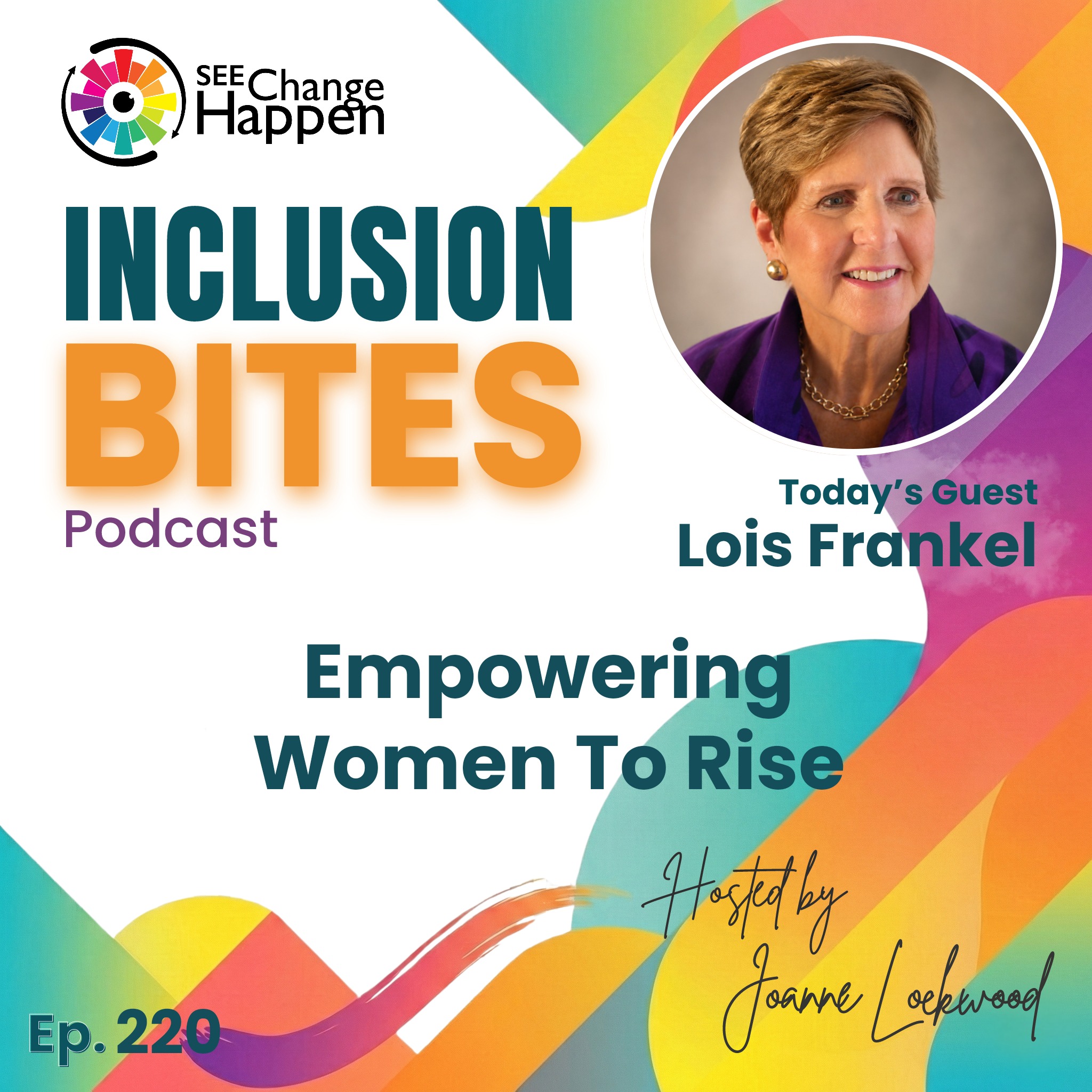
In this episode of Inclusion Bites, Joanne Lockwood talks with Dr. Lois Frankel about empowering women in business by overcoming limiting childhood messages and societal expectations. They explore leadership challenges women face, bridging personal growth with professional success, and how to thrive without compromising authenticity.
In this episode of The Inclusion Bites Podcast, Joanne Lockwood welcomes Dr. Lois Frankel for a compelling discussion on empowering women to rise, navigating the complexities of gender expectations, and challenging the status quo within organisational cultures. Their conversation ranges from the impact of early socialisation and the nuances of emotional intelligence to the systemic barriers women continue to face in leadership roles. Joanne and Lois explore how societal messages shape professional behaviours, why balancing masculine and feminine energies is critical for collective progress, and the importance of self-awareness in building stronger, healthier workplace relationships.
“Don't stop what you're good at, add new behaviours that are going to create balance.”
Explore
Navigate this episode
Joanne Lockwoodhost
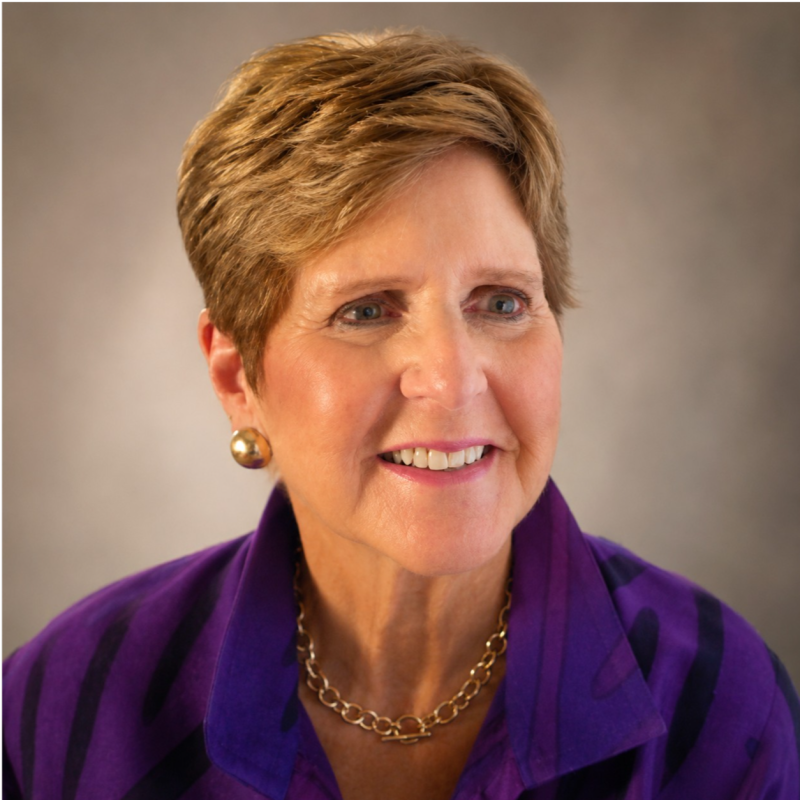
Foreign. Welcome to Inclusion Bites, your sanctuary forbold conversations that sparkchange. I'm Joanne Lockwood, your guide on this journey ofexploration into the heart of inclusion, belonging andsocietal transformation. Ever wondered what it truly takesto create a world? Remember, everyone not only belongs, butthrives. You're not alone. Join me as we uncover the unseen,challenge the status quo and share stories that resonatedeep within. Ready to dive in? Whether you're sipping yourmorning coffee or winding down after a long day, let'sconnect, reflect and inspire actiontogether. Don't forget, you can be part of the conversationtoo. Reach out to [email protected] toshare your insights or to join me on theshow. So adjust your earbuds and settlein. It's time to ignite the spark of inclusion with InclusionBites. And today is episode 220 with the title EmpoweringWomen to Rise. And I have the absolute honour and Privilege towelcome Dr. Lois Frankel. Lois is a best selling author,executive coach and women's empowermentadvocate. She helps women overcome limiting behaviours andsucceed in business without compromising who theyare. When I asked Lois to describe her superpower, she saidthat it is her belief that to those whom much is given, much isexpected and her commitment to teaching other women how toget what they want and deserve. Hello,Lois. Welcome to the show.
Lois Frankelguest
Joanne, thank you so much for inviting me to join you.
Joanne Lockwoodhost
It's a pleasure. And we've already had a good little chat before we pressed the record button andyou said you're in the U.S. is thatright?
Lois Frankelguest
I am. I'm in California. I just recently moved from the Los Angeles areadown towards the beach area. I'm in a little town called Dana Point Point, which is acouple of towns north of Oceanside. And just most people know Lagunabeach, it's the next town south of Laguna beach, so in California, though originallyfrom New York.
Joanne Lockwoodhost
So you've moved around a bit, east to west.
Lois Frankelguest
Yes, absolutely.
Joanne Lockwoodhost
You hopped over the middle, did you? You didn't get stuck in themountains?
Lois Frankelguest
I didn't get stuck in the middle. I shouldn't say stuck, becauseit's. The middle is beautiful.
Joanne Lockwoodhost
Beautiful, yeah.
Lois Frankelguest
But having grown up in New York, on Long island, when I was offered jobs in the middle ofthe country, I always declined them because I feltlandlocked. So I've only lived oncoasts. I lived in New York, on Long Island, I lived in Miami and then I cameout here to Los Angeles.
Joanne Lockwoodhost
Yeah, I'm the same. I live not far from the coast. And if I go too far inland, Imean, the UK is not a huge place by US standards, but yeah, if I get too far away from the water,I kind of feel that uneasiness of not knowing where the wateris.
Lois Frankelguest
Yeah, exactly. And it's not to say the middle. There's anything wrong with the middle, because thereisn't. It just for me, feels a little claustrophobic, personally, never having lived in themiddle.
Joanne Lockwoodhost
Yeah. And also you've got the contrast between the Hustle and bustle and 24 hour NewYork and that more spread out, la, California type environmentas well. And I noticed that real contrast when I was in New York. You walk everywhere or yousubway it or bus it everywhere. Everything's really kind of in a compactarea. But LA and San Francisco and even the whole of California is just moresprawled, isn't it? You need a car and.
Lois Frankelguest
Yeah, it really is. They're like two different cultures. But you know, this country is so big,Joanne, that we have so many subcultures within ourUnited States. So. Yes. You know, New York has one totally differentvibe. Los Angeles does. San Francisco does. You know, people who live in San Francisco don't want to livein Los Angeles. People who live in San Diego would never live in SanFrancisco. So, you know, we each have our preferences, I think, partly based onhow we grew up and what our values are.
Joanne Lockwoodhost
Yeah. Now, having been to San Francisco, LA and San Diegoand New York and Miami, I get it. I get, I get the difference ofvibe. But you're right, US is such a big place. It's map it ontoEurope. It's. It's several countries, isn't it? Easily.
Lois Frankelguest
Yes. Yeah, exactly. Exactly.
Joanne Lockwoodhost
Yeah.
Lois Frankelguest
You can't paint all Americans with the same brush, really, because we're verydifferent from place to place.
Joanne Lockwoodhost
Especially this, in this current climate, we can't, we certainly can't paintpeople with the same brush. Lots of differentperspectives. So you were infamous or famous for penning a book some 20 yearsago. Was it Nice Girls Don't Get the CornerOffice? And I guess that sparked a whole career for you coming out of that book orenhanced the career you already had?
Lois Frankelguest
Both.
Joanne Lockwoodhost
What got you into it?
Lois Frankelguest
Yeah, I'd say both, because when it first came out, allthe. All of a sudden I became an advocate forwomen. And I was always kind of under the radar as an advocate forwomen. But the fact is I was an executive coach, so I coached predominantlymen because I only worked in major corporations with people whowere referred to me by the corporation. So who did they investin? Men. So that was primarily who I was coaching atthe time. So when the book came out, all of a sudden everythingshifted. And at first I resisted it because I thought, wow, I've spent, you know, alot of my career trying to build this coaching business for both men and womenand a woman who does marketing andbranding. She said, lois, go with it, go withit. Just be glad that you have this wave to take you along intothis new area that is consistent with your values and yourbeliefs. It's just not how you were making your livingpreviously. So did I answer that part of thequestion?
Joanne Lockwoodhost
Absolutely, absolutely.
Lois Frankelguest
But when you asked me how to. So that's kind of how I got into this part ofit. But. But there's something just before that,too. There's a backstory, and that is, you know, I mentioned during our preconversation that I worked for arco, the oil company, for quite a few years inHuman Resources. And while I was working there, I went to school at night to getmy PhD in counselling psychology, because what I really wanted to do my wholelife I dreamed of being a psychologist. So with ARCO paying for it, I got my PhD,and then I went to the Powers that Be and I said, you know, you paid all this moneyfor my PhD, and now I. I'd like to be able to use it in the employee Assistanceprogramme. And they said to me, you're doing fine where you are, just staythere. And I think that happens to a lot ofwomen. What happens? As we get more education or degrees or certificates orjust experience, people see us for who we are and what we weredoing. And I was actually working in Equal Employment Opportunity at thetime. I spent quite a few years in eeo, which now it's called dei, but back then wecalled it eeo, spent quite a few years there and, and realised, you know, Ididn't. I didn't spend all this time, energy, going to school at night to be apsychologist, to just stay where I am. So I quit and I started a private practiseof psychotherapy in downtown Los Angeles because I realised that I wanted towork with that particular population. I wanted to work with working
Lois Frankelguest
people. Joanne I did it for about, I'd say about a year and a half, and the moment Iwanted to jump across the couch and put my hands around my client's neck and say,how many times are we going to talk about the samething? I realised I'm probably not cut out to be atherapist. And yet Again, that was all I wanted to do my wholelife. So it was like, at this point, left a good job, got a PhD, you know, what am Igoing to do now? Well, as sometimes life happens to you in the way it should, awoman I had done some training for came to me and said, lois, would you be willingto coach someone? Now, this was 1989. There were not a lot of executive coachesaround at the time. There were hardly any, as a matter offact. And I looked at her and I said, I don't know exactly what youwant. And she said, oh, Lois, you've been a therapist, or you are a therapist,you've done training, you worked in human resources, you put them alltogether, you have a coach. This woman was always on the cutting edge ofeverything. And I said, sure, I'd love to coach someone foryou. I figured it had to be better than what I wasdoing. And she sent this woman to me because, remember back then, you got sentfor coaching because you were somebody who was too valuable to lose and toopainful to keep. And she sent this woman to me. And all I knew was that no onewanted to work with her, that she was bristly and nobody wanted to work withher. She comes in, she sits down. Now, remember, there's no coaching models outthere yet. So I used my very first coaching client to come up with my ownmodel. And I looked at her and I said, you know, maybe you could tell me a littlebit about what it was like growing up in yourhousehold. Because I was a therapist. What was I going toask? And she, luckily for me, she went with theprogramme. And what she said was, I grew up in a Germanhousehold. My parents taught me to always obeyauthority. Don't waste time, keep your nose clean, don't gossip, don't getinvolved in other people's business. You know, that Teutonic, that wholeTeutonic attitude. And it was very clear to me why people didn't want to workwith her, because she was doing all those things she learned inchildhood. And Joanne, that became my coaching model, that became my coachingquestion. Tell me, what were the rules you learned in childhood that you had toobey in order to get love, attention andaffection? In every household, there are rules and sometimes they'reexplicit, sometimes they're implicit. In this German household, they werequite explicit. So what she was doing was over relying on the behaviours thatshe learned in childhood were appropriate, not realising they now weregetting in her way. And that actually formed the basis of my very first book,which was called Stop Sabotaging Your Career. And it was for both women andmen. And in that book, I really talked about the seven primary reasons why I sawpeople falter in their careers. And it was from these old
Lois Frankelguest
messages. Now, I want you to fast forward about 10years. Now, I've been in coaching for about 10 years, coaching both men andwomen, primarily men. But I was working with this one woman who was sent to me forcoaching because she was a little bit on the aggressive side ofassertive. We know what we call those, right? They're calledbitches. So she was sent to me for coaching because people found her kind ofbitchy. I worked with her for about two or three months and one day I went in for acoaching session and she said, before we get started, I just want to tell you Iwas invited to sit on the executive committee of my company and I went to give hera high five and she stopped me and I said, what? And she said, you know, I've beento those meetings, Lois, they're a waste oftime. And what popped out of my mouth was, honey, you got to quit being agirl. Because what I realised was that she was acting like she was taught inchildhood that you have to be twice as good. You have to work twice as hard to beconsidered half as good. Right? You know, you're never as good asmen. You have to just work, work, work, work, work, and maybe you'll getrecognised. When that popped out of my mouth, you know, honey, you gotta quitbeing a girl. All the mistakes I saw women make because of how they weresocialised. I mean, up till now I was talking about family messages for bothgirls, but now I started thinking, wait a minute, but girls get unique messagesin addition to the family messages. They get messages about be nice, be kind, behelpful, be, you know, all these things, and that's what gets in theirway. And after I left my coaching session with her, I outlined all of what I wascalling quit being a girl that the publisher renamed to Nice Girls don't get theCorner Office. And so that's really how this transitionhappened.
Joanne Lockwoodhost
Fascinating, fascinating. So you mentioned the seven things that tend toget in the way. Out of the seven, is there a top one or are they allpretty insightful?
Lois Frankelguest
Well, of course, I think, as the author, I think they're all pretty insightful, but I think the primary oneis building strong, mutually rewardingrelationships. And you're from GreatBritain. So in that book, I used examples of real life people whoderailed in their careers because they either didn't listen,they didn't have strong relationships. And the example from Great Britain that I used was MargaretThatcher. If you read Margaret Thatcher's biography, youlearn that she grew up in a household. She was taught, Margaret, always think for yourself,don't do things just because other people are doing them. Beindependent. She learned those lessons well and look at how they broughther to Prime Minister of GreatBritain. But those messages also derailedher. That my understanding and you know, you'll have to tell me if I'm wrong because as an Americanlooking in, or from what I've read, Margaret Thatcher derailed because of the poll tax controversy,that Margaret Thatcher wanted to put a tax on everyone whovoted. And everyone else, her advisor said, you know, Margaret, this is not agood idea. We don't think that you should do this. And that's when, if you recallthe famous line, you turn if you want to, the lady's notfor turning. That told us everything we needed to know abouther. It also tells us everything we need to know about why shederailed. Because she wasn't really able to take in information from otherpeople. She didn't have those kinds of relationships that would support her in the longrun. She was a lone ranger. And so Joanne, let me ask you, would you agree withthat?
Joanne Lockwoodhost
Yeah, I mean, I was, this was what, late 70s,and I was probably 16 years old or something at thetime when it all came off the rails, but I remember it quitedistinctly. And we had the miners strike, we had a lot of political unrest, all as aresult. And the Iron lady character that she haddefeated the striking miners, it defeated a lot ofthings. But you're right, the poll tax became this kind of the hill she died on, I guess you would callit. Fundamentally, it wasn't a badidea. Before the poll tax, you were kind of taxed as a household based on the size of yourhouse. And what she was trying to say, well, it's only fair if we base it on the number of people whoare eligible to vote. So it's almost like usagebased. So water metering, electricity, gas, so metering based onusage. And so fundamentally it's a very conservative model and it meanttrying to create fairness. But unfortunately what happened was it meant the people who are very, veryrich with very, very big houses paying lot tax, only one person living in itended up being much, much better off because they were only paying for oneperson. And people with five people living in a small council supplied house were endedup paying five times the amount than they were before. So fundamentallyit advantaged the rich. And I think that divide waslost on her. And I think you're right, she probably didn't listen to thepeople around her counselling on it. And she was so set on not turning and not youturning.
Lois Frankelguest
Yes. And that's a great example of someone who could have a fundamentally greatidea. But I think it was the Chinese philosopher Lao Tzu, who said, it's acurse. Right. May you have a wonderful idea and not be able to convince anyone ofit. And so she really suffered from that and from what you just described, which Ihadn't understood before, it had a chillingeffect. What seemed to be neutral on the face had a chilling effect on people whohad less. And don't we see that happen even now in all kinds ofways? Chilling effects. And I know we'll probably get to that a little bit later,but, yes, that had a chilling effect. So as a result, shederailed. So she was the opposite of a nice girl,Right. She wasn't somebody who would go along to getalong. She wasn't someone who suffered from the disease toplease. So really, that first book, Sabotaging Your Career, was for both men andwomen, and I saw both men and women having difficulty with that particularbehaviour. However, in Nice Girls don't get the Corner Office,it's. It's kind of the opposite. It's not quite the opposite, because when they
Lois Frankelguest
change the title from Nice Girls from what I my working title, Quit Being A Girl,to Nice Girls don't get the Corner Office, I said, you realise I'm going to spendthe rest of my life saying, you can be nice and can besuccessful. And they were probably right because it sold a lot ofbooks. And, you know, it's intriguing, it piques curiosity, but also a lot ofpeople have told me I didn't buy the book because I thought you were gonna say youhad to be mean and nasty when nothing was further from thetruth. Because if I had the opportunity to coach Margaret Thatcher, I wouldn'ttell her to stop doing anything. And this is also kind of the basis of all mycoaching. Don't stop what you're good at, add new behaviours that are going tocreate balance. And in Margaret Thatcher's case, given the opportunity, whichI never would have had anyway, I would have told her tostop. Do more listening, ask more questions and more consciously decide thehill that you're going to die on. When it comes to Nice Girls don't get the CornerOffice, All I'm saying is you can't be that nice little girl you were taught to bein childhood and expect to achieve your adultgoals. Just like this client who was finally invited to sit on her executivecommittee. She was obviously implementing some of the things we talkedabout. You know, I talked to her about, you need to listenmore. You know people, we live in a society where we expect certain things frommen and certain things from women. And when you're not delivering those things,people are going to react negatively to you and you don't have to deliverthem. I'm not saying you have to change one iota. I tell my clients this all thetime, don't have to change one iota. But look at the playing field you're on andwhat does the playing field want from you? And if you want to win on that field, youmay need to learn a couple of new skills.
Joanne Lockwoodhost
What you're saying to me sounds like what we would describe these days as emotionalintelligence. Having that self awarenessof. And you also. The other thing you said was build strongerrelationships. And that's the kind of the bookends of emotional intelligence, isn'tit? By being self aware, self regulating, the end result is you build stronger relationships throughbeing adaptive and understanding the game you're playing. Really?
Lois Frankelguest
You're absolutely right. We know that emotional intelligence is the sinequa non for success, right? You can have a hugeIQ but a low EQ emotional quotient and you won't beas successful as someone who has a lower IQ but a highereq. And we see that happen all the time, people who are not rocketscientists rising to the top of theirorganisations. And that's again because as you said, emotionalintelligence is about self awareness, self regulation, socialskills, the ability to show empathy. It's about all thosethings. Now ironically, Joanne, all those things are things that come naturally towomen. And so women tend to be more emotionally intelligent thanmen. They tend to be. When I was coaching more men, I used to do whatI called the feminization of leadership, that men had to learn tobe more like women if they were going to be successful. They had to learn to care what other peoplethink, to listen more, to show more empathy,right? They had to become more self aware, see themselves as others seethem. If they wanted to be successful leaders, that's exactly what they had todo. Now what we know today, the pendulum is swinging back because youhave people like Mark Zuckerberg saying men have gotten too soft, we need to reallytoughen up, you know, leadership. We need Men to be tougherleaders. You see, our own Secretary of Defence, PeteHegseth, I can never pronounce his name and I don't reallycare. Saying that women don't belong in. Don't really belong in themilitary.
Joanne Lockwoodhost
Right.
Lois Frankelguest
So we've seen the pendulums shift, but I believe that emotionalintelligence will always be the sine qua non forsuccess. It always has been, it always will be.
Joanne Lockwoodhost
Yeah. I don't see many wars being fought by women in the world orstarted by women or propagated by women. Women are often the victims or thetargets or the. Or the people who are most affected byconflict. These scenarios. And Margaret Thatcher wasn't forturning. There's a lot of politicians who have the same sort of impact aswell. They think the biggest and loudest is best.
Lois Frankelguest
Exactly.
Joanne Lockwoodhost
Yeah.
Lois Frankelguest
And you know, it's interesting because I did a little talk the other day and somebody said that theythought the military style of leadership, loudest is best, topdown.
Joanne Lockwoodhost
Right.
Lois Frankelguest
That tough kind of leadership is the best. And I said, notanymore. I mean, when I was growing up in the corporation, when theboss said jump, we said, how high? If you say jump today,people don't say how high. They say, why? Why do you want me to dothis? What's in it for me?
Joanne Lockwoodhost
Right.
Lois Frankelguest
It's a discussion. And so, as I explained to this gentleman who said he thoughtmilitary leadership was the best, I said, it's only good in an emergencysituation. It's only good when you need someone to say, take thathill. It's not good in MO and probably 90% of leadershipscenarios. It doesn't work. And it particularly doesn't work in this day andage. And it's precisely. I'm glad you went there, Joanne, because it's preciselywhy I say if ever we've lived in a time that cries out for women's leadership, thattime is now. Because you look around the world and you see war, poverty, famine,corporate greed. We're not at the helm. You know, I said to a friend the other day,what do you think would have happened if Netanyahu and Donald Trump were replacedwith two women? Would we be at war? And she said, oh, no, definitelynot. We would be at the negotiating table. And I believe that with all my heart thatwe need, just as you're saying, we need more women in significant leadershiproles if we want to change the world. You may have read thebook. There's a book I wish I wrote. It's called Gather the Women, Save the World byJean Shinoda Bolen. And she talks about how if we have any hope of saving thisworld, it will be because we bring women together in leadershiproles.
Joanne Lockwoodhost
Yeah, I think I completely agree with that and I'm sure, hopefully you'll agree with what I'm going to say isthat we need a balance, don't we? We need, we need that, both that masculine and feminineenergy to balance out those perspectives. So it's not one or theother. I think, I think what we need to do is we need to bring the skills, bring the emotionalintelligence. And we can't also say that there are men who don't have emotionalintelligence. It's not a, a purely femaletrait. In terms that we can. We always used to argue that women had no leadershipcapability. It was a man's job to be, to be a leader. You know, the army, the, back in the1800s and the 90s where women's role was to, to walk around looking pretty all thetime. There was no, there's no expectation that women could doanything. But yeah, I think it's just trying to find that, that naturalsynergy between the, between the, the thinking styles and the emotional styles, isn'tit?
Lois Frankelguest
Absolutely. And I'm with you. It's about balance. You know, the Native Americans had aword for it, it's called Koyaanisqatsi. And it's about worldimbalance. And I think that's exactly what has tohappen. And we are totally out of balance right now. And I think that's why so manypeople are suffering. There's too much suffering in the world because we are out ofbalance.
Joanne Lockwoodhost
Yeah, there's too many conflicts at the moment that arebouncing and bumping off each other with an agenda that nobody reallyunderstands. Is it about money? Is it about power? Is it aboutoil? Is it about what's it all about? And it comes down toa certain group of people who may well be described as men withoutenough female influence. And I think if you look at some of the administrations around the world, they are maledominated. Those cultures and societies do not respect women'sopinions. And it's. And we see some of the areas of the world, Afghanistan, places like that, rolling back women'srights even further. That's a really sad state ofaffairs. And we can't solve that problem today. But yeah, it's. You're right,it's. We need that energy, we need those, that thinking. And wars would beless. Well, wars would be different. Wars would bedifferent. We've probably still. They'll be bitchy to each other, but they might result innot talking to each other for a while or something else happening. But we certainly wouldn't be launching missiles as a firstreaction.
Lois Frankelguest
Exactly, exactly. Did you read the book the Chalice and the Blade byRiane?
Joanne Lockwoodhost
No, I haven't. Not.
Lois Frankelguest
I think it was Riane Eisler. I think Eisler was theauthor. And in this book she talked about the fact that we know thatthere were matriarchies throughouthistory. And we know that because when you look at their graves and theburial sites, the, the ores, the iron and the ores were used to createchalices that you drink out of to create ornamental things becausethat's what was surrounding the women in thesegraves. Right. And then when the, the. I think they were Nordic, but Idon't want to. I don't want to. I'm not sure I can swear tothat. But somehow as people came from the north and invaded, they cameand they took those irons and oars and they made weapons out ofthem. And we saw it move towards patriarchalsocieties. So this whole notion of the Chalice and the Blade, it'sexactly what you're saying brought that tomind. That would there be wars? Yeah,sure. But would they look different?Probably. They'd probably look a lotdifferent. And missiles would not be the first thing we'd think to useour resources for.
Joanne Lockwoodhost
I think we wouldn't be, we wouldn't be bombing or killing women and children even bymistake in that situation. And there'd be a lot more value to humanlife. I think that's the sad thing is it's the innocence, innocent people that get caught up inall this. The people who are inadvertently becoming human shields or humanvictims of over exuberantcasualties. Acceptable losses, I think they probably call itand.
Lois Frankelguest
Right.
Joanne Lockwoodhost
Yeah.
Lois Frankelguest
You know, I think it was Golda Meir who said a leader whodoesn't. Isn't cautious about sending their people into wardoesn't deserve to be a leader.
Joanne Lockwoodhost
No. If people are expendable, they become.Yeah. And I think that takes us back to the concept of the emotional intelligence, the needto balance that out. And I've got a good friend who actually, she's beenon this podcast. She was a Tornado fighter pilot and she did tours ofIraq and she used to fly these tornadoes and she, she, she fought in combat as well as a, asa female fighter pilot.
Lois Frankelguest
Tornado or torpedoes? Tornado.
Joanne Lockwoodhost
Tornado. Tornado. Tornado, yes. It was a Europeanfighter.
Lois Frankelguest
Oh, okay.
Joanne Lockwoodhost
Yeah. And they still Fly them today. So yes, it's a. I think there's differentconfigurations. One is a combat fighter and the other configuration is a bomber thathad a sort of dual depending on the model and depending on theconfiguration. And I listened to her, I've listened to her podcast, I've listened toher an audible book as well. And her experience in the military really, really did sortof shine to like the title of her book is An Officer Not aGentleman. So she talks about what it was like to be one of the first female fighterpilots and the bias and the prejudice she faced trying to break into that man's
Joanne Lockwoodhost
world. And I listened to it and I was in the military, I joined from school and I did threeor four years in the military when I was younger. And I remember my experience of beingthat very much you were shouted at, it was commander control, this is the way it had tobe, jump how high, that types of things. But I listened to her story and she was probablyin the military 20 years or maybe 20 years after me. The way she described it was verymuch more enlightened and there was a lot more emotional intelligence, a lot moreproper, what I would call modern day leadership thinking in there rather than justshouting at each other. And I saw that as a real difference in the way she describedit. Okay, she was an officer and I wasn't an officer. So yeah, they do talkdifferently. But I did notice a shift in the way that leaders, certainly in the UKmilitary are being nurtured and developed now.
Lois Frankelguest
I love the title of her book, An Officer Not aGentleman. And I absolutely agree with you in terms of this whole notion of how areyou going to bring the best out in your troops? That there is a philosophy thatsays you must be a leader for your time. So, for example, you couldn't takeMacArthur and put him in charge of the troops today because he would not beeffective. And it's exactly what your friend is saying, is that in times ofdanger, right, when danger is imminent, you have to be more command andcontrol. But you have a whole generation of people in the service today that just aren't goingwilling to do that. They're just not going to follow because you said that theyshould. So I agree with her wholeheartedly.
Joanne Lockwoodhost
I mean, go back to the First World War, if you weren't prepared to go over the top andrun and fight, then you were shot as a deserter or somethingelse. But I hope we would no longer do that in a version ofsociety. Maybe some societies might do, but so Human life is valued differently than it was100, 150 years ago.
Lois Frankelguest
You know, Julian, I'd like to think that, and I think we have moved in that direction, particularlyas we've seen more women enter business, more women enter the politicalarena, not enough, but more. And so I'd like to thinkthat. But then when I look at what's going on in the world today, it doesn't seem that that'strue. Does it seem true to you that. That we are valuing human livesmore?
Joanne Lockwoodhost
No. I mean, now you call it al. I would like to thinkthat we probably have that aspiration more than we everdid. We probably think about it, but the reality probably is that acceptablelosses, acceptable things happen. I think we probably, thepeople who rationalise it, they still rationalise it in a need basedsort of decision. Sorry, we had to take that targetout. Sorry, there were children.
Lois Frankelguest
Collateral damage.
Joanne Lockwoodhost
Collateral damage. The, the means lead to the end. We were trying toachieve. And. But then I don't think it's fair to say that women wouldn't make thatdecision. But most people from the outside looking in wouldn't make thatdecision. So somehow the inner circle making these decisions, their echochamber is almost. It becomes their operating procedure is acceptableand they are, they're not getting challenged enough. Is that the issue?
Lois Frankelguest
Well, the inner chamber is primarily Caucasian men, isn'tit? And so if we look at it that way, they haven't changed thatmuch. Because, look, we talked a little earlier about the erosion of DEI,right? And it quickly eroded, more quickly than I thought it could have,given how far we'd come, which tells me it wasn't on a strong base to startwith and that Caucasian men only went along with it because they hadto. So when you talk about this, you know, the way that you describe this, Ithink it's that. And I don't mean to sound. I know this sounds horrible tosay that it's Caucasian men, but that's who's in the echochamber. I mean, when I picture who's in there, I picture Caucasianmen. And so I'm thinking, so what's wrong with thispicture? If there were more people of colour, if there were more people,people, more women, right? If there were just more people who weredifferent of every kind, lgbtq, if there were more people like that inthat echo chamber, I think it would create that balance that we talkedabout earlier. Does that make sense? You look like you might bedisagreeing with me or maybe you just.
Joanne Lockwoodhost
No, I agree completely. And I think. Sorry I was nodding inmy head, probably not nodding outward. So, yeah, you're right. There's still this perceptionthat hiring for DEI or hiring for difference is hiring for secondbest. And we saw that rhetoric coming out of the new administrationin states where there was a plane crash or something, and it came down to thefact if that had been a white man flying that plane, it wouldn't havecrashed. So we should not allow women to fly planes because we can't trustthem. Yet you can put autonomouscars on the road in San Francisco and say that, okay, it still caused 800 seriousaccidents, but it's better than a driver doingit.
Lois Frankelguest
You know, it's, again, collateraldamage. It's collateral damage to thetechnology. Right. It's the technology, what's mostimportant. And we don't hold the technology back because of collateraldamage. We don't stop wars because of collateral damage. There's something faulty in thatthinking.
Joanne Lockwoodhost
Yeah, but what you were saying there about, or we were saying together about, you know, hiring for diversity, hiring for secondbest, there was this perception. And what you said, immediately someone said, took the clothes off and said, it'sokay. You don't have to be nice anymore. It's so difficult being nice to everybodynow. I can just go back to being me and being abrasive and dismissive and thinkingin that way. It's almost like a relief to the people whohad. Who had the power.
Lois Frankelguest
Yeah, that's how I feel about it. Because how did it get eroded and insome cases obliterated so quickly? We're talking about within months, withindays. Yeah, yeah.
Joanne Lockwoodhost
Right.
Lois Frankelguest
Yeah. It's like. And it's because people never really bought into it to beginwith. Human beings. I don't know that human beings really wantequality to begin with. And I'm thinkingabout. This is a little bit ofa. Kind of tangential, but I think it fits in here. And you can certainly let me know if itdoesn't. They did this study once where they brought together all these people who won thelottery. Okay. So all these lottery winners came together at acocktail party. By the end of the cocktail party, the lotterywinners were divided by how much theywon. So the people who won the most gravitatedtowards each other and formed one group. The people who earned the leastgravitated towards each other, formed anothergroup. And it kind of speaks to how human beings tend tosegregate and find ways to separate from each other rather thanfind the similarities. You know, and again, there's the saying, you know, in the End, we're all morealike than we are different, because all the research does show that we're all more alikethan we are. There's more difference within any one group than there is betweengroups. So again, it kind of speaks to our desire tosegregate and to find ways to say who's up, who's down,who's in, who's out. Right,yeah.
Joanne Lockwoodhost
It's a very human thing, though, isn't it? If you go back forty, fifty thousand, a hundred thousand yearsago, anybody who came from over the hill generally wanted to do youharm. They didn't come and say, hi, how youdoing? Can we have a coffee? They wanted to take what you had, your women, your food,your children, whatever it was, and destroy you to empowerthem. I think we still have that protectionism. If you're different, you're from over thehill, therefore you must mean me harm. Affinity bias and in group and out group,I think that's still part of our psyche and that's what we've got to try and fightagainst. You're different. I don't trust you, you're notme. And we also have this bias that we think we arebetter than other people, and people who are more like us must also be better thanother people. And that's an inbuilt bias. People don't seethat within us. We still believe that I'm right, I have to be right, I want to beright.
Lois Frankelguest
Yeah, that's well put, Joanne. That's actually really well put about over thehill. It's like we're tribal. We're still tribal, aren'twe?
Joanne Lockwoodhost
We are, we are. And, you know, we've become us and you becomethem. And it's. We see it all the time. As soon as you are able to them somebody or other,somebody, you can then use dehumanising language. If you dehumanise, the empathygoes and you just look at the rhetoric that comes out of certain politician's mouth, howeverybody this person doesn't like has a bad name and that bad namesticks. You become Sloppy Joe or you become Crooked Hillary or whatever itis. So you lose the human factor. You just become thislabel. And it's easier to demonise a label than it is to demonise a human, aperson. And I think that's what's going on. You see. You see the language that's being used and it'sdesigned to divide anddehumanise.
Lois Frankelguest
Absolutely. What's that saying? Defamation precedesannihilation?
Joanne Lockwoodhost
Yes. And you look at the history, certainly in Nazism and how thatworked. You create by that. Was it the seven stage of genocide or whatever it may be, orwhatever it is, you just gradually erode somebody, dehumanise them and then you could dowhat you like. Once you don't see that person as a human, it's no different to slaughteringa cow for food, is it? You don't have any feelings for it, it just becomes food or becomesvermin. And once you get people into that category, there's nobreaks. But going back to what you're saying earlier about the privilege and thedifferences, I was thinking about, if you've ever seen the video, the privilege race,where the people line up on the start line, they take a step forward or they take anotherstep forward of this and they take another step forward and at the end of it, so I thinkthere's a school somewhere and they. They line everybody up at the start line and they ask aseries of questions. One of the questions is, do you have your own mobile phone
Joanne Lockwoodhost
contract? Do you have a book at home? Are you at college because you're intelligent orbecause you got a scholarship for playing sport or something likethis? And then what they did is they look, they asked the people at the front to turn aroundand look at the people at the back. And generally it was people who are ofcolour. No socioeconomic state was rooted at the startline. And then the people of the college goers, the privileged people, were generallyleaps and bounds ahead and when they turn around, they look and you can see the shame almostin people's eyes that they had so much advantage and some peopledidn't. But what always strikes me when I look at that video is that nobody ever says, I needto go walk back, I need to. I need to cede my privilege. I need to cede all the benefits I'vegot and come and join you. That's the trouble with our society, is we all want bettermentfor ourselves or for our children, our children'schildren. And we're not going to say, oh, no, no, you have that job, you have that extramoney. I'll give you all my money. We want to be worried about the rainy day, aren'twe? We don't live in a sufficiency world, we live in a gluttonyworld. We always want a bit more, just in case. A bit more just incase.
Lois Frankelguest
Yeah, I think you're absolutely right. I'd love to see that video.
Joanne Lockwoodhost
As a matter of fact, if anyone's listening, to this, just go into YouTube and typeprivilege Walk, I think it is, or Privilege Race.
Lois Frankelguest
Okay.
Joanne Lockwoodhost
There's a lot of variants. It's often used as a. Well, it was in the DEI sortof coaching space. Whether you can still find this online, I don'tknow. But some very good videos.
Lois Frankelguest
You're right about feeling as if you never have enough,right? Because money is not about money. It's not about havingenough. It's about keeping score, particularly formen. All right, it's about keeping score. So look at somebody like Elon Muskwho has. And I could name all these other people too, who have more money thanthey're ever going to need in their entirelives. They could take. If you have $20 billion, you could take a billion andyou could solve world hunger. But does ithappen? No. And that's the other interesting thing, is therewas. I recently read an article about how women are much more philanthropicthan men. Look at what named MacKenzie. I can't think of her firstname. Bezos's ex wife giving away all of that money,right? It's like we see this happen over andover. Gates wife giving away money, giving it away to goodcauses. But we don't see that happening for the richest of the rich becauseit's not about the money. It's about keepingscore.
Joanne Lockwoodhost
A sitcom, I think it's. I think you call it a sitcom on. I think it's Apple TV calledLoot.
Lois Frankelguest
Yeah, I've heard of that.
Joanne Lockwoodhost
Yeah. It's about this. This woman who gets divorced and getshalf of her husband's billions in a divorce settlement. She then decides it's going to spend the rest of her lifegiving it away. And it sort of plots that the comical,satirical way that she gets thwarted and how power getsbehind each other to try and prevent her giving itaway. Being. Being a genuinely sort of philanthropicbillionaire. It's almost like society goes around and saying, you can't give your money away because you're going to giveus a bad reputation. And it's quite, quite comical to see that, that if you've got thatmuch money, and you're right, you can never give it away. Bill Gates is giving away money like hand overfist and he's still a billionaire. You cannot give it away quick enough to make adifference.
Lois Frankelguest
You can't. You can't. And, you know, I just read something yesterday that said, youknow, consider this. What if after somebody has a billion dollars,they. Their taxes go significantly up,right? Once you reach a billion, your taxes are like significantly morethe taxes on that billion could really help everyoneelse. Like you're saying, you know, what about the people who are lessprivileged? It would really help them. But we're not willing to go in that in thiscountry. We're not even willing to like increase taxes on businesses or thewealthy. We're not willing to do that. Those initiatives somehow don'tget very far.
Joanne Lockwoodhost
No, I read a story. Maybe you can help on this one. One of the things that Nixon wasgoing to do was introduce universal basicincome. UBI was it? And he was, I think, one vote off or something, getting itthrough. And then obviously Watergate and everything else crumbledaround. But he at that stage recognised, even Nixon recognised, that peopleneed sufficient to live on. And there's this myth that poor people don't know howto manage money. Poor people are better at managing money than rich people whosquander it on stuff and nothing. And rich people waste more money than poorpeople ever have. So there's this myth that if you give people universal basicincome, they will squander it. We want to keep the poor, poor and needy to makesure that they're grateful and work so that rich people who have money don't needto work. And because they're, and I think that's the divide in society, we want tocreate this divide. If, if, if poor people didn't need, didn't need to work, whatwould they do all day? Yeah, it's. They don't know what to do withleisure. And it's. I, I think it's, there's this disconnect in society where wegotta try and plug those holes. I mean, we can't solve that today, obviously, butthat's some of the fundamental problem, even going back to what you're sayingabout the gender divide. And it's making sure that women have something todo.
Lois Frankelguest
Absolutely, I'm with you. Absolutely.
Joanne Lockwoodhost
How do you move the mindset? You obviously coached a lot of men, a lot ofwomen, and you said that quite often they have this, a commonblocker, which you find you almost wanna, as you say, get off from your chair, goover the couch and give em a shake and say, come on, how dothey overcome those blockers? Is it a kind of epiphany or is there a wayof coaching people through this?
Lois Frankelguest
Well, you know, it's like the old joke. How many psychologists does it take tochange a light bulb? It only takes one, but the light bulb has to really want tochange. Right. And so it's the same thing when you're Coaching people, what's init for them? People don't change because it's a nice thing todo. Most people, I should say most people, they don't change because it's a nicething to do. They do it because there's something in it forthem. So it's always about finding where is theleverage. And the leverage is different foreveryone. I remember coaching one man when he got his feedback because, you know,
Lois Frankelguest
we've always used 360 feedback to hold up the mirror to let people say, here's howpeople see you. Okay, this one man startedcrying. And I mean, he was tough and he started crying and he said, I, I considermyself a Christian. And the fact that people see me like this, I'm not acting veryChristian now, that was the leverage for him,okay? That was the epiphany for him. I think once people have the mirror held up andthey can see how other people see them, how they experience them, then they canmake some choices about what's in it for me tochange. So that was that it in that case. In another case, it was quite theopposite. I was coaching a man who was sent to me for coaching because his companysaid he wasn't an adding enough value, that he would never disagree withanybody. He was, you know, he was acting more like a nice girl,right? Never disagree with anybody, always very nice, verypleasant. Everybody liked him. But when things tough, things had to be said, hewouldn't say it. And so when I asked him the coaching question, tell me about whatit was like growing up in your house and what were some of the rules formembership. He said, I, I grew up in a very religious household and I was taught toalways turn the other cheek. And I said, that's a good thing to learn, isn'tit? At the same time, if you always turn the other cheek, then some things thatshouldn't happen are going to happen. And you need to be able to find yourvoice. You know, I go back to, it's not stopping what you're goodat. It's about adding behaviours. And in this man's case, I needed to help himdevelop some new skills for being able to disagree without beingdisagreeable. Because that's what was important to him, was to belikable. I want everybody to be likable. Hey, you know, likable is necessary forsuccess. Being likable is necessary, it's notsufficient. And so, and that goes back to that emotionalintelligence. So it is about finding theleverage. For some people, it's about getting a promotion you know, I could becoaching a woman and she says, you know, I want to get thispromotion. And I said, well, in order to get that promotion, you're going to haveto speak up more in meetings, you're going to have to speak louder, you're going tohave to speak earlier. Are you willing to do thosethings? If you want the promotion, you're going to doit. If you don't, why change? There's no need tochange. So you know, to answer your question, it is always about for eachindividual, it's different and it is finding that place that this is changing isvaluable to me. I am going to get something out of it, ofit. And I think most people don't just change for the sake ofchanging. It's too hard, it's too hard. Why shouldthey? Did I answer that question?
Joanne Lockwoodhost
Yeah. As you were talking there, it's going through my head about that wordlikable. And I came to the realisation about 10 years ago that a lot of these thingsare in my own control to be likable. I control whether I'mlikable. That's for me. If I want to be likable, I could do something aboutthat. If I want to be worthy of respect, I can do something aboutthat. If I want to be loved, I need to be lovable. So all of those basic things are inmy control. And if I, if I'm self aware enough to know that that's what I want toachieve, I could be likable, I could be lovable, I could be worthy of respectbecause I'm now empowered. That's on me. And I think the other thing that youpicked up on there is I don't like it, I don't like everybody, therefore I don'thave expect everyone to like me. And that's fair, it's a fairswap. I don't have.
Lois Frankelguest
But that's really hard for women. I think that's really hard for mostwomen. I think most women do have this disease to please and they wanteveryone to like them. You know, I always say I'm a recovering nicegirl. It's like I make a lot of the mistakes still and I catchmyself and it's hard for me to say difficult things, to have a difficultconversation with someone. It doesn't mean it stops me from doing it, it just means it's hard todo. But I know what the payoff will be, that there'll be a positivepayoff. And so, you know, this whole thing about this need toplease. I used to have a Little saying in my office, it was from QuincyJones and it said, not one bit of my self respectdepends on your opinion of me. And that's the place I think weall need to get. And it sounds like, Joanne, that's where you are, that not one bit ofyour self respect depends on someone else's opinion of you, that youare in control of your self respect. You get self respect because you respectyourself. That's what I'm hearing you say, correct?
Joanne Lockwoodhost
Absolutely. And I had to do the work myself. I had to realise that this was in me andhow I show up is in my control. And I think I've seen others who I think pick up on thewords you said earlier about I believe I'm a Christian, therefore I'm a goodperson. You are a good person who is a Christian rather than a Christian who is a goodperson. I think sometimes your faith can justify your actions and believe you'redoing for righteousness. And you can look at wars we've been through, we've talkeda lot about wars and they're done because you believe you're righteous and youbelieve you are fighting for good. And I think if we stop and think I'm a good personwho happens to be a Christian and not use Christianity or whatever faith you mayhave to justify your actions is a good thing. And that's, that's probably thefundamental here, is you don't have to be likable because you're a Christian, youcan be likable because you're likable.
Lois Frankelguest
Well said, well said. You know, and I think for women, again, going back towomen and this whole likability thing, this nice thing, the problem is, is that weget such reinforcement in society and negativereinforcement when we're not nice, which that does not happen tomen. Men can be not nice. And sometimes it'll just be, you know, guys will be guys, orthat's just him or, you know, blow it off or, you know, he'll get over it, whatever itis. When a woman has an off day and she is not nice, thatdogs her, that follows her. And so the rulesare really different for women. And that's what makes it so hard that, you know, it's interestingbecause for years I've been saying that little boys and little girls get different messages inchildhood. I realised that now little girls get similar messagesto little boys. You know, daughters get messages about, you can be anything you want, you can
Lois Frankelguest
do anything you want, the sky's the limit, don't let anything hold youback. Little girls are getting that message. Now the problem is as soonas they get out into society, all bets are off because you have themedia, you have educators who are not educating thatwell. You know, you have all of this coming at little girlsthat say, but how are you supposed to be. A woman came up to me after I did a keynote and saidthat she had a five year old daughter and she sends this daughter off to school everyday with a fist bump. Be smart, be kind, be healthy,okay? Be smart, be kind, behealthy. She comes home one day and she hadn't eaten her lunch and she said, what's thematter? You didn't like what I made you for lunch? And the five year old says, no, mommy, it's not that, it's thatI'm getting fat. Where does a little girl who getsall the right messages come home with thatmessage? And so that's just one small example. What about what you seein magazines? What about what you see on theInternet? The Internet is so unhealthy forchildren. It is just plain unhealthy, especially for littlegirls.
Joanne Lockwoodhost
Yeah, you're right, you're right. Certainly that body consciousness, self image stuff,social media, Instagram, all that kind of new Snapchat, Y type social media nowit amplifies this negative talk. And in the old days you could, you gohome from school, you shut the front door and you're safe. Now you go home, shut the front door andyou're less safe in your bedroom than you ever were. And I think that's, that's what we've got to try and rememberhere. But it's the problem where we going back tothis nice girls don't get the caller office. Women trying to compete in the male environmentand losing because if women compete in a female environment, theywin. You know, I look at my daughter, who's what, 34, she works as a,a manager of a, an early yearsnursery care establishment. This is a global organisation, they're based out of the States and they'vegot nurseries all over the uk. And she's a manager of one of theseoffices. Her profession or her sector is female dominated becauseit's children, it's care, even though there are men. I'm not saying there aren't men in it, but she's able tothrive as a manager of this because her area manager, her people around her are allwomen. So she's thriving is the challenge we need to solve,really. Getting more female investors, getting more female money to promote, amplify and createfemale led Businesses and female led organisations so that womencan succeed in those environments? Or should we be fighting in those male environments tryingto get in there and change the rules? Or is it both?
Lois Frankelguest
Oh, that's a lot to unpack, Joanne. So sorry, but let me startwith. I don't think it's about creating allfemale environments for women so they can thrive because thatmeans that would suggest that every female, female led environment orprimarily female environment would be a healthy one. And that's not necessarily thecase. I look at someone like Martha Stewart, I would notwant to work in her environment. Look at, you know, the Devil Wears Prada,right? I would not want to work in that environment. So it's not aboutwomen create better environments. They don't always create betterenvironments. It has to be. I think part of it for your daughter is that
Lois Frankelguest
that field attracts a certain kind of person, woman orman. And so you're getting certain values in thoseroles. And I think it's more the field necessarily than it is just an environmentof all women. Although with that said, we do know thatgirls who go to all girls schools and graduate from all girls highschools and I don't, I'm not sure about, I think in the past when they graduated from allgirls colleges as well, they were more likely to become leaders laterin life because they weren't competing againstmen. And so when I said there's a lot to unpack, that was one thing of what yousaid. And then the other piece was, or you said, are women competing against men in theworkplace? Well, women are just competing to get their fairshare. It happens to be that men are the ones who hold the pursestrings, are the decision makers, whether they're going to get it or not. And I don't like to see it as womenare competing against men. That's not how I see it. I see it as women arecompeting for their fair share. And in order to do that they can't be morelike men. But they have to embrace that theyhave rights and that they deserve certainthings. And once they get that, then they're gonna be more willing to ask forwhat they deserve, ask for what they'veearned. And I think that's the place they have to get to withinco ed environment. Right. The fact is, is that there are men and women in theworld. I don't want to create these separateentities. I want to create equality wherever wego. And that can be in an environment where there's both men and women working,only women working, only men working. I think there needs to be, because evenwithin those environments, there are differences. I mean, I can't imagine beinglike, you know, for example, I can remember when I worked at ARCO and some of the guys who Iknew there who were gay, it was a predominantly male environment, but it didn'tmean they were thriving. Because you have to remember this is back in the 80sbecause they were not treated equally. It is every step of the way for me,it's about ensuring the playing field is equal, iseven. And at the same time, as you said, it's aboutrecognising I have control over whether I'm going to be treatedequally or not. Am I asking for what I want? Am I actinglike I belong at the table? Am I saying the toughstuff? Am I making tough decisions? Am I doing all thosethings? And if I'm not doing all those things, then I am sabotagingmyself. And you don't do those because you compete againstmen. You do those things because that's what it takes to be successful in mostbusinesses. Does this make sense?
Joanne Lockwoodhost
Yeah. And as you talk about, I was going to spare my mind is I don't perceivethat men actively consider competing againstwomen. I perceive men are so caught up with competing with other men,they're not actually competing with women, whereas women are competing withmen. So it's almost like I just think of a footballanalogy. So England always think Germany is their biggest competitor, and there's this feudgoing on. Germany don't care about England. They care about theNetherlands. They want to beat the Netherlands. So it's almost like we care about beating Germany, but Germanydon't really. Don't care about beating us. Men are so preoccupied with competing with eachother. Women are just a casualty in that fight, whereas women are activelycompeting in that space, I think is how I would perceive it.
Lois Frankelguest
I think that's a good point. I think. And in most situations, that's absolutely100% accurate. And yet my mind went to Donald Trump and HillaryClinton.
Joanne Lockwoodhost
Yes. Yes.
Lois Frankelguest
When they were competing with each other or with Kamala Harris and DonaldTrump.
Joanne Lockwoodhost
Right.
Lois Frankelguest
When they were competing with each other. When men do compete with women, itbecomes personal.
Joanne Lockwoodhost
Yes.
Lois Frankelguest
You know, it becomes a personal competition as opposed to a professionalone. You know, when men compete with other men, they don't make itpersonal. They make it about, you know, can I get moresales? Can I get a bigger piece of the business? Can I have, you know, more peoplereporting to me than you. They don't make it that, you know, you're abitch.
Joanne Lockwoodhost
All right, just let me push back on that then, using that specificexample. So you mentioned Kamala Harris and you mentioned HillaryClinton. How did Donald Trump treat Joe Bidenthen? I don't think he treated Joe Biden any differently to Hillary.Kamala. Really?
Lois Frankelguest
That's a good point. That's an excellent point. Yeah. And that'show Donald Trump treats everyone, that it is a zero sum gameand there's winners and losers and there's only room for one winner and that'sme.
Joanne Lockwoodhost
Yeah, exactly.
Lois Frankelguest
So, yeah, that's an excellent point. I don't know this and that's why I'm actually going to askthis question. I'm going to ask a do you think question which I normally tell women, don't ask, don'tdo you think questions unless you really want the information. I really do want thisinformation. Do you think that Donald Trump does this because ofhis malignant narcissism and do other men do thesame thing to other men? I don't know if it's a Donald Trumpthing.
Joanne Lockwoodhost
I don't recognise his behaviour in anybody I've ever come across tothat. To that extent. I don't think it'sa. I don't. I don't see it being represented anywhereelse. I think it's a particular type of personality trait, radicalnarcissism or borderline personality disorder, however you wantto describe it. I don't see it as being a common trait amongst evenfamous. Was it. What's it called? Founder of Apple or Apple,Jobs? Yes. I mean he was famously quite narcissistic andaggressive and things.
Lois Frankelguest
Yes.
Joanne Lockwoodhost
But I don't think.Yeah. The current president is as more sois a more extreme version of that, isn't he?Yeah.
Lois Frankelguest
You know, that's the difference between narcissism and malignantnarcissism. Right. We all need to be a littlenarcissistic. We ought to be successful. We need to think something ofourselves. And I think that kind of narcissism we see in leaders at all levelsand a bit of it is healthy. I think, you know, healthy narcissism is a goodthing. The problem, you know, is when it goes over healthy intomalignant, when it is really harmful to them and to otherpeople. Right.And. And I don't. I guess I could go on and on about that and I don't wantto.
Joanne Lockwoodhost
The self. Self belief of being untouchablebeing. You know, I know people joked about him seeing himself as the king or theemperor or the Dictator is that sort of self belief that everybody else will agreewith you even when they don't. And I think that's, that's the unhealthy bit iswhere you, you don't allow discussion or dissent or collectivethinking. You know, we started this conversation off by the ability to sort ofengage with others ideas. That's the whole power of diversity, the whole power ofthinking more than just yourself. This person is obviously has a plan and I'm surehe's surrounded by people going please don't do that, please don't dothat. And he does. And I heard a story that the reason that things like Starlink and
Joanne Lockwoodhost
Tesla have been a success whereas X hasn't been, is that in those otherorganisations Musk was surrounded by people who said no or not actually no, butthey just filtered out the silly ideas. But with X he had nobody around himfiltering those ideas out and you saw a differentperspective. I think you go back to that factorthing. You need to surround yourself with people you can trust to tap you on theshoulder from time to time and go, probably not a goodidea. And then you actually listen and have that emotional intelligence torealise that. I think that takes us full circle back to the Thatcher analogy at thebeginning. What's your thought of them?
Lois Frankelguest
I absolutely agree that the best leaders trust the wisdom of the teamand they know that collectively when synchronicity kicks in,it is far greater than any one individual'scontribution. And so it's that, you know, it's the synchronicity as you getthat going. Good leaders know that's what you want to have happen becauseyou're only as good as yourself. Your team is exponentially betterwhen you capitalise on all those differences. And it's what makes it so important thatthe team have differences.
Joanne Lockwoodhost
Right?
Lois Frankelguest
Like think about the Myers Briggs. The Myers Briggs is something I used to do in my team buildingexercises and I used to break them into groups based on their Myers Briggstypes. And I would say, okay, tell me how you would handle thissituation as a group, as a Myers Briggs type. And it became very clearthat if you only hired people exactly like you, your type, you wouldbe limited in how broadly you could break down a problem andsolve it with different kinds of resources. Like I always say, I don't wantpeople all like me on my team. I want, I know that I'm not ashark. I know that I'm not a shark. I wanted sharks on my teambecause I knew that they would bring more balance, thathey, I'm the counterpart to that. I know that it's not. I trust that that's not going to get outof hand or I hired more people who were smarter than me in certainareas. That's the trick is understanding thatthere's always gonna be greater and lesser people than yourself. And so, okay, let's bring them togetherand let's really get teamwork going insynchronicity. Because the wisdom of the team always exceeds thewisdom of any one individual. There's exercises that showthat. If you've ever done any of those, like lost at sea exercises, you know, those kinds ofexercises, it proves it over and over.
Joanne Lockwoodhost
I think. I suppose in my own leadership experience, I realised early on thatif I was the smartest person in the room, there was aproblem. Yeah, I need to get more people in the room. If I was the best at anything, Ineeded to get more people. I mean, the skill, the best leaders, the best skill they can haveis bringing the people on board and creating motivation and direction and empowermentand other things. And that's more of a facilitation role toallow the team to succeed andthrive. And all you're doing is playing blocker or enabler and openingdoors and stopping things going wrong or asking for money or this sort ofthing. So I think as soon as you think you're the best at something,you're not being a leader at that point, being the best.
Lois Frankelguest
No, no, you're not. What was that book by Jim Collins that talked about the different levelsof leadership and he talked about level five leadership that really you want, you know,as leaders we want to achieve level five leadership where it's not about us, it's reallyabout everybody else and it's about us putting everybody else together in a way thatworks. That's where our wisdom comes from as leaders is seeing how do I put together ateam that's going to have all of the resources needed to exceed toexcel?
Joanne Lockwoodhost
Yes, Lois Frankel, on that, on that note, yeah, it's beenfascinating. How do people get hold of you?
Lois Frankelguest
Oh, people can get hold of me. My suggestion would be to connect with me onLinkedIn. Dr. Lois Frankel Frankel. And the reason to connect with me there is becauseI post interesting articles, resources, things like that that are careerrelated. And so, you know, just connect with me and you'll get some of these little tipsas you go along through the week. Or you can connect with me through my website,drloisfrankel.com My books are available on my website lists all the booksdrloisfrankel.com or you can just Google my name on Amazon and all the books comeup. There's a Nice Girls series we've been talkingabout. Nice Girls don't get the corner office. There's Nice Girls Don't GetRich. Nice Girls Just don't get it. Nice Girls don't speak up and standout. So there's a series of books.
Joanne Lockwoodhost
Is there going to be a final book? Nice Girls actually do get everything theywant. If they want it. There must be.
Lois Frankelguest
No, but if you act like the nice little girl you were taught to be inchildhood, you will never achieve everything youwant. The final book would have to be Adult Women Get EverythingThey Want because that's the goal is to add adult behavioursto your little girl repertoire.
Joanne Lockwoodhost
Is that divorced, independent, older women get everything theywant.
Lois Frankelguest
I write about that in Nice Girls Don't Get Rich.
Joanne Lockwoodhost
Yeah, let's not ruin it. Then People can get a book to find out the answer to thatquestion. Lois, thankyou. It's been fascinating. I've really loved our conversation.
Lois Frankelguest
I have really enjoyed it too. Joanne, thank you for theinvitation.
Joanne Lockwoodhost
As we bring this conversation to a close, I want to express my deepestgratitude to you, our listener, for lending your ear and heart to thecause of inclusion. Today's discussion struck achord. Consider subscribing to Inclusion Bites and become part ofour ever growing community driving realchange. Share this journey with friends, family andcolleagues. Let's amplify the voices thatmatter. Got thoughts, stories or a vision to sharethere? I'm all ears. Reach out to[email protected] and let's make your voiceheard. Until next time, this is Joanne Lockwood signing off with apromise to return with more enriching narratives that challenge,inspire and unite us all. Here's to fostering a more inclusive world
Joanne Lockwoodhost
one episode at a time. Catch you on the nextbite.
Emotional Intelligence as a Catalyst for EmpowermentChallenging Limiting SocialisationThe Power and Peril of NicenessStructural Gender ImbalancesThe Case for Gender-Balanced LeadershipReframing Success and Self-Respect
In this episode of The Inclusion Bites Podcast, Joanne Lockwood welcomes Dr. Lois Frankel for a compelling discussion on empowering women to rise, navigating the complexities of gender expectations, and challenging the status quo within organisational cultures. Their conversation ranges from the impact of early socialisation and the nuances of emotional intelligence to the systemic barriers women continue to face in leadership roles. Joanne and Lois explore how societal messages shape professional behaviours, why balancing masculine and feminine energies is critical for collective progress, and the importance of self-awareness in building stronger, healthier workplace relationships.
Lois is a bestselling author, executive coach, and renowned advocate for women’s empowerment. With roots in counselling psychology and a substantial background in corporate HR, she focuses on helping women break free from limiting behaviours without compromising authenticity. Her influential book, "Nice Girls Don't Get the Corner Office," revolutionised the conversation about women’s success and leadership, highlighting the subtle yet pervasive messages that impact women’s career trajectories. Lois’s philosophy of teaching women to claim what they want and deserve has resonated globally, establishing her as a key voice in DEI and workplace culture transformation.
Together Joanne and Lois dissect the challenges of cultivating inclusive environments, the enduring impact of gender norms, and the vital role of emotional intelligence in leadership. From historical examples like Margaret Thatcher to reflections on diverse teams and the erosion of DEI initiatives, the episode unpacks why amplifying women’s voices is not only an issue of fairness but of organisational effectiveness. There is a strong focus on actionable strategies—asking difficult questions, embracing difference, and building mutually rewarding relationships—to disrupt imbalance and open doors for all.
“People don't change because it's a nice thing to do. They do it because there's something in it for them. So it's always about finding where is the leverage.”
The enduring impact of childhood socialisation on career-limiting behaviours and how to recognise and recalibrate these patterns for professional growth.
How emotional intelligence underpins effective modern leadership and why it remains essential amidst shifting business landscapes.
The risks of imbalance in leadership styles and why organisations need both ‘masculine’ and ‘feminine’ energies at the top.
The structural and cultural barriers still impeding women’s progress and the nuanced reality of ‘competing’ in mixed-gender professional spaces.
The mechanism of exclusion and privilege maintenance, from echo chambers and bias in leadership to societal reluctance to redistribute advantage.
The insidious effects of societal messages and media on girls’ self-worth, and why workplace equality must also be matched by cultural change.
The importance of team composition that embraces different thinking styles to achieve collective intelligence and lasting organisational resilience.
One thing to remember
Empowering women to rise in leadership and business requires personal evolution beyond childhood socialisation, cultivation of emotional intelligence, and a conscious pursuit of balance in organisational and societal structures. To succeed, women must recognise and challenge both internalised and systemic barriers, not by abandoning their core values, but by strategically adding new skills and advocating for equity amidst persistent inequalities.
Questions this episode helps answer
Ever felt like the world’s been telling you to play small?
They say “nice girls finish last.” But what if the real problem is just following the rules you never chose?
Stuck at the crossroads between being liked and making waves?
Why do so many talented women hit invisible walls just as they’re ready to rise?
Tired of the “play nice, wait your turn” script?
Explore topics
Ideas from this episode
Emotional Intelligence as a Catalyst for Empowerment
Harnessing self-awareness and relationship-building to enable women to flourish in leadership and life.
Challenging Limiting Socialisation
Unpacking childhood messages and cultural expectations that constrain women’s confidence and career progression.
The Power and Peril of Niceness
Examining the professional impact of likability pressures and the necessity to balance being agreeable with assertive boundary-setting.
Structural Gender Imbalances
Exposing how male-dominated systems, echo chambers, and privilege reinforce inequalities—and why diverse perspectives are essential to change.
The Case for Gender-Balanced Leadership
Making the link between inclusive, emotionally astute leadership and healthier societies, and challenging war-mongering paradigms.
Reframing Success and Self-Respect
Encouraging women to define value on their own terms—moving beyond the need for external validation to own their achievements.
Learn
Frequently asked questions
What is emotional intelligence and why is it crucial for success?
Emotional intelligence refers to the capacity for self-awareness, self-regulation, social skills, and empathy; it is widely recognised as the sine qua non for professional effectiveness and leadership, frequently outweighing pure cognitive ability.
Do women naturally possess higher emotional intelligence than men?
While emotional intelligence traits such as empathy and social awareness are often more pronounced in women due to socialisation, this is not exclusive to women, and emotional intelligence can be cultivated by individuals of all genders.
Is it possible to succeed by simply emulating traditional “male” behaviours in the workplace?
Adopting behaviours traditionally associated with men or “tough” leadership is not the solution; success is more about balance—adding new behaviours to one’s repertoire without abandoning core strengths or personal authenticity.
Why do women sometimes struggle to ask for what they want or deserve at work?
Societal messages received in childhood, reinforced by media and organisational culture, can socialise women to prioritise likability and compliance over self-advocacy, thus making assertiveness and self-promotion more challenging.
Does increasing women’s representation in leadership automatically ensure greater inclusivity?
Not necessarily; genuine progress relies on cultivating diversity of thought and emotional intelligence across all leadership, rather than simply achieving gender parity, as toxic dynamics can persist in any gender-dominated environment.
How can individuals overcome self-sabotaging behaviours and thrive?
The first step is self-awareness—understanding how early socialisation and implicit rules shape one’s professional conduct. Change comes when individuals identify personal leverage points, often with support, and are motivated by their own values and ambitions.
Share this episode
Heard something worth passing on? Send this conversation to someone who needs to hear it.