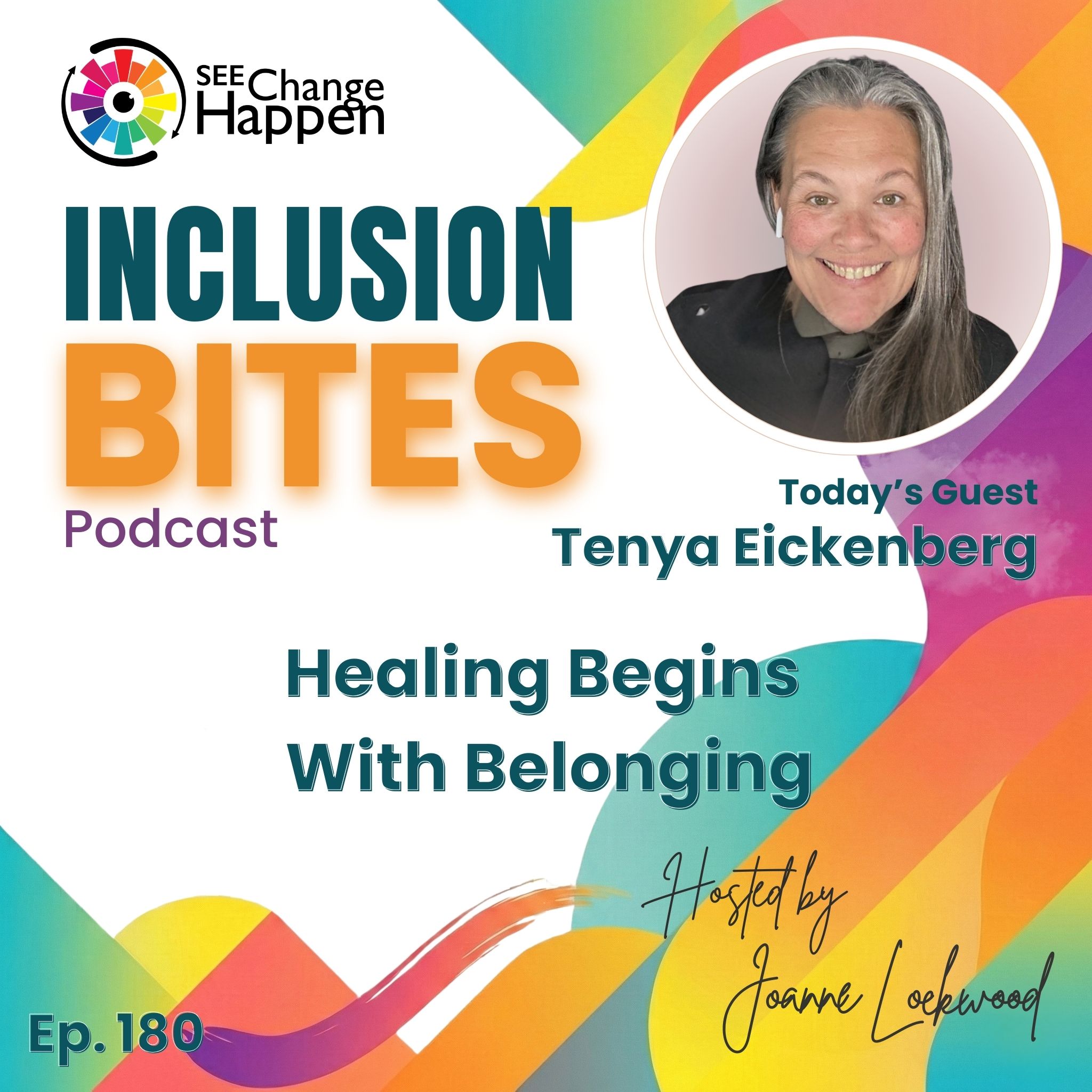
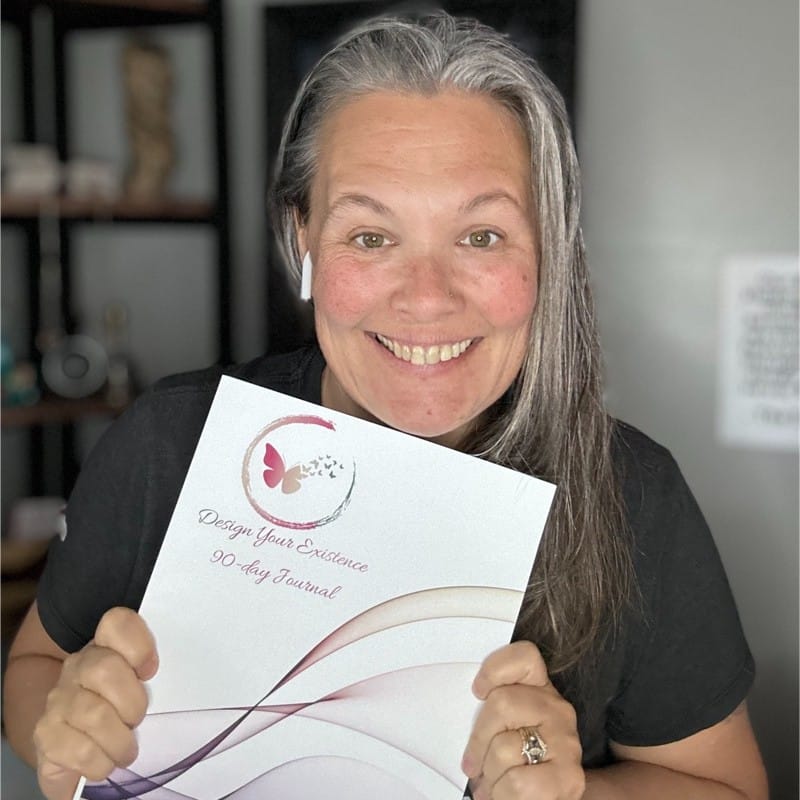
Tenya Eickenberg explores the profound journey from emotional self-care to energy healing, illuminating how personal boundaries, self-awareness, and authentic belonging serve as catalysts for holistic transformation and lasting inner healing.
In this episode of Inclusion Bites, Joanne Lockwood speaks with Tenya Eickenberg about mental health wellbeing trauma.
Foreign.Welcome to Inclusion Bites, your sanctuaryfor bold conversations that spark change. I'm Joanne Lockwood,your guide on this journey of exploration into the heart ofinclusion, belonging and societal transformation.Ever wondered what it truly takes to create a world? Remember, everyonenot only belongs, but thrives. You're not alone.Join me as we uncover the unseen, challengethe status quo and share stories that resonatedeep within. Ready to dive in? Whether you'resipping your morning coffee or winding down after a long day, let'sconnect, reflect and inspire action together.Don't forget, you can be part of the conversation too. Reach outto [email protected]to share your insights or to join me on the show.So adjust your earbuds and settle in. It's time toignite the spark of inclusion with Inclusion Bites.And today is episode 180with the title Healing Begins with Belonging.And I have the absolute honour and privilege to welcome TenyaEichenberg. Tenya is a mind, body, energyfacilitator who helps people clear, emotional and
Joanne Lockwoodhost
energetic blocks to heal, transform and thrive.And when I asked Tina to describe her superpower, she said that it isbeing able to empower others to release what no longer servesand step into their most authentic selves. Hello, Tenya,welcome to the show. Thank you so much for having me. I'm excited.It's a pleasure. And I'm guessing from your accent, you're not in the uk?
Tenya Eickenbergguest
I'm not. I'm in the. In the States, on the other side of the pond.
Joanne Lockwoodhost
That side of the pond, yeah. Whereabouts? I'm in Maryland,
Tenya Eickenbergguest
just outside of Washington, dc. Yep. Been to
Joanne Lockwoodhost
New York? I've never made. I've never made Washington state or anywhere around there. So,yeah, one day. One day. Maybe in five years time.So it's coming up for Easter, you got anything planned?
Tenya Eickenbergguest
My son is moving. My son is moving out ofour home. My husband and I are going to become empty nesters. Wow.
Joanne Lockwoodhost
Exciting. Yeah, so that's happening. We're actually going to start
Tenya Eickenbergguest
moving him and his girlfriend in today and then they'llofficially move everything in on Friday. So we're going to be helping themset up Friday and then we're just going to kind of enjoy the weekendwith some Easter plans with where we get to meet my. Meet hisgirlfriend's family. So that's exciting. Yeah. And thenprobably on Easter, we're probably just going to chill out. We're going to stay ata campground and just enjoy each other's companyfor a day. Reconnect to each other as,
Joanne Lockwoodhost
as life partners. Yeah, that was, that's one thing
Tenya Eickenbergguest
that we've always strived to make consistentthroughout our marriage. We'll be married 29 years this year together for 30.We have a 28 year old daughter and then our twins are 25and we also have a granddaughter who's gonna be born within the next week ortwo. So lots of changes going on in this next week,next two weeks. But yeah, we always made it a point to, to putour relationship kind of the main focus of ourfoundation because we knew that one day our kids were going to move outand it was gonna be him and I that were gonna be leftholding up the fort and we wanted to make sure that we had a goodfoundation for when we went into that, that space that we couldsupport each other just as a couple. Hmm.
Joanne Lockwoodhost
I mean you're probably say seven or eight years behind us.Our son was the final one to move out. Yeah, about seven or eight yearsago. But yeah, our daughter's in her 30s, marriedour son's, he's in his 30s as well now andgot a lot a long term partner which he's living with. So yeah, it'simportant to reconnect, isn't it? Because if you sit on the sofa looking ateach other going, what are we worried about? What are we going to do now?It's a real strange feeling to go back to that time before childrenBC right when you used to lay in on a Saturdaymorning and go, well it's nothing to do today. We're just laze around. We coulddo whatever we want. No one cares if we don't go out. Don't, don't, don't,don't put any clothes on today. No one's going to notice. Right? Right.
Tenya Eickenbergguest
Yeah. Well, we didn't really have, have that couple time beforewe started dating. And then three months later I became pregnantand then a year later we got married. So our oldest was six weeks oldwhen we got married. Lovely. So we've always had childrenduring our marriage and we really only we havenever lived together alone because we livedwith roommates before I got pregnant. Well actually no, we lived with roommateswhen I found out I was pregnant. So we've, you know, we've always had somebodyelse there during our relationship, whether it was in utero or,you know, as a big human. I mean we've gone onvacations just the two of us, but really never been longer than a week, maybe10 days at most. It's Quite exciting. Then it is really
Joanne Lockwoodhost
a new chapter in your life. Yeah. Yeah, it's very exciting, but we're definitely very
Tenya Eickenbergguest
excited for it. Yeah. My wife and I, we have. We love
Joanne Lockwoodhost
our time together. Yeah. And we love it when our childrenvisit, and we love it when our parents come as well, because we're at thatfamily generation. We've got responsibility for the elder generation as well as the.You can't get rid of responsibility no matter what age you are these days.So you talk about healing and helping others thrive.What got you into what you do and creating these sort of safe spaces fortransformation within people. I was looking for a safe space.
Tenya Eickenbergguest
In 2018, we had the mostamazing year for our family until this point, where we arenow extending our family into grandchildren. In2018, both my husband and our oldest were graduating fromcollege. Our twins were graduating from high school, and we weremoving to our forever home right here, right off the Chesapeake Bay inMaryland. And we have been wanting to move back to this place. Andso I had this vision of what itwas going to be like because in this community I have, My best friend wasliving here. Her family was living here. And this is the place Ilived when I was 15 years old, when my dad got stationed inMaryland in the Air Force. And so this is where I met my two bestfriends. And it was. It just had held a lot ofmemories and a lot of fun and a lot of love. And so I reallywanted to move back here. And so we had the opportunity to do that whena friend told us that they were selling their house and would we like tobuy it. And that was in. That was in, like, Februaryor March of 2018. And we're like, well,you know, when you're ready, let us know. And. Andwe'll. We'll start the ball rolling. And like, June, they were like, okay,so we're ready to. To get the ball rolling. Is this still something you wantto do? And we said yes. And so within sixmonths of saying yes, we had re. Re redone ourtownhome. So put it on the market. We put it on the market in September,sold it in October, moved in in November. So incredibly quick. Whichto me, knowing what I know now about the law of attraction and energywork, when you're in flow, things move quite quickly. And thatmoved quite quickly. Downside was we were moving to the beach in the winter,which totally sucks because you can't enjoysitting on the beach and wading through the water.And mid November, it's. It's too cold and it'sdreary and it's no fun. So we were kindof secluded from everybody for like the firstsix months. We'd go over to people's houses, but it just was not what Ihad envisioned. And then summer hit and we wereable to start getting outside. But prior to that I'dhad a bit of a falling out with my mom.And it caused a lot of stress emotionally for me.And I started to self medicate. I started to drink and smoke.I hadn't smoked for like eight years. And I started
Tenya Eickenbergguest
smoking again partially because I was around people who were smoking. It waseasy access to this olddrug that I used to use to hidemy emotions to relax throughtraumatic events. I started smoking when I was 13, so it wasn't hard topick back up and remember how good it made mefeel when I was feeling extremely stressed andemotional. And then of course I added in the alcohol because we're sitting on thebeach so you want to have your margaritas and, and all that stuff.And so I really suppresseda lot of things for about a year. And I knew thatthings were getting bad when I would start driving homefrom work and I would imagine what would happenif I just let my van run intoa telephone pole. How would that make me feel?Could I get a few days off? Because I was under themindset that I can't, I can't take vacation days because what if I getsick and I really need em, or actually onthe flip side, I wanted to use them for vacations so then Icouldn't use em for sick. That was probably more true than, thanthe other way. Like I wanted to be able to take an entire week offand go someplace and relax with my husband. AndI couldn't do that if I took mental health days. Cause Ionly had, at that time, I think I only had two weeks a year totake off, you know, and then your weekends are filled with, with stuff youcan't get done during the week when you're working 40 hours a week. And Iwas working an hour from home. So Iwas out of the house for 10 hours aday, 11 hours a day, depending on what was going on that day.And so I got to the point where I was like, I, I'm thinking abouthurting myself. I need, I need help. And at the time I only knewthe traditional roots talk therapy and medicationbecause I grew up with a mother who was diagnosed bipolar when I was 7or 8 years old. And that was the first time meditation was brought into my
Tenya Eickenbergguest
life, but it was never anythingthat was taught to me. It wasn't anything that was for an eightor nine year old to do so. And then after we,we actually, we were living in England at the time when my mom wasdiagnosed and she had to deal with her own mental illness andso she didn't have the capacity to, to teach us kids how to handle ourown emotions, our own mental health. But I had seen her go to therapyand she had been on medication for as long as I canremember. So I went that routeand was on it for about six to eight weeks. And both thedoctor and the therapist, the doctor wanted to up my medication. When I said itwasn't working so well. And talk therapy, it just felt like I was talking aboutthe same things I had talked about for years with other therapists. Not sayingthat anything that they were doing was wrong. It just wasn't right forme. And I didn't feel like you asked about thatsafe space. I didn't feel safe enough with either of them to tell them thatI had thought about hurting myself because I didn't know them. You know, sharingthat you are thinking of hurting yourself or taking your own lifewith somebody you don't know if is hard. Sharing itwith somebody you do know is even harder.So, so, you know, think about whatit takes for somebody to take their own life. They thinkthat, that, that is the easiest option totelling somebody that they're thinking about hurting themselves.Because we have seen nothing. But in themovies, TV shows, whenever somebody has said that they, theyfeel crazy or they feel insane or they're feeling certain ways,certain feelings. Even if, if they're saying like I, I feellike I'm gonna hurt myself, the next scene is always them being ineither a padded room or some, a room by themselves, sittingon a bed. There's there, there doesn't seem to be, at leastin the past, that I have seen a goodrepresentation of what happens if you tell somebody Ifeel like I'm going to hurt myself. Have you seen anything, anything that wouldencourage people to be okay with sayingI'm hurting and I feel like I don't want to be here anymore.
Joanne Lockwoodhost
It's all caught up in stigma and shame, guilt,not being strong enough, not being capable enough. You know,I'm a strong woman. How can I be like this?I associate this, that feeling with other people,not with me. I don't want to be a failure. I don't want to admitI'm broken. That's Part of my. I think this is what you're saying to yourself,isn't it? Part of the problem here is that I'mfailing. And that. And to face up to it makes me feel more of afailure. Having to admit it, having. Having emotions
Tenya Eickenbergguest
makes us feel broken. And I'll be the firstto admit, because I'm still human, that there are times whenI try to still hide me gettingupset. Now my kids know that I'm a very easycrier. And when I'm watching movies that are verycompassionate and heartfelt, they will be the first ones to look atme to see if I'm okay. And I'm always cryingbecause it's just how I feel emotions. Butwhen I'm out in public, I willstill find myself trying to push those down because I don'twant the attention of feeling my emotions. But we needto feel our emotions. So It's a catch 22. It's like, how do you getcomfortable with feeling your emotions whenyou're having them? It's really hard to do because youreally do have to navigatehow other people might react to you because they don't knowhow to deal with your emotions because they don'tknow how to deal with their own emotions.
Joanne Lockwoodhost
When you are. When you were going down this. Idon't know if this is a good metaphor or not going down this slopetowards this, I suppose this mental anxiety you were facingor whatever, however you describe it, looking back on thattime, can you see the triggers andthe steps that were sucking you into that further and further?At the time you were looking foralcohol, nicotine, as ways ofavoiding you dealing with the real problem? These were sort of. Thesewere boosting brain chemicals that made you feel better about yourself or less worse.
Tenya Eickenbergguest
Yes. Looking back, I can absolutely seehow I was reaching for a cigarettefirst thing in the morning to help suppresswhat I knew would come up later in the day. I would, you know, Iwould sit out on our deck smokinga cigarette, scrolling through what, you know,TikTok and just mind numb. I couldn't.Every time my phone would ring and my mom would pop up on the screen,I could feel my body tense up. Anytime mydad would call, I would tense up because I'm sure it had something to dowith my mom because my dad never calls. So it was, you know,it was always. And I would always wait for. If it had been acouple of months since there had been eggs breaking, I wouldwait for. Wait for the. The call that would causeme to have to walk on eggshells. Do you think some of this links
Joanne Lockwoodhost
back to your familyhistory of bipolar? Absolutely. These are manicepisodes. So people around you would have realised thatTina's having a manic episode here, not knowing what to dowith it. I think I was definitely afraid of that.
Tenya Eickenbergguest
Right. Because for as long as I could remember, my mom would always tell methat bipolar disorder runs in our family. You havea 50, 50 chance of getting it. But I always said, oh, no,whatever my mom gets starts with her and ends with her. And I thinkthat is. And this is where, again, our belief systems comeinto play and intentions come into play because wedon't have to inherit what our parent,who our parents are. My mom also has several illnesses thatare hereditary, but nobody before her hasthem and nobody in my family is going to have it.
Tenya Eickenbergguest
It's not being passed down through me. And I think that has really helped mein moving towards the energy healing aspect of it.Because through energy healing you can clear out thoseinherited energies, those, those things thatare passed down from generation to generation to generation.And when I, when I, when I told myself I'm, I'm not gonna, I don'twanna be on medication. I think medication is greatfor short term and I know a lot of people are notgoing to agree with that because a lot of people have had much success beingon medications for their anxiety and depression for, fordecades. And congratulations. I amso glad that you found something that worked for you, but itdoesn't work for everybody and it wasn't working forme. And so that's when I, I asked theuniverse, I asked God, whoever was listening, give me somethingthat is going to get rid of this anxiety and depression,get me something that is going to cure it. I was looking for a cure.
Tenya Eickenbergguest
I was not looking to manage my mental illnesses. Iwas not looking to survive through my mental illnesses.I wanted them gone. And that's when energy healing came intomy awareness. And to be honest, I wassceptical at first because it was the emotion code that came intomy awareness. And if you haven't heard of the emotion code, it'susing muscle testing or kinesiology totest your body's muscular system for yes and noanswers, for truth and false answers, for yoursubconscious, for your body, for you alone, not anybodyelse. And so I was like, do I drinkthis purple Kool Aid? Because I wasn't gonna be taking, Iwasn't going to ingest anything because that was,that was the belief that I had had for so Longthat I had to one, give my power away to somebodyelse to heal me. And two,because my anxiety and depression have always, I've always been toldit's a chemical imbalance. And so if it's a chemical imbalance, thenyou have to treat it with chemical to rebalance it. Butthe emotion code required nomedications, it required not ingesting anychemicals, which was exactly what I was looking for. So is,
Joanne Lockwoodhost
is it your belief or your theory that a lot ofhow the body reacts is fed from signals from the brain?So if you reprogram your brain in a more positiveway, I'm not saying it will cure everything, but itwill certainly influence how the body responds. Isthat the basic theory? Yeah. Although I don't think it's. I don't think it,
Tenya Eickenbergguest
I don't think that it is just about the brain. It is about every singleorgan in our body. Whenwe don't feel emotions and we're. I'm going to usejust this lifetime because I'm a believer that we don'tonly have one lifetime. I believe that we have, we live as a soulthat has lived on different timelines, different lifetimes. Andour soul brings that experience into whereverwe are today. With that, we bring whatever thatsoul is holding onto. So even though our soul is,is coming here to have a human experience, it's had many humanexperiences and it brings all of that knowledge. But with thatknowledge comes any trauma that theymay have attached themselves to in those other lifetimes orin those other timelines. Right. So, so it's very woo woo. You know, alot of people are not on that same wavelength. They think that we, you know,our brains are what's controlling everything and once our bodies aredead, that's it, we're gone. But that's not my belief. So I think thatour bodies hold onto so much and from this lifetimewe can have trapped emotions stuck in our shoulder, we can have them stuck inour hips, we can have it stuck in our bladder. So it's not just aboutthe mind. And even though our mind has,has been tested to be controlling a lotof what we do as humans, I don't think scienceis gotten everything right, hasn't gotteneverything to show us the big picture. Yeah, I
Joanne Lockwoodhost
can relate to the concept that we don't know everythingand what we do know is based on, largely on observationand there are things we can't observe that just happen and anything. I want tocall that spirituality, want to call that bigger being, whatever. I don'thave any proof either way? Not a, an overly, I'm not, I'm not a religiousperson at all. But I, I, I do have a, what I would call aspirituality, a Buddhism without the religion sort of thing. It's, it'sabout interconnection with the world and people andself, I guess, without any, any, without any definition of whatthat means. My life is better when I'm connected with myself and myenvironment. Right? Right. And it's not just connecting with your, with your mind, it's
Tenya Eickenbergguest
connecting with your heart, it's connecting with your entirebeing. And with that being said, when we do the consciouswork, when we do do mindset work,it does work. It does take quite awhile though. I mean you, when you are retrainingyour brain, retraining, really looking at your belief systemsand, and asking yourself, do I still want to believe this? Do I still want,you know, do I still want to believe that the sky is blue? Right?It then you have to say, okay, so if I don't want to believe thatthe sky is blue anymore, what colour do I want it to believe that itis? And how do I change my mindset around? Well, you've got all of theseother people over here that are saying, oh no, but the sky is blue.And you've got yourself over here going, yeah, but, but is it really? Because someof it looks white, some of it looks purple. It all depends on when you'reseeing it, what time of day are you seeing it? So it can take along time to shift your mindset intowhatever it is that your, your, your goal is,when will you bring energy healing into it to help to clearaway those emotions or those stuck trauma energies. Just these ballsof energy, you know, those little prickly things you get on your socks when youwalk through a field. So that's how I see energthe, these trauma energies, these, these stuck emotions, thesenegative energies that are impacting our physicalbody as well as our spirit and our souls. When we find those,we can pluck them out. Problem is sometimes they're sohidden, like they're so stuck down in your socks. You can feel it,but you can't find it. Right? So in a sense,you want to take your entire, you want to take your sock off and youwant to start picking them out because they're hurting you. But you can't do thatwith your body. You can't just take your meat suit off and pickout all the trauma energies with muscle testingand charts. Right? Just, just there's an emotion codechart that has like 60 different emotions. You can muscle test yourbody to find do you have a trapped emotion ofanxiety? And if you get a yes, okay,you ask, can, can I release it? And you might geta no, because you might need to know more about it. You might need toknow how old you were when you got the emotion. You might need to knowif the emotion is inherited or did you absorb it from somebody else that youwere standing next to. And if you need to know those kinds of things, yourbody will tell you. You find out what you need toknow and, and then you ask, can I release it? And then yourelease it. With the emotion code, you swipe your governing meridianand this is where. This is where. Again, I wassceptical about using this energy work.It had nothing to do with, is it the devil?Is it, is it entities, is it anything like that? Had nothing to do withthat. It was just the, the newness of what thismodality was and how easy, really, howeasy it was to feel better and that I didn't have to waitsix to eight weeks to see if I was feeling better. So, yeah,so, you know, once you're, you're able to release it, you get that, yes,I can release this. That's how easy it is to clear andrelease what's no longer serving you. I suppose one of my core beliefs
Joanne Lockwoodhost
is that my entire reality is generated by myconsciousness. Whatever my consciousness is, we call it myprogramme, my AI, my brain, whatever it is. Soeverything I look, feel, see, touch, experience has been generated fromelectrical stimulus into my consciousness. And thatcreates a pattern or a process. And I also have a belief that howI process things is unique to me. And when you say the sky isblue, how I define blue in my mind isn't necessarily how youdefine blue in your mind, red. We all interpret that wavelength oflight in our own way, which is why some of us like these two colourstogether. And some of us don't like those two colours together because there's a clashor whatever it may be. The taste. Everything we experience is all based on ourbrains taking stimulus and processing them. In fact,this entire conversation is made up in my own mind. I'm being told that you'rethere because I can see you through my eyes, I can hear you through myears, but those are just senses and those electrical stimulus is going into my brainand the brain process them. So I can supportthe idea completely that our consciousnesscan override much of what we think, feel andbelieve. If we learn to train it and focus on it. So yeah, everything you'resaying there, I could believe. Yeah, yeah. And we start
Tenya Eickenbergguest
getting trained on what to believe the daywe're born. Right. Because our parents start to instil theirbeliefs in us right from the beginning. And then our teachers start toinstil in us the beliefs of the school system. It's not untilwe get to be 12 or 13 years old we start toquestion our own beliefs and they call itrevival. Why? Why? The why? Yeah, yeah.Well, yeah, it's like, was it like 3 or 4 years old when they startasking why? Why? But, but then we become teenagers andwe start to rebel against our belief systems. Whatever. Yeah,
Joanne Lockwoodhost
that's right, right. Whatever. Belief systems have been instilled in us.
Tenya Eickenbergguest
Our kids did it, we did it. It's just a part of, ofbeing human is, is figuring out who you are.However, if you are in an environment where thebelief systems of your parents are continually being instilled in you, it's veryhard sometimes to change your belief system until you get out ofthe house. And once you do that, then you can really start to figure outwho you are if you have the opportunity to, if you allow yourselfto. Problem is, we hold so muchjudgement about ourselves when lookingat other people that it's very hard to figure out who weare if we're not encouraged to do so. Yeah. Because if we're not careful, we
Joanne Lockwoodhost
swap our parental models forother figures of authority in education, in our friendgroup, in government, in whatever it may be. And we cantake this left hand fork and go one way or right hand fork andgo bad. So we're all one decision, a left,right decision away from changing our lives for the better or for the worse.
Tenya Eickenbergguest
Yeah. Yeah. So with these, withthese. When you find these energies in our body, sometimes we have to know theexact location, sometimes we don't. But letting themgo frees up that space in your energy,frees up that space in your physical body and allows your body to heal theway that it's meant to. Our bodies areincredibly restorative, but when they're holding onto so muchtrauma, and if you tell me thatyou don't have any trauma in your life, you're blinded.Everybody has trauma. Everybody has beenaffected by it in some way. Whether it is watching yourparents go through trauma, being bullied at schoolor told by a teacher that you're not good enough because you got to seeon a paper, or, you know, going through high schooland wanting to to date a particularperson and that person not giving you the time of day.We all go through traumatic experiences. It's just a matter of whetherour conscious mind remembers it or not.But your body is always going to remember. So what's the process that I can
Joanne Lockwoodhost
start to connect these energy dots toeither traumas, things, emotional baggage,stress, anxiety. Because presumably there are different techniques for different partsof the body, different situations. You can't just say with one,one formula, here's some energy you gotta tune in. Have yougot to tune it and focus it. Right? So first I would, I would suggest
Tenya Eickenbergguest
that you learn how to muscle test, because this is theeasiest way, at least in my opinion. Cause it's how I. I learned. It'sto get in touch with your intuition, to get in touch with your subconsciousand start testing it with foods. So to do a swaytest, you're just gonna hold the food against your bodyand you're going to ask either out loud or in your mind, does mybody want this? And if you sway forward,typically that's a yes. If you sway backwards, typically it's a no.But your ego is going to get in the way in the beginning. So youhave to practise it and you have to be, you have to be consistent.
Tenya Eickenbergguest
When I started learning muscle testing, I was doing, with thesway test, I was probably doing 20 to 30 tests a day.And then when I wanted to switch to doing muscle testing with myfingers, I went to doing like a hundred questions a day. Andit's just based, based off of the sensations in your body.So start with that just very simple test with food. And I will, I willtell you, I guarantee anything that comes out of your cabinet is goingto be a no. Because our bodies don't like processed food,so, so do choose processed foods versusfruits and vegetables and kind of gauge it that way. Once you feel likeyou have that, you're confident in that. And this builds confidence in ourselvesas well, because you really get to know what your.What you want as a person, because you start to feel thesensations in your body. You can sit there, close your eyes and ask your bodyto show me a yes and, and you might get, excuse me,you might get goosebumps, you might yawn, you mighthave to take a deep breath, you might shiver a little bit, butyour body will tell you yes or no. It's just a matterof tuning into. That, some of this moving it from
Joanne Lockwoodhost
unconscious decision making to conscious decision making. So we're trying toget our prefrontal cortex Engaged here by saying, I wantslowing down the thought process and leaning in or leaning away is allabout being mindful about that decision we're making rather thanjust grabbing, going, yeah, yeah, I'll have that, whatever. Andthen regretting afterwards. Didn't really fancy that. Why did I eat thatfor? So it's having that conversation with yourself before you do somethingrather than living with a regret afterwards. Is that kind of the
Joanne Lockwoodhost
approach? Yeah, absolutely, absolutely. And you can always go against what your
Tenya Eickenbergguest
body's at, what your body wants too. I mean, there are times my bodydoes not like Reese's Peanut Butter Cups. Iguarantee every time, every time I ask, does my bodywant this? I get a no. But my mind still likes the taste ofReese's Peanut Butter Cups, so I will still eat them because I'm humanand I enjoy them. But once you, once you learnthat process of understanding what your body wants, either throughmuscle testing or through your intuition, then you can start to ask, doI have a trapped emotion of loneliness?And if you sway forward or muscle test with your fingers and it,and it locks strong. So I use, I use the ring to ring method.So when I get a yes, it locks. When I get a no, it releases.So you can do that as well. But when you get that, presumably you. Can
Joanne Lockwoodhost
also evaluate the strength of that resistance as well. SoI'm a little bit bothered. Oh, I'm a lot bothered. Right, yeah, yeah,
Tenya Eickenbergguest
yeah. But you can, you can use muscle testing to ask, do I have atrapped emotion of loneliness? And if you get a yes, then you ask,can I let it go? Can I release it? Can Itransmute it? Well, whatever words come to your mind and if you get ayes, then you say, okay, I releaseloneliness. Or if you're practising the emotion code, you can,if it helps, you can sway, you know, rub across your, yourgoverning meridian. You can use a pendulum. Whatever. Whateverworks for you is what's going to help you to heal.And that's what I want. So you're trying to link a symbol, some symbolism to
Joanne Lockwoodhost
the event. You can snap. You can snap if you want. I'm letting it go.I mean, I often have a mythical piece of paper which I scrunchup into a ball and throw it in the bin. I don't need to bedealing with that. Goodbye. Yeah, so it's symbolic.
Tenya Eickenbergguest
Exactly, exactly. Whatever you can, you know, you can take a deep breathand, and blow it out real hard. Whatever, whateverempowers you to let that stuffgo. And, and this is What I stress to my clients is thatwe have the power as human beings to healourselves from everything we do. But thequestion is, how deeply ingrainedis. Is whatever it is you're trying to heal,how deep does it go? How long might it taketo heal? And is it in your highest and best toheal that? Because you may be trying to heal.Like right now, I'm working on healing myhypothyroidism. I'm working on healing my thyroid through energywork, because I don't. Because when I take the medications, I don't feel.I don't feel better. I don't feel worse. I don't. But Idon't feel better. My. My labs are better, but I don't feelbetter. And so it is in my highest and bestto work on my thyroid energetically. But it might notbe my highest and best to address,say, my eyesight. It might be that that is just part ofthe human experience that I'm supposed to travel throughby having to use readers or get glasses.And I may not be able to heal my eyesight right there. There is.There are things that we may, as human beings, aresupposed to learn from throughthis human experience. I'm definitely not against medicalintervention. I don't want that to come across as that. I don'tthink that doctors are valuable because I think they are incredibly valuable.Problem is, one doctor does not know your whole body. Yeah. I think you have
Joanne Lockwoodhost
to appreciate there are things that you have within your controland there are things you don't have in your control. Andeven when you're going to the doctor and getting medication orwhatever it may be, you still have to take the medicine. Yes,I still have to put my glasses on. I can't expect my eyes to befixed without putting my glasses. So I take some personal responsibilityto take the tablet every day. If I don't, it doesn't work. Right.So, yeah, there's an agreement with myself and theperson that's helping me to allow that to work. And I have to believe init, because if I don't believe it's going to help, I won't take it. Iwon't do it. I won't get better. Right. And that's the same thing with energy
Tenya Eickenbergguest
work, you know, to a degree,you have to believe in it. You really do.To a degree, you have to believe that what you'redoing is helping you. And that's. That's why.That's why addicts have a hard time sometimes quitting, taking drugs becausethey truly believe that the cocaine is helping them.Right. Well, it also applies, you know, if you have a strong
Joanne Lockwoodhost
faith, religion or belief, and that helps you andit's strong enough so that it manifests itself really to you, thenwhy am I going to deny that that works for you? Because that's yourway of processing your. Call itenergy, call it whatever it is, the self healing, the self reflectionis whatever works for you. But you're right, I gave upsmoking 21 years ago. I gave up alcohol three and ahalf years ago. And I've cut back on eating a lot for the lasttwo years. So, yeah, I was a lazy eater. Ijust eat what's ever in front of me. I'm the person who goes to thebuffet and ends up with a plate that's like a mountain of all the foodthat comes back alcohol. I had no stop button. I was drinking and drinkingand drinking. And I was the one at the party who was theone who didn't want to invite at the end. I was always the embassy.And I had to look back at myself and say, who am I? Who doI want to be? Because if I just carry on notengaging in my life and just letting it run itself, I don'tlike it. I don't like that person. It's not me. I'm seeing a facsimile ofme, not me. I had to take a decision. Stop smoking, stop drinking, andthink about my calorie intake. Because if I don'tdo it, no one's going to fix it for me. Right? Right. Yeah. And to
Tenya Eickenbergguest
your point, you have to do what's right for you. Right.If I break my leg, I'm going to the doctor. I'm not going to tryto heal it through energy work. I might write, use energy work to helpreduce the pain and maybe speed up the healing process.But I'm still going to go to the doctor. Right. Because that's, that's,
Tenya Eickenbergguest
that's a bone break. That. But there are some things like I don't feellike I need to take medications for my cholesterolthat I can fix through energy work and through diet and through exerciseand, and healing is not just one faceted like you were saying.You have to, you know, you are focusing on yourphysical health, right? The, the quitting smoking, the quitting drinking, the eatingbetter. That's gonna be your physical health. But you also have your mental health,your emotional health, your spiritual health. You have these five pillarsthat you need to address to becomethe healthiest version of you, that you can become, you can't justfocus on one. And that's one thing I learned throughthis process when I got in, when I found energy healing,that that wasn't enough because I had. It took me aboutfour months to, to heal my anxiety and depressionabout 80%. But I wasn't doing, I wasn't takingcare of myself on those other levels. Iwasn't setting boundaries. I was still a people pleaser.I wasn't trying to eat as healthy as I could.I wasn't, I was still smoking when I startedon this healing journey. I, I only just quit smoking lastJuly for good. Okay, well done, well done, well done. So,so I smoked for about five years after I started smoking again. Um,I just recently quit alcohol. I think December was the last timeI had an alcoholic drink. So it's a process. We're notgoing to do it all at once. And, and you do have to want to,don't you? And you do. You people can tell you all the. Time, you need
Joanne Lockwoodhost
to stop smoking, stop drinking. The government tell you there's labels oncigarette packets, labels on alcohol saying, it's going to kill you. Yeah,yeah, and yeah, kill me tomorrow, maybe not today.We don't believe. We're not going to. We're not going to change because someone tellsus to. We've got to find that, that why their own. Why,why do I want to stop fall? Yeah. Yeah. And all you can do is
Tenya Eickenbergguest
when, when somebody says that I'm ready, I'm ready toheal, then they will. Youcan support them, support them in their journey. And if theyslip up, don't mention it. Like,why is it any business of ours to ask somebody?
just support them wherever they are. If they tell you thatthey're going to quit smoking, great. Six months goes byand they haven't quit smoking. It's none of your business why they're still smoking. It'syour journey. It's your, you dothe best that you can do and you do, you don't, don't letanybody influence you. And, and, andI'm at fault for that. Sometimes I'll have conversations with my husbandbecause he'll mention his back hurts or he's feeling fat orhe's gained weight. And I have, I am,I am a Libra. I am a caregiver.And I am a person who loves to giveunsolicited advice. That is, that is one of my toxic traits is givingunsolicited advice but it comes from. It comes from a place of love andcaring and wanting to help. Hey, but on the flip side of that, you now
Joanne Lockwoodhost
get paid to give solicitor advice, so you should balance it out, can't you? Yeah,
Tenya Eickenbergguest
yeah, but. But I have. Have on occasionasked my husband, what are you gonna do about it? And I've had to stopmyself. As soon as that enters, as soon as that comes out of my mouth,I turn right back around and go, I am so sorry. It is not.It is not up to me to ask you those questions. Oh, but create space,
Joanne Lockwoodhost
it does, so that you can ask yourself that question. Right, right.
Tenya Eickenbergguest
Because. Because they are. Everybody is a reflection of us and whatwe want to help other people with is often something that we need help with.
Joanne Lockwoodhost
My wife, Marie and I, we've noticed over the last18 to 24 months, since we've been very conscious about our food intake,trying to lose weight, that our. Our daughterand our son and our son's girlfriend and sex sent my mum,have all started embarking on a healthieror conscious mindset about what they're eating and also maybe drinking aswell. And we haven't had to fat shame orpoint out the fat. They've got a few pounds because we were in thatposition. But I think they can now see a positive exampleof two people who have taken a choice, embarked on it, andthey can visibly see the change in us and the progress we've made.So we haven't got to do anything other than be the best people we couldbe, exemplify good practise and let themabsorb it. But whilst we had a gluttony problem, we werecreating the environment in the family where it was okay to be gluttonous. And Ithink by saying, actually, we're not advocating for that anymore, itrubs off and people go, that's great. You give me permission to do it tothemselves. So I think you could become infectious in your.
Tenya Eickenbergguest
Right. You're better behaved as well, can't you? Right. Because then your. Your outer worldstarts to look like your inner world. So you focus on you. You know, weare. Our first job. We are. It's the old saying, isn't it? Put your own
Joanne Lockwoodhost
oxygen mask on first before helping others. Yeah, it is. We're our first job.
Tenya Eickenbergguest
Take care of you first so that you can be there for others. But
Joanne Lockwoodhost
is that maybe the mistake you were falling intowas trying to be the mom to everybody andfixing everybody else and letting yourself. Yep, absolutely.
Tenya Eickenbergguest
Absolutely. It wasn't until. Until I realised that I reallyneeded to look at myself and, and figure out how canI create a space where I am happywith what I have. And that's when energy healing came into mylife. That's when self care really started to showup that it was something that was needed. And you know, myself care was relearning how to be,how to be a emotionally intelligentand healthy minded person. Itwasn't, it wasn't about going for weekly massages or getting mynails done or even showering. Itwasn't even about that. It was more aboutallowing myself to worry sometimesor to be sad or to be mad. It was about learning howto set boundaries with people who continued to cross them.And I didn't even realise they were crossing boundaries that my subconscioushad made until I started to really questionwhat are my boundaries. Yeah, I suppose unless we plot out
Joanne Lockwoodhost
where, where are those things are, what thenwe can just become uncomfortable when someonetransgresses them without realising it. Yeah, yeah.
Tenya Eickenbergguest
When, if somebody makes you frustratedand resentful, they're doing something that is pushing yourbuttons, they're crossing your boundaries and that's a good timefor you to stop and go, what is it that they're actually, what arethey doing? What, what boundary are they crossing for?A boundary that I set with my mom was, I had to send her,I sent her an email and told her that I was not going to respondto any emails, texts or phone calls where I wasfeeling manipulated, bullied or belittled because she would sendemails in bright red capital letters like shewas yelling at me. And I told her that if she did that I wasn'tgoing to respond to anything in the email. She stopped emailing me, I guess, youknow, for what reason. But shedid not cross my boundaries, which was amazing. Sopeople will not cross your boundaries if you set them, but if you do setthem, make sure you have a consequence and uphold that consequence.
Joanne Lockwoodhost
You say in the show notes that you said through about thislight bulb moment where people realise they have the power to healthemselves. Surely there's a light bulb before that whichis recognising that you need to healor you need. That's the first step. Yeah, the first step. Sopeople listening to this right now, our listener out there,how can they maybe self identify about thisneed to heal before we talk about how we get that? I have the powerto do it. So if you are feeling
Tenya Eickenbergguest
frustrated with life, you're feelinglike life is always happening to you.You're always, you know, you're you're, you're running into the wall,right? Every time you try to do something, this wall gets put up. That iswhen you realise that there are things in you that probably needto be healed. And like I said, you may have had awonderful childhood and you may be, you know, I don't know,40 years old and in a very happy marriageand just think that life, life was actually really grand. But you keep hittingwalls every time you try to move forward todo something. There's probably things in there that need to be healed thatyou don't remember. And again, that's where energy healingcomes in and is so helpful because you don't have to remember,you don't have to relive what you've gone through.But if, yeah, if you're feeling frustrated with life, relationships aren'tgoing well. You know, justsit back and just, just, just think, is there something in methat I need to address on a deeper level?And your conscious mind will say, no there's not. Your ego will say,no there's not. But if you are human,there's something to, there's something to heal if you'refeeling frustrated with life. So obviously reaching out to you is a good option for
Joanne Lockwoodhost
the next stage. But how can we maybe think about ourown first aid, our own triage to help us onthis journey from realisation to taking,taking our own power. What can we do there? Start with self care.
Tenya Eickenbergguest
Start with really looking at how are you taking care of yourself?Where on those five pillars are younot taking care of yourself? And pick one. Startwith honestly I would start with emotional. Emotional or mental iswhere I would start because those are gonna help you move forwardin that physical, spiritual or energetic, thoseenergetic pillars. But start with one of those andfigure out what self care you need to help with those pillarsand start there. I would love to say start bycalling me, but my, my goal as a, as a coachis to empower you to know that you can heal yourself.I'm just a guide. I, I can help you to release some of thoseenergetic blocks. I had energetic blocks to self
Tenya Eickenbergguest
care and so I had to work on myselfenergetically before I could do the self care work.But there are a lot of people who can do the self care work withlittle, with some ease and then you becomeconsistent with it and then you can add in all the other stuff. Sostart with the self care. Start by putting you firstso that you can take care of others. And I will tell you, I willbe blunt if that means you have to get up an hour earlierand go to bed an hour earlier, then that's what you do. Ilove it when people tell me they don't have time for self care. Because Iwill find you the time. Yeah, it's the old adage, isn't it? You've always got
Joanne Lockwoodhost
time for things you want to do. You never have time for the medicine,you never have time for the pain. So if it's importantto you, you've realised the light bulbs come on. The first bulb, Ineed to do something. Second light bulb fires. I have the power to do itmyself. And that is I have to take personal responsibility. Because no one's gonna doit for me. Nope. No. No. And until it'sa priority, it will never happen. Yep. And I call myself out all the time.
Tenya Eickenbergguest
I don't hold myself accountable for a lotof things. I'm still growing, I'm still learning,I'm still healing. We shouldn't beat ourselves up. No. We should just recognise what's going
Joanne Lockwoodhost
on. Say, well, I made that choice today. Yep. If I don't want tomake that choice tomorrow, that's within me. I can make a different choice tomorrow. ButI made that choice today. As you said earlier. Am I leaning into that oram I leaning out from it? How am I feeling if I've lent into it?I can't beat myself up because it felt right. Exactly.
Tenya Eickenbergguest
Exactly. And the day you have that light bulb, it
Joanne Lockwoodhost
goes, actually, that's not me. Tomorrow, then you lean in.And tomorrow is different. Yep. Yep. And just, just take
Tenya Eickenbergguest
each day as it's the first day.Really, don't worry about tomorrow. Cause that's whereanxiety comes from. And don't worry about what you did yesterday because you can'tchange the past. I've not been drinking alcohol for about 1200
Joanne Lockwoodhost
days today. Each day. I don't drink alcohol.I have the choice tomorrow. I can. I can have the choice today if Iwant, but I've chosen today. I'm not going to. And I keepmaking that choice. I'm not denying myself. I've just made that choice every day.And I actually make that affirmation with myself every morning when I wakeup. No, I don't say, at the end of the day, have I drunk.I start the day by, I'm not gonna have a drink today. Right? Yeah. Andyou're gonna make that choice every day. I'm gonna be doing this today, not whatdid I do? Because it's too late to correct. So I made that positive start.
Tenya Eickenbergguest
Yep, absolutely. You know, it's been absolutely
Joanne Lockwoodhost
a wonderful conversation. It's been mind expanding. How can people get hold of you?So our fabulous listener, who's got a way to the end, how can they getahold of you? You can go to my website, designyourexistence.com
Tenya Eickenbergguest
you can also find me on Facebook and Instagram, designyourexistenceand on all of your podcast platforms. I havemy own podcast, the Metamorphosis Project. Fascinating. Fascinating. I'm gonna have to tune
Joanne Lockwoodhost
into that. I'll put all the details in the show notes so we can findthose. Thank you so much. Thank you for having me.
Tenya Eickenbergguest
I've loved this conversation. As we
Joanne Lockwoodhost
bring this conversation to a close, I want to express mydeepest gratitude to you, our listener, for lending yourear and heart to the cause of inclusion.Today's discussion struck a chord. Consider subscribing toInclusion Bites and become part of our ever about growing communitydriving real change. Share this journey with friends, family andcolleagues. Let's amplify the voices that matter.Got thoughts, stories or a vision to share? I'm allears. Reach out to[email protected]and let's make your voice heard. Until next time, thisis Joanne Lockwood signing off with a promise to returnwith more enriching narratives that challenge, inspire andunite us all. Here's to fostering a more inclusive world oneepisode at a time. Catch you on the next bite.
The Link Between Healing and BelongingEnergy Healing, Emotional Wellbeing, and Self-ResponsibilityPersonal Boundaries, Self-Care, and Everyday Inclusion
Joanne Lockwood is joined by mind, body, and energy facilitator Tenya Eickenberg for a conversation about how healing and belonging intertwine, and why so many people struggle to feel safe enough to acknowledge what they’re carrying.
Tenya shares her own experience of emotional stress, self-medicating with alcohol and smoking, and reaching a point where she recognised she needed help. Together, they talk openly about stigma, shame, and the fear that can stop people from speaking up about mental health, as well as why traditional routes like talk therapy and medication may not feel accessible or effective for everyone.
The episode also explores Tenya’s approach to self-healing through self-care and energy-based modalities, including muscle testing and the “emotion code,” with an emphasis on listening to the body, releasing what no longer serves, and building habits that support long-term wellbeing. Practical themes include tuning into intuition, making conscious choices day by day, and setting and upholding boundaries—especially in family relationships.
Across the discussion, the core message is that belonging is rooted in self-recognition and authenticity, and that sustainable change often begins with personal responsibility, compassion, and creating emotionally safe spaces for ourselves and others.
“we always made it a point to, to put our relationship kind of the main focus of our foundation because we knew that one day our kids were going to move out and it was gonna be him and I that were gonna be left holding up the fort and we wanted to make sure that we had a good foundation for when we went into that, that space that we could support each other just as a couple.”
“I knew that things were getting bad when I would start driving home from work and I would imagine what would happen if I just let my van run into a telephone pole. How would that make me feel? Could I get a few days off?”
“Because through energy healing you can clear out those inherited energies, those, those things that are passed down from generation to generation to generation.”
“I was looking for a cure. I was not looking to manage my mental illnesses. I was not looking to survive through my mental illnesses. I wanted them gone.”
“It can take a long time to shift your mindset into whatever it is that your, your, your goal is, when will you bring energy healing into it to help to clear away those emotions or those stuck trauma energies.”
The process of recognising emotional and energetic blocks as the first step towards genuine healing.
Practical techniques for identifying and releasing negative patterns, including muscle testing and intuitive enquiry.
The influence of intergenerational trauma and inherited belief systems on personal wellbeing.
Why self-care—beyond physical acts—demands emotional intelligence, boundary-setting, and reflection.
The necessity of prioritising personal responsibility and choice in sustaining mental, emotional, and physical health.
Understanding how our lived example can quietly influence and inspire positive change in those around us.
Embracing a multidimensional approach to healing: integrating physical, mental, emotional, and spiritual pillars for authentic transformation.
One thing to remember
Healing and personal transformation begin with a genuine sense of belonging—both to oneself and within a supportive community. This episode highlights the importance of recognising your own needs, prioritising self-care, and understanding that true healing is a multidimensional journey involving emotional, mental, physical, and spiritual facets. Real, lasting change only occurs when individuals feel empowered to explore, acknowledge, and release what no longer serves them, making way for authenticity and deeper connection.
Questions this episode helps answer
How does the concept of belonging serve as a catalyst for personal healing and transformation, according to Tenya Eickenberg’s journey?
In what ways can emotional and energetic blocks manifest in daily life, and how might these influence our experience of inclusion or exclusion?
The idea of self-care was discussed in relation to emotional intelligence and boundary-setting. How do self-care practices contribute to establishing healthier relationships and environments?
Tenya shared that everyone carries some form of trauma. How can workplaces or communities support individuals in recognising and addressing these traumas without stigmatisation?
The process of self-reflection and questioning deeply held beliefs was highlighted. What role does questioning our inherited belief systems play in fostering authentic inclusion?
How can energy healing modalities such as muscle testing and the emotion code support mental well-being, and how might they complement traditional approaches to medicine and therapy?
Explore topics
Ideas from this episode
The Link Between Healing and Belonging
In my recent conversation, I had the pleasure of exploring with Tenya Eickenberg how the journey to healing is intricately woven into our sense of belonging. We delved into the essential need for a safe space—whether that's emotional or physical—and how seeking environments where we are valued allows us to acknowledge our emotions without shame.
Energy Healing, Emotional Wellbeing, and Self-Responsibility
Tenya shared with me her evidence-based yet holistic approach, rooted in energy healing, emotional release, and the self-responsibility required for lasting change. We took a deep dive into methodologies such as muscle testing, the Emotion Code, and the influence of belief systems on both mental and physical health.
Personal Boundaries, Self-Care, and Everyday Inclusion
Another powerful theme that emerged was the role of boundaries and self-care in fostering everyday inclusion—both for oneself and others. Tenya and I reflected on how the inability to set and uphold boundaries, often due to emotional blockages or societal conditioning, can lead to burnout, resentment, and a diminished sense of self.
Learn
Frequently asked questions
What is the central theme of this episode?
The episode centres around the notion that healing, both individually and collectively, begins with a profound sense of belonging. The conversation explores how establishing inclusive, safe spaces enables personal transformation and the empowerment to overcome emotional and energetic barriers.
---
Who is the guest, and what expertise does she bring?
Tenya Eickenberg is the featured guest. She is a mind, body, and energy facilitator specialising in helping people release emotional and energetic blockages. Her work encourages individuals to shed what no longer serves them and embrace their most authentic selves.
---
What personal journey did Tenya share regarding healing and transformation?
Tenya discussed her own challenges with emotional and mental health. After facing significant family changes and personal struggles, including depression and anxiety, she sought healing beyond conventional approaches. Dissatisfied with traditional therapy and medication, she turned to energy healing modalities, such as the Emotion Code, to address her needs holistically.
---
How does Tenya define ‘energy healing’, and what methods does she use?
Energy healing, according to Tenya, is an approach that considers the interconnectedness of mind, body, and spirit. She advocates for methods like muscle testing (kinesiology) and the Emotion Code, which involve identifying and releasing trapped emotions and inherited traumas that may reside anywhere in the body, not just the mind.
---
Does Tenya believe energy healing replaces traditional medicine?
No. Tenya emphasises a complementary approach. She acknowledges the value of medical intervention but believes energy healing offers an additional, non-pharmaceutical way to address issues, particularly when individuals seek deeper, long-lasting change rather than symptom management alone.
---
How does one begin to identify and release emotional or energetic blockages?
Tenya recommends practicing muscle testing to attune to one's intuition and subconscious. For beginners, she suggests using simple tests with foods to differentiate between what one’s body desires and does not. Once comfortable, one can ask about specific emotions—such as loneliness or anxiety—and use symbolic actions (e.g., deep breathing, snapping fingers) to facilitate release.
---
Share this episode
Heard something worth passing on? Send this conversation to someone who needs to hear it.